81

I still keep in touch with my previous employer. Unsolicited, I received a job offer for about 25% more than I make now. There isn't a deadline on the offer; it's "just there" if I want it.

I enjoy working for my current employer. The biggest disadvantage is that it isn't as much as I could make. At one time, this wouldn't have mattered too much, but now it does.

I am already paid competitively compared to market and company averages. It seems difficult to justify an increase that large. I could mention the competing offer, to "justify" the pay increase. Also, this isn't just a "tactic". If the new offer turns out to be the best one, I will take it.

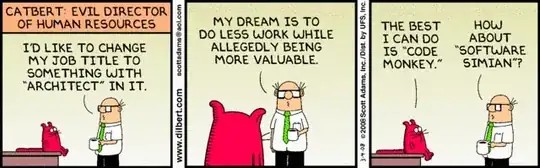
But I've heard it is a bad idea to mention offers, as it makes me seems "disloyal", and backfire, i.e. make a raise less likely. (I've never really understood "loyalty" to a company, but I still would rather play nice.)

Dilbert

Should I try negotiating a large salary increase solely on my performance, without mentioning an offer, or should I use both? If I do mention it, how should I do it in order not to seem ungrateful or hostile?

gnat
  • 3,068
  • 10
  • 41
  • 77
Paul Draper
  • 1,509
  • 1
  • 9
  • 16

5 Answers5

57

This isn't just a "tactic". If the new offer turns out to be the best one, I will take it.

It sounds like you are more than willing to leave if your current company doesn't offer you the same salary. Make sure this is the case before mentioning a competing offer.

It's entirely possible the response from your manager will be, "Sorry, we can't afford that" and you have to leave to get the pay increase.

Should I try negotiating a large salary increase solely on my performance, without mentioning an offer, or should I use both? If I do mention it, how should I do it in order not to seem ungrateful or hostile?

To be successful in negotiation you need to be able to walk away.

It sounds like you are. It also sounds like you are going to ask for one heck of a raise above and beyond what is normal for your position, if you are already paid market salary and yet want 25% more.

What you need to do:

  • Read this question about how to ask for a raise and everything there. Likely your boss cannot just go "here's another 25% salary!" without some justification. Maybe this means you take on more responsibility. Maybe this means you have a new title reflecting your current responsibilities.
  • Research as best possible what your market salary is. If possible, try to determine your pay range for your position. Sometimes this is public, sometimes not. But learn as best possible what options your manager even has.
  • Figure out whether money is the sole factor affecting your job choice.
  • Discuss with your boss using the methods from the first bullet here. Be very careful to avoid "I want more money or I'm leaving" but rather make it, "I would like to take on more responsibility for more money, how can we make this work?" If your manager feels you are fighting him/her then this will end poorly.

I would try to avoid mentioning the other offer unless absolutely necessary. It will come across as "match this or I leave" which is not the impression you want your manager to have, should your current employer be able to match it.

enter image description here


Also, make sure you aren't returning to your previous employer only because of money. If you left because of the work environment, or other things which likely haven't changed, you might be sorely disappointed when returning.

Bernhard Barker
  • 13,022
  • 4
  • 39
  • 62
enderland
  • 110,742
  • 49
  • 328
  • 478
  • 2
    Thoughtful and well said. I just want to mention that high and low ends of market salary can be a lot more than 25% from the median. The salary isn't outside the market, just (admittedly) a lot more towards one end. I just didn't want to seem completely ridiculous :) – Paul Draper Sep 09 '14 at 14:05
  • 13
    Salary markets vary between industry and geography. – Gusdor Sep 09 '14 at 15:11
  • Also be careful - higher wages typically comes with higher expectations of what you can do. Don't oversell yourself. – Thorbjørn Ravn Andersen Mar 28 '21 at 21:56
27

As a manager, I am not overly concerned about "loyalty" as you put it. I fully expect that each of my employees could at any time entertain another offer, and doing what is best for them, their career, and their family should be their top priority.

On the other hand any time an employee is unhappy enough to start actively looking for another job, I feel I've already lost them. I try to encourage my employees to come to me about issues before they get to this level. I will never get into a bidding war for an employee (some managers will). If money was the only reason an employee started looking - the company failed to adequately compensate/appreciate them in the first place, and the lack of appreciation will probably continue into the future when they're up for the next raise - especially since they're now making more than typical. More than likely, there were other reasons the employee started looking, in which case those other reasons will still be there.

I know you're saying that you were approached about this job, but if you bring it to your boss, they're going to assume you're willing to take it and are therefore unhappy. Unhappiness tends to spread, so letting you go to the other opportunity may be their best approach.

You're better off having an honest talk about how you'd like to be making more, what you want to be making, what kind of performance would justify that compensation, etc. If your boss is open to this conversation, he may likely ask "where did you come up with +25%?" and you could then delicately bring up the standing offer, but you better be sure it's a real offer since you may end up needing to take it. Bringing up a raise in the context of "What can I do to make myself that valuable to the company?" is really the best approach.

Jared
  • 5,100
  • 2
  • 19
  • 24
  • 10
    Interesting that everything else in your answer contradicts the opening paragraph. – psr Sep 09 '14 at 17:05
  • 8
    @psr - I guess the difference between loyalty and employee happiness isn't clear then. I thought this was pretty clear. Do you have a suggestion as to how I should make this clearer? – Jared Sep 09 '14 at 17:07
  • 3
    the problem is your opening paragraph says "i don't need loyalty" but then you say "if you look elsewhere i will remove you". You use the term "happiness", but the fact remains that you use evidence of job hunting as a rationale to remove the employee. As such, your opening paragraph is devoid of meaning - you say you don't care about loyalty, which is apparently true. – bharal Mar 30 '18 at 23:16
  • 2
    But you do care about "happiness", and while most people would associate job hunting with disloyalty, you associate it with unhappiness. So you use "happiness" as the excuse to remove them. However, either way, you're removing an employee for job hunting, you just use a different word for the rationale than others. The end result, being the same, and the cause, being the same, the only difference is the semantics. Which is the point psr is raising. – bharal Mar 30 '18 at 23:16
  • I said nothing about removing them. I want them to have a job they enjoy. As a wonderful side effect, they'll also be more productive. I'd never fire someone for being unhappy (that reaks of "the beatings will continue until morale improves"). If someone is clearly unhappy in their role, it seems silly to try really hard to convince them to stay in a job they hate. – Jared Apr 01 '18 at 03:02
  • Your second paragraph reads as "I want employees that totally reject the entire idea of working elsewhere". But you don't care about loyalty... – jmoreno Apr 02 '18 at 22:26
  • 2
    @jmoreno that's pretty extreme, and not something I got. The 2nd paragraph, to me, read as "Once an employee is looking at offers, the company already failed at employee retention. Money alone isn't going to solve this." – Nelson Apr 03 '18 at 08:33
  • @Nelson: which is the same thing as saying that our employees should be so loyal they would never leave merely because of filthy lucre...money, who needs it. – jmoreno Apr 03 '18 at 22:15
  • 1
    @Nelson: to most people 2% of their annual salary is at least a mildly significant amount of money. If an employee says that he has a job offer with an increase over that, what he is most likely saying isn't "I'm unhappy about the foosball machine and I want to work someplace where I don't have to hear Bob's tapping his table all day long", but rather "I want to stay, please match this offer so I don't have to choose between working here and making the money I now know I can make". – jmoreno Apr 03 '18 at 23:28
  • 1
    @psr - I'm not seeing the contradiction that you do, for what that's worth. Pointing out that if an employee is unhappy enough to look elsewhere, the battle is too far gone to be salvaged is nothing about demanding or wanting "loyalty," it's an accurate reflection that they will probably lose that person, sooner or later, and it becomes a matter of whether it happens in a way that is planned for and more easily transitioned, versus whether they get hit with the news and have to scramble in the interim. – PoloHoleSet Jun 05 '18 at 15:53
  • @PoloHoleSet: this isn't a marriage, you don't have to be unhappy or dissatisified to throw out at line and see if anyone bites. The simple fact of the matter is that employers can not afford to make sure they are always paying the most. Which means that employees can't just leave it to their employers to make sure they are getting paid what they could be getting paid. It's up to the employee to do that, and the only real way too see what you'd get on the market is to play in the market, interview, see what offers you get. And dissatisfied with pay doesn't mean unhappy. – jmoreno Aug 13 '18 at 22:23
  • @jmoreno - you don't have to be dissatisfied, but the fact is that for most workers, if they are satisfied with their work environment, they will not *actively* seek other offers. Besides, that is not my characterization, but the answerer's. I was merely comparing parts of the answer in trying to illustrate there was no inherent contradiction (IMO) between the first paragraph and the others, as claimed by the first commenter. – PoloHoleSet Aug 14 '18 at 16:37
  • @PoloHoleSet: the OP says in the third paragraph about an unsolicited job offer — “willing to take it and therefore unhappy”. Six of one half dozen of another, doesn’t matter if you call it loyalty or unhappiness, if you treat someone badly because they may be considering going elsewhere, you are (a) treating them badly, and (b) encouraging them to leave. – jmoreno Aug 18 '18 at 04:00
  • @jmoreno - If it's not bad to consider leaving for a better opportunity, then you can't call it bad for the company to choose to make that transition on their own terms. That's not about "loyalty," it's not about "punishing," it's about the amount of disruption, adjustment, and then lost opportunity that comes with replacing a vacancy, vs pulling the trigger yourself. Filling a vacancy is expensive. It makes completely, albeit cold-blooded, business sense to dictate that. I don't get where you can say it's fine for an employee to look out for themselves, but not an employer. – PoloHoleSet Aug 20 '18 at 16:03
  • @PoloHoleSet: I didn’t say it was bad for a company to look out for itself. I said Jared’s answer is contradictory. And that if your reaction to something is the same, it doesn’t matter what you call it. A spade or a rose or even asset management, it’s still the same unemployment line. And I don’t hold that against a company. But I do take brownie points away, for trying to imply they are doing it in the best interest of the employee. – jmoreno Aug 21 '18 at 00:38
  • @jmoreno - I'm not sure how you can characterize "treat someone badly" as "not saying it is bad". – PoloHoleSet Aug 22 '18 at 14:42
9

I think it would only be fair for you to mention the other offer. Be honest about it though, you aren't holding them hostage or anything, but your services have gone up in value with this competing offer.

Give them a chance to retain you. They may offer perks, like extra vacation, a better office, or even a company car, as well as salary. Be open to what they offer and you may get a nice rounded package. (don't ask for the perks though, you will come off as greedy, let them come back with their best counter, whatever it is).

On the other hand, if they are offended, upset or otherwise unprofessional, you have the other offer.

The biggest mistakes I have made in my career have been not taking an opportunity when it was presented

Bill Leeper
  • 14,012
  • 39
  • 45
  • 1
    Besides, asking for something specific may turn out to be not in your favour if they would have considered something even better, i.e. asking for "commute gas allowance" would be silly if the manager's first thought would have been "ongoing company car loaner". – tar Sep 10 '14 at 05:39
7

At one time, this wouldn't have mattered too much, but now it does.

If the new offer turns out to be the best one, I will take it.

Should I try negotiating a large salary increase solely on my performance, without mentioning an offer, or should I use both?

While I don't normally advise making job choices based solely on who will pay the most, you have already decided that you will go to the highest bidder.

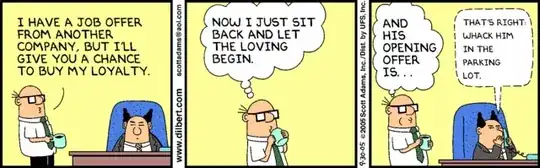
Thus it makes sense that you push the bidding along by mentioning to your current company that you have another offer and that you will make your decision based on their offer.

But I've heard it is a bad idea to mention offers, as it makes me seems "disloyal", and backfire, i.e. make a raise less likely. (I've never really understood "loyalty" to a company, but I still would rather play nice.)

If I do mention it, how should I do it in order not to seem ungrateful or hostile?

Well certainly it can be viewed as "disloyal". And it could "backfire" in the sense that one or both parties won't want to play the bidding game.

If you still decide you want to risk it and play the game, your best bet is to go to your current employer and indicate that you have a solid offer to go to your former company for a 25% increase.

You could indicate how grateful you are, that you really like your current company, and that you really like your current manager (if that's the truth).

You could point out how stellar your performance has been, and how valuable you are to the company.

You could also indicate that you understand you are being paid competitively, and that at one time, this kind of increase wouldn't have mattered too much, but now it does.

You then ask if they would be willing to match or beat your other offer.

That way, if they match or beat the other offer, you can still take two different paths:

  • you could choose to play a somewhat riskier game and go back to your previous employer and try to get them to beat the new offer
  • you could play it safer and choose to accept the new offer from your current company

And if they choose not to match your other offer, you thank your current company, and either

  • accept whatever they do offer (if anything), or
  • accept the 25% increase from your former company.
Joe Strazzere
  • 382,456
  • 185
  • 1,077
  • 1,492
5

I think most employers realize there is always somebody else that could pay you a higher salary. They probably feel they offer competitive salaries, so they can differentiate themselves on other perks, benefits, job satisfaction, corporate culture, etc. and won't get into a bidding war. If you tell them you're considering another job just for the money, there's little room to negotiate.

Justify the increased compensation on how you are helping the company and making them more profitable or whatever other reasons they're in business (Maybe you work for a non-profit?). That is always what is important.

Loyalty works both ways. The companies that are interested in their employees should expect their employees to do what is best for their career, personal life and family. Making more money is a part of that and sometimes the company just can't compete. Has your company ever changed a supplier for a cheaper price? Would they keep everyone on the payroll even though the company is going to go out of business and cost everyone their jobs? Don't let them take the "high road" and throw loyalty in your face when we all know it's just business.