202

When I learned driving in The Netherlands (in a car with a manual gearbox), I learned that on a down slope¹, I should switch to low gear and use the engine to brake, thus reducing the wear on the brakes. In Dutch, this is called op de motor remmen, which literally translates as braking on the engine.

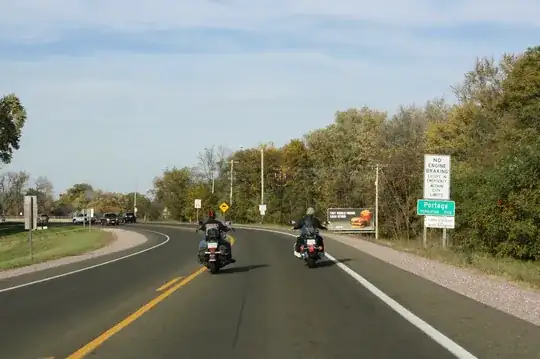
In the USA, I have seen signs prohibiting engine braking:

no engine braking
"No engine braking" sign outside Portage, Wisconsin. Source: Wikimedia Commons.

What exactly is prohibited here, and why?


¹In The Netherlands — strictly theoretical ;-)

gerrit
  • 56,864
  • 19
  • 169
  • 332
  • 1
    Comments are not for extended discussion; this conversation has been moved to chat. – Mark Mayo Jul 07 '17 at 01:41
  • 2
    there may be more great answers on https://mechanics.stackexchange.com/ – phuclv Jul 10 '17 at 01:43
  • https://www.youtube.com/watch?v=HkfjCJClWVA This might help. – coteyr Jul 10 '17 at 04:32
  • Annedoctal evidence: Living in a country without hydramatic gearbox cars there are signs "engine breaking required" in long and very inclined slopes. That's for safety reasons, if the breaks fails the engine breaking will reduce the acceleration. That's for passenger cars. Also the correct use of engine breaking is part of the drive license test. – jean Jul 10 '17 at 16:14
  • 9
    @jean: The word you want is "braking", not "breaking". "Braking" in automotive speak refers to slowing the vehicle down. "Breaking" something means damaging it, often by unexpectedly separating it into pieces. The two words are, unfortunately, pronounced the same. – Jamie Hanrahan Jul 10 '17 at 19:23
  • 3
    I am so annoyed by 'using the the engine to break to prevent wear to the brakes'. Do you also not use your lights to prevent them to wear? They are MADE to wear, they are made to be a user-serviceable part. The rings on your pistons are not. It's going to be a lot more expensive to replace those. Not to mention the fact that you don't have brake lights when you brake on the engine... – Anemoia Jul 11 '17 at 18:23
  • @CSharpFan On a downslope, braking may be more about preventing acceleration than about reducing speed. – gerrit Jul 11 '17 at 18:38
  • 2
    @gerrit ever been to the Netherlands? It's flatter than flat. Now I agree on your statement, but being from Belgium personally, I do think that it is thought the wrong way, it should indeed be used for ADDITIONAL control, not for braking when coming to a stop. – Anemoia Jul 11 '17 at 18:40
  • 1
    @gerrit Carefully read the question and take a wild guess as to whether or not I have been to The Netherlands ;-). The question states explicitly that I learned this for downslopes, not for regular "I need to slow down" braking. – gerrit Jul 11 '17 at 18:53
  • @gerrit and others, you know better -let's keep the comments to the linked chat room above please :) – Mark Mayo Jul 12 '17 at 03:24
  • "What is being prohibited here?" is a travel question, in the sense that it's always good to know how to stay out of trouble when travelling. But "Why?" (which is the title, and what shows up in HNQ) seems completely off-topic, and perhaps best suited for politics.stackexchange.com. – Peter Taylor Jul 12 '17 at 07:16

8 Answers8

275

Completely different thing! They are referring to the "Jake Brake" in heavy trucks, where the trucker opens a portal to the depths of Hades and you hear a very loud

BrapBrapBrapBrapBrapBrapBrap

sound, wrap the pillow over your ears, and call the Realtor in the morning.

This does not apply to regular old downshifting in a gasoline car, where you spin the engine to use your cooling system as a dynamic brake. If trucks would just do that, nobody would complain.

The Jake Brake (or more properly the Jacobs brake) makes engine braking more efficient. Normally a diesel gulps a full load of air (no throttle plates) and no fuel is injected when it is in engine braking. The engine consumes energy in the compression cycle but regains that energy in the expansion (normally power) cycle. The Jake Brake prevents that regain, by opening the exhaust valve at the start of the power cycle instead of the end. This instantly, and percussively, dumps a shot of 200-400 psi air directly out the exhaust stack.

Harper - Reinstate Monica
  • 35,577
  • 4
  • 65
  • 144
  • 1
    Comments are not for extended discussion; this conversation has been moved to chat. – Mark Mayo Jul 07 '17 at 01:41
  • 17
    This, exactly. A Jake brake turns that massive, diesel engine into a 2-stroke air compressor, drawing in through the intake and pumping out through the exhaust. This is why the pitch is twice as high as the engine, running normally. My dad was an OTR driver for decades. His later trucks had a 2-stage Jake, where half of the cylinders switch on the first stage, then all of them on the second stage. First stage wasn't as noisy. Second one ... ooh yeah. – Meower68 Jul 07 '17 at 13:44
  • 3
    I worked extra as a garbage man 20 years ago and drove a Volvo FL (maybe) that was a couple of years old. It was a "city" model with automatic gearbox and I'm pretty sure it also had an automatic exhaust brake system or maybe even a compression brake that was applied as soon you nudged the brake. It let out a rather nice muffled 6-cylinder growl while gently rolling to a halt. Saved quite a lot on the brakes. Is this not available on the US market still? – KarlP Jul 07 '17 at 23:36
  • 12
    Here is a video of a truck using them: https://www.youtube.com/watch?v=qocMoTOVn6Q – porges Jul 08 '17 at 08:09
  • 5
  • @DanNeely I stand corrected. I believed exhaust braking was what made that noise, but it appears it's a different thing to compression release braking. – Clonkex Jul 11 '17 at 22:54
  • 1
    As this is now protected I must comment to point out that in many places, on steep hills there are signs telling you you MUST use engine braking to avoid overheating your brakes. This is a real problem on long descents, riding the brakes causes them to overheat and stop working, whereas your engine can slow the vehicle for as long as you like. – John U Jul 12 '17 at 11:35
  • 3
    They mean you must use engine braking generally, of which the Jake Brake is only one kind. A truck with that brake can engine-brake without it perfectly well, by going a bit slower, downshifting more, spinning the engine faster, and using those spinning losses as the brake. So requiring engine brake and banning the Jake Brake are compatible. – Harper - Reinstate Monica Aug 19 '19 at 16:47
112

Even if the signs are often referring to engine braking in general, the intention is to prohibit usage of so called compression release engine brakes. Diesel engines in heavy vehicles are often equiped with such a braking system, which is more effective than just braking with an idle engine, but can be very loud. The purpose of prohibiting such braking systems is to avoid noise pollution in built-up areas.

Tor-Einar Jarnbjo
  • 56,324
  • 5
  • 151
  • 206
  • 35
    It might clarify further to point out that in the USA, manual transmissions in passenger cars are rare enough that there is a general assumption that only trucks have them. Even the few Americans who drive manual transmission passenger vehicles don't usually know how to engine brake or double-clutch or anything like that. – Todd Wilcox Jul 04 '17 at 19:29
  • 1
    One of the videos linked to that Wikipedia article makes a pretty good demonstration why noone wants this done near a town. I recall at night you could hear it from miles away. – Dan Mašek Jul 04 '17 at 19:33
  • 56
    @ToddWilcox: I drive a manual transmission and know full well that sign is only meant for big trucks so I ignore it. – Joshua Jul 04 '17 at 19:45
  • 2
    @joshua Yeah me too. – Todd Wilcox Jul 04 '17 at 21:36
  • 14
    @ToddWilcox Is there any point to double-clutching in a run-of-the-mill passenger car stick-shift? – hBy2Py Jul 05 '17 at 00:35
  • @hBy2Py If it's a Volkswagen TDI and it's below like 7 C then it helps a lot because the synchromeshes are very sluggish. And that's just on the upshift. It helps all the time in all cars in the downshift. – Todd Wilcox Jul 05 '17 at 02:51
  • 3
    @ToddWilcox most transmissions I've driven have been able to do most downshifts in a shorter time than I need to release the clutch pedal and reengage it. Most of the time double clutching is just time consuming and cumbersome. – phoog Jul 05 '17 at 03:09
  • 1
    @ToddWilcox Interesting... as w/phoog, I almost never have trouble shifting in either direction -- the only exception has been on downshifting into first gear, which has been problematic on both manuals I've owned thus far. I'll have to give the double-clutch a try next time. – hBy2Py Jul 05 '17 at 03:34
  • 2
    @hBy2Py - there is no reason, as most modern manual transmissions are synchronized. If your transmission isn't (and you would know it), then you would also know to double-clutch. Double-clutching is best avoided on sequential gearboxes; like those on a motorcycle. – Burhan Khalid Jul 05 '17 at 05:39
  • @hBy2Py Only if you drive "classic" cars. "Real" classics (and vintage cars) didn't have synchromesh on any gears. Even some "ordinary consumer-grade" cars didn't have synchromesh on first and reverse gears in the UK in the 1960s - I learned to drive with that type of gearbox. – alephzero Jul 05 '17 at 13:53
  • 5
    I got quite good at double-clutching at uni. The synchro on my scrapper studentmobile was knackered in 3rd, and double-clutching was the only way to make progress without knocking all the teeth off :) – Martin James Jul 05 '17 at 18:04
  • @BurhanKhalid, you can't double declutch on a sequential gearbox, there's no neutral between gears for the extra clutch movement – Separatrix Jul 06 '17 at 07:53
  • 1
    @hBy2Py Unless there is a bad synchronizer in the transmission double clutching is mostly optional. It does help big time with downshifts (faster and less wear on the synchronizers) so it is a fun and useful skill to have! –  Jul 06 '17 at 07:53
  • 2
    @hBy2Py Generally the answer is no, but on a lot of cars, at least, double-clutching to get into 1st gear while moving anything faster than idle roll speed (in 1st) is almost necessary since the speed differential is so large (and the torque multiplier so high) in that gear. It's very hard on the 1st gear synchro if it has to wind up the entire transmission to high speed (and clearly difficult even to get the shift lever into gear) when you're rolling at an odd speed too high for 1st but maybe a bit too low for 2nd. – J... Jul 06 '17 at 10:50
  • Gasoline engines use throttle plates, which force the engine to do work drawing a vacuum which won't be regained when air re-expands. If a diesel engine were to draw a vacuum while running, it wouldn't produce enough heat during compression to ignite the fuel. Turning an engine without a throttle will absorb some energy, but not a whole lot. – supercat Jul 06 '17 at 13:36
  • 1
    @ToddWilcox: The disappearance of manual transmission cars in the U.S. is relatively recent. Only ten years ago, about half of all new models were stick, according to an L.A. Times article. These "No Engine Braking" signs, have been around much longer. I've driven stick for 30 years, never knowing these signs applied only to trucks. – Adrian McCarthy Jul 06 '17 at 22:47
  • 4
    @AdrianMcCarthy The L.A. Times article said that nearly half of car models in the U.S. had a manual transmission option available a decade ago, not that nearly half of the cars sold actually had a manual transmission back then. Only 2.9% of cars sold in the U.S. had manual transmission in 2007. Even 30 years ago, only 29% were manual. – reirab Jul 08 '17 at 23:48
  • Also the odd three speed box would not have synchro on 1st. Even with synchro it will last a lot longer if is not stressed by down shifts. I was always taught to make the gearbox think I was changing up and make the friction work for me. – mckenzm Jul 10 '17 at 02:50
31

I was always told that this is because engine braking is noisy[1], and hence undesirable in built-up areas..

In New Zealand there are signs "Heavy Vehicles Please NO Engine Brakes NEXT 4 km", as these vehicles will be much louder than typical cars.

[1] https://www.nzta.govt.nz/assets/Highways-Information-Portal/Technical-disciplines/Noise-and-vibration/Research-and-information/Leaflets/Engine-Braking-noise-leaflet-v1.1.pdf

walter
  • 1,097
  • 7
  • 18
  • 17
    From which we can derive that A) New Zealanders are much more polite than Americans (and as an American I can say that this is not IMO a particularly difficult feat :-) and B) speak more precisely (again, no great feat). – Bob Jarvis - Слава Україні Jul 04 '17 at 22:50
  • 2
    @BobJarvis It probably takes more physical sign to fit the NZ text. I'd chalk the US wording to economic reasons, not rudeness. – Andy Jul 06 '17 at 00:58
  • 1
    @Andy, judging by the photo (sorry, I can't find a good photo from NZ that shows scale), the US sign is probably larger than the NZ ones. – walter Jul 06 '17 at 07:52
  • 1
    @walter Which could be because it has to be visible from further away, due to regulations. – Andy Jul 06 '17 at 15:10
  • 2
    @Andy, it could be a font size issue, or the "except in emergency within city limits" on the US sign, while I suppose the "please" on the NZ sign implicitly allows use for emergency situations (https://www.nzta.govt.nz/assets/resources/traffic-notes/docs/traffic-note-19-rev1.pdf indeed suggests the NZ signs are requests, more than orders) – walter Jul 06 '17 at 15:33
21

These signs are usually directed at large trucks, which make a lot of noise when engine braking. Example. So it's intended to reduce noise pollution. The rule may or may not apply to smaller vehicles.

Nate Eldredge
  • 37,484
  • 10
  • 135
  • 153
  • @vbocan I'd call that an audio reference :). Never heard this, is it an American thing maybe? Or perhaps in the Netherlands we just don't have hills. – Luc Jul 09 '17 at 00:02
  • 3
    In Europe, we use electric or hydraulic transmission brakes (aka retarders) instead, which make no noise. – Hobbes Jul 09 '17 at 17:07
20

Ok, so there's alot of misconception here... I am a Professional truck driver. I'll mention the misconceptions one at a time:

1) engine (Jake) brake laws are antiquated. New big rigs (roughly 2007 (maybe a smidgen earlier) to current date) are inherently so silent when engine braking, you really can't tell there is engine braking at all. These laws are for older trucks that have been grandfathered to not require mufflers. The laws were to combat noise pollution. Big trucks also down shift while using the engine brake itself to slow down, and in a lot of cases, rarely touch the brake pedal when done correctly. Even without the actual device itself, we still refer to it as engine braking because we literally use the engine to slow down when we don't need the engine brake [device]. The officer must prove that you were actually using a Jake brake.

2) Double clutching has nothing to do with engine brakes nor slowing the truck down. You can actually shift a big rig without EVER touching the clutch pedal. It is called "Floating Gears". You SHOULDN'T float gears in a car, but it isn't impossible. I do it often in a car. In NORMAL passenger cars, you don't double clutch because they have synchronizers that prevent the need of it. You can tear up your transmission by double clutching a car [that has synchronizers].

3) Cars don't have engine brakes. They don't need em. And VERY FEW diesel pickups have them, cause they too don't need them.

4) Someone mentioned dynamic braking using the cooling system and it [dynamic braking] has absolutely nothing to do with the cooling system. It's primarily used in trains to help the locomotives slow down... Dynamic braking is used in electric motors. Not internal combustion engines. It's the high to low RPM's with no throttle and the car's low weight after shifting that slows the car down (the motor wants to idle, so the low weight of the car causes a much more rapid deceleration than a big rig, where the mass of the big rig wants to keep the rig going, and over-rides the engine's wish to idle).

5) all of the terms in reference to the Jake brake are synonymous... Jake brake, engine brake, compression brake, etc are all the same thing.

EDIT: Please stop down-voting my answer and editing it because you don't THINK I wrote it correctly. I wrote the answer how I wanted it to be written. Thanks.
PiGuy88
  • 309
  • 1
  • 4
  • 3
    Hi and welcome to the site! I'm a little confused, as the edit history for your answer shows that you're the only one who has been editing it (or at least someone with access to your account), and it doesn't look like anyone has currently downvoted (I see it as 4 upvotes, 0 downvotes). Is that not the case? I'm confused how that could be. – Zach Lipton Jul 10 '17 at 22:02
  • 1
    Hmmm... Very odd... I got a notification saying someone edited my post... I must not be understanding some of the symbols and other stuff correctly. – PiGuy88 Jul 10 '17 at 22:31
  • 6
    @PiGuy88 - Somebody without enough reputation is only allowed to suggest edits rather than make them themselves; that's probably what happened to your answer, and once you rejected the suggestion it wouldn't show up in the edit history. – Jules Jul 11 '17 at 01:03
  • 2
    I understood @Harper's point about using the cooling system as a brake to mean 'the extra energy from engine braking is eventually dissipated by the cooling system' - which I think is technically correct (the transmission converts the wheel rotation back into extra engine rotations, causing extra compression/ignition cycles, which creates extra heat, etc). – Beejamin Jul 11 '17 at 01:42
  • @beejamin, the cooling system can't be part of an engine brake in any form. The way a dynamic brake works, is by using the traction motors on locomotives as a generator. This creates resistance in the traction motor because as more "load" is being put on the motor, the harder it has to work to create power in which the heat produced is then dissipated through brake grid resistors. The cooling system on a car cannot dissipate energy this way. As the engine slows, so does the water pump, in which so does the speed of the water. Continued below** – PiGuy88 Jul 11 '17 at 01:56
  • In order to get the cooling system to act as a dynamic brake, you would have to put a reverser system on the water system to force the water in the opposite direction to get the same effect as a dynamic brake. but even then, it wouldn't be a true dynamic braking system. – PiGuy88 Jul 11 '17 at 01:58
  • 2
    No, I understand that - I wasn't trying to say (in a passenger car) the cooling system is providing the braking force, it's dissipating the heat generated by the engine providing the braking force. It was just how I interpreted @Harper's answer first - it's a bit of a stretch, I admit! – Beejamin Jul 11 '17 at 03:47
  • 1
    "You can tear up your transmission by double clutching a car [that has synchronizers]." Do you mean if you don't master the technique? Otherwise, I don't see how can you tear up a clutching system with synchs by doing double clutch – vegatripy Jul 11 '17 at 08:45
3

To succinctly answer the actual question -- assuming the reason for the signs in the USA is the same for the identical signs here in AUS:

As answered by other people, it is to reduce noise (excessive noise).

To further flesh out my answer a bit...

As I understand it, at least here in Australia, there are at least three different types of braking:

'Wheel' Braking The quietest but possibly the least effective, especially on slopes, due to overheating and brake fade, etc.

Exhaust Braking [To me] has quite a pleasant 'Brrrr' sound. Not silent, but not all that noisy either.

Engine Braking (Jake Braking) The most effective, but also, by far, the noisiest.

Links: Brake Fade (Wikipedia) (See esp. 'Causes of Brake Fade' section) Jake Brake vs Exhaust Brake (Difference Between)

C.Bru
  • 31
  • 1
  • Two mini additions:

    There is also, of course, down change to help slow down a vehicle as a form of braking.

    I couldn't add the third link I wanted to add, so here it is: [link]https://en.wikipedia.org/wiki/Engine_braking

    – C.Bru Jul 08 '17 at 23:45
-2

To offer an alternative to the above answers, could this be because there is no visual cue to the following traffic when using engine braking? When applying the brakes directly the brake light is turned on, but not so when using engine braking. A guess, but maybe the sign is placed at traffic spots that are potentially dangerous?

And
  • 11
  • 2
    The "WITHIN CITY LIMITS" on the sign would suggest that it's not for a single, specific location. Also, note the "SPEED LIMIT 25" (given that this is about the USA, presumably miles per hour, so about 40 km/h) sign coming right up going into the turn. And of course, you should always maintain sufficient distance from the vehicle in front of you that you have time to stop. I don't know about US law, but I'm fairly certain that in all of Europe, not maintaining sufficient distance is itself a crime; and it certainly doesn't help you if there is an accident and you didn't maintain distance. – user Jul 11 '17 at 15:21
-4

Engine braking is undesirable. Engines are expensive to replace. Brake components, not so much.

  • 4
    It's not that simple. See e.g. this page and this other page at Mechanics@SE. When done properly, engine braking doesn't cause wear to the engine. You should never downshift to a gear that is incorrect for the current speed (and this varies significantly on each car model). Engine braking is not downshifting to an incorrectly low gear so that your car jumps and screams on high revs. – tricasse Jul 10 '17 at 14:21
  • 1
    Also note that when you're wheel braking, you are still using engine braking (as you should use your brakes with gears engaged). – tricasse Jul 10 '17 at 14:21
  • 5
    This also doesn't answer the question of why traffic laws would prohibit this practice. The government is not generally in the business of making sure you don't wear out your car too fast. – Michael Seifert Jul 10 '17 at 14:33