26

In Louisiana, USA it's widely understood (unofficially) that one can travel 5mph above the speed limit without receiving a speeding ticket.

Does this rule apply when traveling the rest of the States?

hippietrail
  • 79,417
  • 54
  • 271
  • 625
  • 2
    See: http://travel.stackexchange.com/a/36573/1893 – lambshaanxy Dec 22 '14 at 02:21
  • Most speedometers read slightly high, so someone going 5mph over on their speedometer may only be going 2 or 3 mph over in reality. If your GPS shows speed you can get an accurate comparison (or use the old-fashioned mile marker + watch method) – Spehro Pefhany Dec 22 '14 at 15:40
  • 1
    @SpehroPefhany I always assumed that the difference is because the GPS will smoothen and effectively shorten the vehicle's path if the road is not completely straight. – Szabolcs Dec 22 '14 at 17:16
  • 1
    @Szabolcs but that would make it read higher (less distance in the same time), and it usually reads lower than the car speedometer. – Spehro Pefhany Dec 22 '14 at 17:52
  • @Szabolcs What do you mean by that? Are you simply saying that the speed shown is a moving average of the speed computed from the data obtained by the GPS satellites, or something else (like that the computer keeps into account the shape of the path etc to compute the speed)? – Bakuriu Dec 22 '14 at 17:53
  • 46
    I remember being taught in drivers ed in Ohio that you'd generally be fine a 5 over but to remember that your speedo was +/- 3. You could be doing 8 over and was it really worth a $150 ticket? That was 15 years ago. As a mature adult I've decided no its not worth $150 for 8 over, so I make sure I'm doing at least 10 over and getting the most for my money! – Freiheit Dec 22 '14 at 18:09
  • 4
    @Bakuriu Suppose the blue line is the car's path. The GPS only measures the position from time to time, so it really sees the red line. The red line is shorter than the blue line, so GPS measures lower speed. Spehro: less distance in same time = lower speed. – Szabolcs Dec 22 '14 at 18:21
  • 2
    Of course the GPS could be smart and do a higher-order interpolation between the points, which would reduce this effect. The speedometer could also show a higher-than-true speed. I'm not claiming these are not so. I don't know. – Szabolcs Dec 22 '14 at 18:36
  • The important question is whether (all) the traffic cops share this 'wide understanding'. – Tim Lymington Dec 22 '14 at 19:12
  • 2
    @SpehroPefhany Less distance in the same time is a lower speed – Izkata Dec 22 '14 at 19:47
  • 2
    My experience with using GPS (as compared to a precision on car rally computer synchronized to measured miles) on various tour rallye events is that it tends to underestimate mileage traveled possibly due to not picking up height changes (lots of height changes causes it to significantly under read) as well as "shortcutting" corners (lots of corners in rapid succession also cause it to "lose" mileage). – Brian Knoblauch Dec 22 '14 at 21:10
  • 1
    Ah. You are trying to find the Secret Speed Limit. – Mark Adler Dec 23 '14 at 02:11
  • 1
    Police can pull you over any time they care to - there's always a reason, even if they have to make it up on the spot. A few years ago a co-worker coming home just past midnight after pulling two consecutive shifts got pulled over for doing 38 in a 45 zone. The cop said, "We have an unposted minimum speed on this road - 40 miles an hour - and you were under it". Now, to be fair, once the cop was assured that the guy hadn't been drinking and was just tired after a double shift he let him go but he could have issued a ticket, which may or may not have held up in court. – Bob Jarvis - Слава Україні Dec 23 '14 at 12:06
  • (Texas here, referring to various small cities in SA area) Some cities will not ticket unless you're 10 mph over, others will ticket if you're even 1 over (people often go 5 under in this city because it's well known for this hypersensitivity to speeding). Generally, though, 5 over is not going to get you any trouble. "Don't stick out" is good advice, since the locals will know how strict the police are. – Tim S. Dec 23 '14 at 20:51
  • 1
    With one exception, all of the answers address only speeding on an open highway but doing 75 in a 70 zone is usually much less significant than doing 25 in a 20 zone. For example, the official guidelines in the UK are that penalties are only issued for people who exceed the speed limit by 10% plus 2mph. So you can be ticketed for doing 24mph in a 20 zone but shouldn't normally be for doing 78 in a 70 zone. Surely large parts of the USA also have similar schemes? – David Richerby Dec 24 '14 at 12:50
  • Certain towns are known as speed traps. Here in California, two examples are Los Banos and Placerville. –  Dec 25 '14 at 22:58
  • 1
    Believe it or not the number one factor that impacts whether a cop will decide to pull you over is the color of your car. I used to drive a nice sporty red number. Got a ticket every year. Now I drive a dark blue crossover. Not a single ticket. I've learned my lesson. I'd rather go fast than look fast. – candied_orange Aug 29 '15 at 03:56
  • @BobJarvis So in other words that cop was lying. Obviously there isn't a legal range of 5 mph. – coburne Aug 31 '15 at 14:33

11 Answers11

44

Getting stopped for going only 5 MPH over is unlikely anywhere in the US. Of course it can still happen if something else is suspicious, e.g. very dark tinted windows (which may also be illegal), a very unusual looking vehicle, etc.

5 MPH over could be a discrepancy in measurement equipment, and officers do not want to go to court to explain when and how their radar gun was calibrated, etc. If they see you doing 20 over and write you a ticket for 10 or 15, it's less hassle for them. This cuts both ways: if your speedometer is slightly miscalibrated (entirely possible), you might be doing 10 over when you think you're doing 5 over.

But there is no such "rule" that lets you drive over the limit. If you believe the speed limit is too low, it is incumbent upon you as a member of a democracy to try to get the limit increased.

John Zwinck
  • 4,143
  • 18
  • 25
  • 17
    A speedometer is allowed to read slightly high, but it's illegal for it to read low. So the tolerances are set that most people are driving slightly slower than they think they are. – hobbs Dec 22 '14 at 19:12
  • 3
    Anecdotal, a friend got pulled over for 56 in a 55 years ago in Ohio. I suspect that he looked suspicious in some manner as that's otherwise unheard of... – Brian Knoblauch Dec 22 '14 at 21:04
  • 4
    Cops sometimes use traffic offenses as an excuse to pull over a car if they want to check it out (drivers license, warrants, maybe see if they smell drugs, that sort of thing). If you're pulled over for going a tiny bit over the limit, that's probably what's going on -- they wanted to pull you over anyway, the speeding is just an excuse. – cpast Dec 22 '14 at 22:17
  • 3
    I've been personally ticketed for 73 in a 70. It's not common, but it happens. :( – LessPop_MoreFizz Dec 23 '14 at 02:05
  • @LessPop_MoreFizz: ouch. Well, that's why I said it's "unlikely" after all. Clearly no one can expect completely uniform treatment across an entire state, much less the whole US. – John Zwinck Dec 23 '14 at 02:06
  • Indeed. Just wanted to make it clear that it does. This was, admittedly, one of the most remote places possible to get a ticket (Ely, NV), in a car with Michigan plates. The assumption was clearly that fighting the ticket would be a nightmare for me, and thus, that I'd never bother and just pay the fine. – LessPop_MoreFizz Dec 23 '14 at 02:08
  • 5
    @hobbs: That's interesting, I didn't know. However, a slightly under-reading speedometer is unlikely to correct its behavior in accordance with the law. One way it happens is when a car is outfitted with slightly larger tires than it originally had. For example, replacing 205/16 R55 tires with R60 ones (just one size taller) means you'll be going 65 when your speedometer says 60. – John Zwinck Dec 23 '14 at 02:16
  • 1
    In states that have checkboxes for offenses, there may not be checkbox for <3 mph over (they can't actually cite you!). Usually, <5 mph over is cited as a 0 point moving violation, meaning you can get an indefinite number of these tickets without license suspension. The fine is usually less than $20, making it an inefficient use of resources. It's typically not worth the officer's time in terms of paperwork for the offense, and excessive tickets of this nature might even get the chief of police in trouble (e.g. the courts will tell them to stop nitpicking because it's overwhelming). – phyrfox Dec 23 '14 at 17:57
  • Be wary of small towns, especially those that highways/interstates pass through. Traffic tickets can be a significant source of their revenue on the basis that someone with out-of-state plates (a la @LessPop_MoreFizz) won't be willing/able to fight it and will just pay the fine, so they'll gladly ticket you for just a few MPH over. – Doktor J Dec 23 '14 at 18:34
  • On the speedometer calibration issue, I know my 2007 Ford Ranger reads fast; I have a ScanGauge II that plugs into the OBD port, and the speedometer consistently reads about 10% faster than what I'm doing. Roadside speed readers and a dynamometer test have confirmed that the data coming from the ScanGauge/OBD is accurate. Consequently I use my ScanGauge to make sure I'm staying within the range my local cops won't ticket for ;) – Doktor J Dec 23 '14 at 18:36
  • @JohnZwinck: "a slightly under-reading speedometer is unlikely to correct its behavior in accordance with the law" - right, and slightly dysfunctional brakes are unlikely to fix themselves in accordance with the law, as well. Isn't the common understanding of "device X is legally required to do Y" that the owner or driver has to ensure that the device works as legally required, or otherwise they are liable for any consequences of the miscalibration? – O. R. Mapper Dec 23 '14 at 22:28
  • @O.R.Mapper: definitely. However, regular average people would never pay to have an under-reading speedometer fixed voluntarily. They may be obligated by law to have it fixed, but first they'd have to notice. As a practical matter, I stand behind my claim of "your speedometer may be under-reporting," unless of course you have checked it yourself or bought the car new and know for sure you haven't changed the tire size at all. – John Zwinck Dec 24 '14 at 00:11
  • Cops may be less lenient in school zones, as well. – ps2goat Dec 24 '14 at 00:15
  • hobbs: unfortunately it's allowed to read up to 10% high, which is not "slight" but really significant at high speeds!! And at least in europe, virtually all cars read ~8% higher. This is why a lot of people in highways are going a good 10 kph below the limit.. I measured the error in my car, and I if it says 141 kph I'm going 130 (the speed limit in highways) -- a 7 mph difference!! – Andreas Bonini Dec 24 '14 at 13:19
  • 2
    @BrianKnoblauch "Well you was doing fifty-five in a fifty-four. License and registration and step out of the car" – Matthew Flaschen Dec 24 '14 at 23:58
  • 1
    +1, although as a member of a "democracy" each of us commoners is powerless and utterly trampled upon. – Vandermonde Dec 25 '14 at 03:13
34

In New York you definitely MAY be pulled over for exceeding the speed limit at all. In other words, if a cop wants to pull you over (to fulfill a ticket quota etc) he can use the fact that you exceeded the speed limit by 1 mph.

Now, having driven across the United States, I would have two observations which may illuminate how cops decide whether or not to pull you over. 1) If you have an out-of-state license plate, you will definitely draw attention, so I would keep that in mind. I was once pulled over in Kansas for 'not maintaining my lane' (which was absolutely false) while in a vehicle with California plates. The trooper was simply curious about what I was doing etc, and I received no citation or ticket. 2) The important thing to keep in mind is 'flow of traffic'. If the speed limit is 55, but everyone is doing 65+, then it is safer (and less likely to attract police attention) to go the same speed as everyone else. Likewise, if you are near a busy exit on a highway and traffic slows to a crawl but you decide you want to maintain a speed much closer to the limit by weaving in and out of traffic, that will certainly grab attention.

So in my experience (and from advice my father, a judge, has given me) I would say the number one 'rule' when deciding how to drive on a roadway is to not stand out. If you are the only car on the road at 2 am, make sure you follow every law to the 'T'. If a cop is waiting in a speed trap at 2 am, s/he will most likely use any excuse to pull you over, if only to break up the tedium of their shift. If you wish to exceed the speed limit, 5 mph over generally won't attract any attention on a highway, but as Green Chili mentioned, it depends on where you are speeding.

Jon Doe
  • 457
  • 3
  • 3
  • 4
    I want to upvote this so bad, but I have such a hard time with "definitely may". :-) – corsiKa Dec 22 '14 at 19:11
  • 2
    Getting back into town at 2-3am on a couple occasions I've gotten police escorts from one end of town all the way to my home neighborhood. I was pretty much the only thing on the road... :-) – Brian Knoblauch Dec 22 '14 at 21:07
  • 1
    Also worth noting that if you have a distinctive car you're more likely to be pulled over. (I've been pulled over while following the flow of traffic, and the officer said "you're the only yellow car on the road." Apparently it's easier to make sure you got the right car) – Rick Dec 23 '14 at 13:48
  • 2
    'flow of traffic' is too accurate. I was pulled over in AZ for going 55 in a 55 zone, but everyone else was going 65+. It wasn't for speeding per-se, but I've forgotten the exact name of the violation. – BlueBuddy Dec 23 '14 at 17:55
  • 1
    In my part of NY (Upstate) it's not unlikely for you to be pulled over in a school zone for any excess whatsoever. – Chris Pfohl Dec 23 '14 at 21:00
14

On the highway, doubtful, but if you are in a residential area, or school zone, most likely yes.

Here in Fort Worth, Texas cops will pull you over for going 5 over the limit in a school zone in a heart beat. Anywhere else though, not really. I've been passed by casual cops when I was doing 8 or 9 over the limit. I've even passed cops doing the same speed. Just really depends on the area also. Certain smaller towns might get their money from traffic tickets, so they will pull you over for no reason, whereas bigger cities won't care.

TravelLikeBeaker
  • 2,621
  • 2
  • 25
  • 42
  • 3
    A big one is the playground zones that are also school zones. They write you two tickets :O – corsiKa Dec 22 '14 at 19:10
  • 3
    Agreed with the school zone mention. I had a friend that was pulled over for 17 mph in a 15 mph school zone. – reirab Dec 22 '14 at 21:43
  • 3
    Smaller towns is a good point, especially if an area has lots of out-of-town people on vacation (there are beach towns I've been to where cops are notorious for giving tickets whenever they can). – cpast Dec 22 '14 at 22:20
  • 1
    The school zone is a big one, and not only in Ft. Worth. Austin is the same, so is Oklahoma City. – Burhan Khalid Dec 23 '14 at 04:29
  • 2
    This is the only answer that considers that people drive on roads other than highways. – David Richerby Dec 24 '14 at 12:46
  • "I've even passed cops doing the same speed." You cannot overtake a vehicle if you are travelling at the same velocity with it... – user1997744 Dec 26 '14 at 16:58
9

Yes.

Utah just increased some of its speed limits from 65 to 70 mph. The highway patrol confirmed that back when the speed limit was 65, they gave a 5 mph buffer to drivers before ticketing.

But with the new 70 mph speed limit, they're changing the buffer to be 1-3 mph.

From a recent news covering:

But Col. Danny Fuhr, superintendent of the Highway Patrol, has vowed strict enforcement of the new 70 mph limit. He said people may not get tickets if they travel 1 to 3 mph over it, but will be targeted if they travel 75 in a 70-mph zone.

So going 75 will get you a ticket nowadays.

Cornstalks
  • 741
  • 1
  • 5
  • 9
  • Interesting, it's more lenient here in Louisiana. We just had a 100 mile stretch of interstate that I drive weekly raised to 75 mph. The state police released a notice that they would be ticketing for 6 mph over. – CuriousWebDeveloper Dec 22 '14 at 19:53
  • 1
    Yeah, this buffer definitely varies depending on location. We've had 70 mph Interstates for many years now in TN and I don't think I've ever heard of anyone getting pulled over for 75 in a 70 zone here. I've heard Tennessee Highway Patrol officers say that they won't usually bother pulling someone over for speed alone on the Interstate unless the vehicle is going at least 13 mph over. Of course, if you're doing something else dangerous or otherwise suspicious, they might use a speed less than 13 over as an excuse to pull you over. – reirab Dec 22 '14 at 21:48
  • 3
    And Georgia is a whole different matter. If you're not doing at least 20 over on the Interstate in downtown Atlanta, you're a traffic hazard. It's a 55 zone and traffic typically moves 80 (or 0, but not 55.) – reirab Dec 22 '14 at 21:53
  • @reirab it's fairly common for these 55 zones on "urban" interstates (which exist many places, not unique to Georgia) to be ignored by everyone, and this cannot be generalized to a 20 mph buffer in any other kind of 55 zone i.e. on a county road. – Random832 Dec 26 '14 at 14:10
  • @Random832 Yes, the fact that everyone ignores the urban 55 zones is pretty much universal (which raises the question of why we still have them.) Atlanta just seems to be an unusually extreme example with the general flow of traffic usually being around 80 mph. In most other urban U.S. 55 zones (that I've seen, at least,) the general flow of traffic on the Interstates seems to be more around 70-75 mph. – reirab Dec 26 '14 at 14:32
9

Technically, any speed over the speed limit can be considered illegal and ticketable. I've personally witnessed California Highway Patrol pull over one car at 67 mph in a 65 mph zone. (Cop car was in lane two of four on the freeway, at 65 mph. A somewhat dense pack of cars were therefore all dutifully travelling at exactly the same pace. One car tried to slowly sneak by at 67 mph in lane 1. Sirens ensued.)

I've also had a cousin receive a ticket in Milpitas, California in a 35 mph zone, while going less than 40 mph.

Yes, a 5 mph tolerance is widely understood to apply, but the fact is that an asshole cop can enforce the letter of the law, and nowhere in the law will you find a 5 mph tolerance mentioned.

200_success
  • 2,917
  • 2
  • 23
  • 29
  • 5
    Honestly, a judge would probably toss such a ticket. However, even more unethical officers can target out-of-state/out-of-town vehicles on the assumption that they'd pay the ticket instead of making the trip to go to court. – reirab Dec 22 '14 at 21:56
  • 4
    @reirab I would guess that traffic court judges tend to side with officers. There is the option of fighting your ticket by mail, but that still sucks. – 200_success Dec 22 '14 at 21:58
  • It depends on the location and situation, I'm sure. However, I think they'd run into Constitutional problems if they were caught applying the limit unequally. E.g. If you're ticketed for +3 mph in a zone where it's unusual to ticket for < +13 mph, it would be hard to argue against tossing it and the officer likely wouldn't even show up. – reirab Dec 22 '14 at 22:02
  • 2
    "A****** cop" as opposed to what other kind? Still, +1! – Vandermonde Dec 25 '14 at 03:07
7

While unlikely, yes. I will be covering special cases other users haven't covered yet where you may.

Typically, if you are pulled over for 1-5 over, the officer has alternative motives that may not be all that ethical.

  • The main one being, if an officer is profiling you. While this is illegal, it is hard to prove. When I was driving around a friend who had a suspended license in his car I would get pulled over that so the kind officer could check the driver. If they are suspicious for any reason, they can stop you.

  • The other time I have seen +1 mph tickets is in small highway towns in need of money. This is completely unethical in my mind, but it happens.

With that said, while there is no legal rule allowing you to go up to 5 over, it is (at least where I am from) generally understood when safe to do so. Again, generally safe, if a cop wants to pull you over he can.

FreakyDan
  • 71
  • 1
  • I've seen it as an alternative for a "reckless driving" citation. A ticket for doing 36 in a 35 zone (a question of fact) is a lot harder to challenge than one for driving in an unsafe manner (a question of opinion). – Mark Dec 22 '14 at 23:00
5

Since there have been no actual citations about towns setting up speed traps to scam motorists using speeding tickets, I will provide some examples:

Hampton, Florida:

They are especially ridiculous at their job, since they specifically extended the limits of the town to encompass a small section of the highway specifically to fleece motorists:
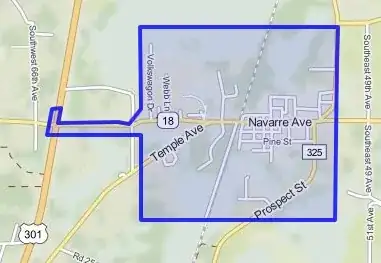
enter image description here

You can lay claim to a 1,260-foot stretch of busy highway a mile outside of town and set up one of the nation's most notorious speed traps. You can use the ticket money to build up a mighty police force -- an officer for every 25 people in town -- and, residents say, let drugs run rampant while your cops sit out by the highway on lawn chairs, pointing radar guns at everybody who passes by.

Waldo, Florida

The city that once covered half of its $1million budget with speeding ticket fines and other 'police revenue' is disbanding its department.

The Waldo City Council voted 4-1 on Tuesday to dissolve the police force after both the police chief and his replacement were suspended over allegations that included ticket quotas.

March Ho
  • 913
  • 1
  • 12
  • 20
2

I once got pulled over by sheriff for doing 65 on 60 in Oklahoma country highway. However I was only given a warning. Warning don't affect your insurance but stay on your record. I was driving on a old highway and cop was driving on opposite way. He turned around on highway and came chasing me to warn me.

I would always do plus 5 on highways until then thinking no one will ever ticket me and braking to slwoing down on first spotting cop helped me, however because he was coming from the other direction I did not see him.

Police alerts on waze app are pretty useful if the cop is not moving.

Sagar Rao
  • 108
  • 4
2

There are certain geographic zones and times where enforcement is particularly stringent.

  1. For example, during the late 1990s in western North Carolina through the Appalachian mountains, the local law enforcement had the option of citing reckless driving for cars going 5 mph or more over the speed limit.

  2. Also during that time, when New Jersey increased the interstate speed limit from 55 mph to 60 (or 65?) they ticketed any speed over the limit to clarify their expectation about the new limit.

  3. Finally, there are scenarios where it will become plainly obvious when a speed limit is even approached. No officers are required to check the speed, only a tow truck to fetch the vehicle. Certain sections of Highway 1 in California, the Pacific Coast Highway (PCH), have a speed limit that is actually a limit like the ones in math class. Rather than a quasi-arbitrary guideline based on fuel economy and mortality rates with respect to curve and banking ratios, some limits are actual boundaries with specific consequences when approached. Some sections of the PCH are serpentine, highly banked, and without guard rails hundreds of feet above large rocks and the ocean. I distinctly recall a section where it was challenging to do more than 15 mph, but the speed limit was 55 mph. I suspect that most drivers attempting to go 55 mph around the curve would end up sliding right off the road.

eeasterly
  • 121
  • 2
1

From my experience in the US, all the above answers are correct but one thing that isn't mentioned is the specific road also makes a difference.

For example on Texas SH 195 that runs between Killeen and Austin, there are multiple radar traps and speeds are enforced strictly. This is because this road is notorious for having drunk speeding college kids (and GIs) that are coming back from Austin.

I have been pulled over going 2 (according to the digital speedometer in my car) over the limit by a state trooper. I was not cited, but both the state trooper and a MP came out to check the car and my documents.

The weather also makes a difference. If you are speeding slightly and its raining, foggy etc you will also be pulled over for speeding within 5 mph of the limit. I had this happen to me while trying to catch a plane at DFW (my flight from Killeen was canceled due to the weather). The officer pulled me over, took his time checking my documents (it was a rental car), then proceeded to write me a ticket as slowly as possible.

Burhan Khalid
  • 39,678
  • 4
  • 82
  • 157
1

My driver's safety course in Culver City, California included a session with a CHP officer who went out of his way to state that they do not pull drivers over for speeding if they are going with the flow of traffic, but will pull over people "jackrabbiting" across highway lanes regardless of speed limit for reckless driving.