33

Since I'm traveling with essential medicines and medical equipment it is key for me that my carry-on luggage is allowed to be carried into the aircraft cabin, so that it's available to me at all times, and not lost due to accidents or theft.

Last times I flew my carry-on-luggage was gate-checked, meaning that it received a "Delivery at aircraft" tag and was stowed together with the checked-in bags underneath the aircraft at the time of boarding. Only at one time have I received a corresponding receipt. When complaining, the gate-check personnel told me to talk to the staff on the tarmac, who often don't understand English. The aircraft crew is inside the craft.
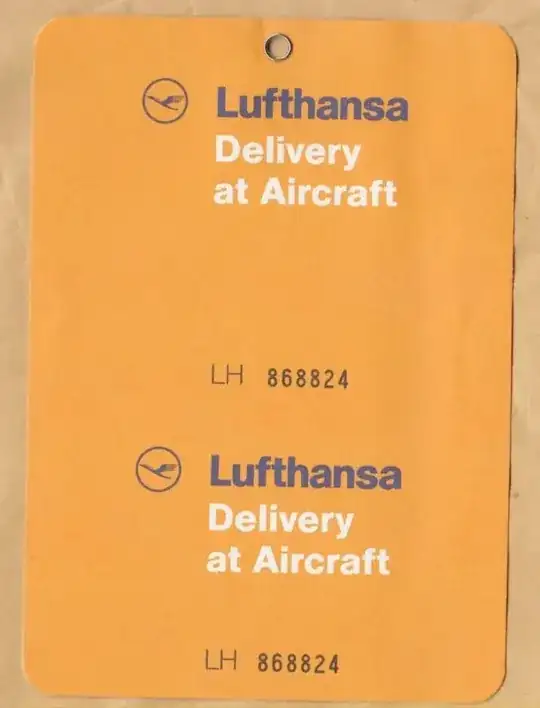
This means that I cannot access my medical equipment in case of an in-flight emergency. And, if the "delivery at aircraft" bag is misplaced or stolen (which has been reported to happen to others), I have no proof I had the bag in the first place, and I have none of my medicines while in a foreign country.

What can I do to ensure that I am allowed to carry my carry-on luggage into the cabin?

Gruber
  • 433
  • 4
  • 7
  • 9
    Were you given a reason why your carry on had to be stowed in the hold? Did you mention your need to keep it with you to the airline check-in / customer service team before you went to the gate? – Traveller Nov 14 '21 at 12:55
  • 4
    @Traveller: It seems to me that at some airports, all larger carry-on bags are routinely tagged with "Delivery at aircraft". I didn't speak to customer service because I was unaware this could happen. – Gruber Nov 14 '21 at 13:04
  • 30
    Well that tag in your photo is perforated (you can just barely see it). You are supposed to break it at the perforation, leaving half that stays on the bag, and the other half is your "chit" to claim it. And they match. If you leave both halves on the bag, then you have no proof of ownership. – Harper - Reinstate Monica Nov 15 '21 at 01:37
  • I am honestly not sure if commercial passenger flights is the right thing for you if you need to travel with essential and irreplaceable equipment. And with essential, I mean life threatening to be without and not just that the lack of equipment will be inconvenient. Even if you have the equipment with you in the cabin, you may just as well with a small probability get into a situation where the aircraft has to be evacuated and you have to leave your hand luggage on the aircraft without knowing when you will be able to get access to it again. – Tor-Einar Jarnbjo Nov 15 '21 at 11:06
  • 4
    Make sure any medication and medical equipment are on top and easily viewable. If they insist on trying to gate-check the bag, open it and show them that it's medical needs and explain that it's necessary in case of medical emergency. Your English is more than good enough to convey this, and most if not all gate staff at any airport in the world will understand "medical emergency" well enough to get the point. They'll understand that they'll have an ugly lawsuit on their hands if they insist on checking a bag full of medical equipment necessary for a medical emergency. – FreeMan Nov 15 '21 at 20:04
  • How large is this medical equipment? I'm guessing it's too big to fit in your pockets, or you wouldn't have packed it as luggage in the first place... – MJ713 Nov 15 '21 at 21:33
  • @MJ713: Yes, it's too big to fit in my pockets. I now realize that I can mitigate some of the worst effects by packing some of my medical stuff in a smaller bag inside my carry-on bag (like Matryoshka dolls). Although it may pose a problem with some airlines that have a one carry-on bag rule. – Gruber Nov 16 '21 at 08:13
  • 1
    They don't care, @Gruber how many "bags" you pack, just how many items they see you carrying on. Bags within bags within a bag is perfectly acceptable, it's the "a bag" that they care about. As a matter of fact, in the US, at least, they expect you to pack all your toiletries inside a 1qt (~1l) plastic bag (if in your carry-on), then take that out at the security checkpoint in the airport. – FreeMan Nov 16 '21 at 13:59
  • 2
    Many airlines have reduced the size of their carry on bags in the last few years, insisting that normal carry on be small enough to be stowed under the seat in front of you. If your carry on fits these new smaller dimensions, there is less chance of your bag being stowed in the hold. If travelling with someone else, it helps if they are willing to have their bag checked in. They are trying to prevent problems with too many carry-ons to fit in the overhead lockers. But as most comments have said, explain it, show your equipment if necessary, be friendly but assertive, and you should be fine. – Greg Woods Nov 17 '21 at 08:20
  • 1
    Reaching the boarding gate (= queueing up) well in advance and carrying a smaller cabin bag will improve chances of this not happening. Been there, seen that and had to collect the bag from a transit airport baggage claim. Not a pleasant experience. – alwayslearning Nov 17 '21 at 10:31
  • What is the size of your essential medical equipment? Have you arrived close to boarding closing time? – Quora Feans Nov 17 '21 at 18:45
  • @QuoraFeans: I am usually at the gate well in advance of its opening, unless there are delays when transiting. The equipment occupies most of my carry-on bag. – Gruber Nov 17 '21 at 19:26
  • Why are you not in advance asking each and every airline you use, to facilitate your needs?

    Loss and theft are clearly real, wholly logical worries… and don't they double or triple or worse for "casual" passengers - as you describe yourself, in airline terms

    What kind of fourth-world primitive field were you flying from that the gate people told you to talk to staff on the tarmac?

    Never you mind no understanding English… in any civilised country, you'd be in gaol almost before you thought about talking to staff on the tarmac and in some places, shot for trying to!

    – Robbie Goodwin Nov 17 '21 at 23:01

9 Answers9

67

The main reason for gate checking with delivery at aircraft is simple: It's a small plane and standard carry on sizes don't fit in the overhead. There isn't a whole lot the crew can do about it: if it doesn't fit, it doesn't fit.

What can I do to ensure that I am allowed to carry my carry-on luggage into the cabin?

  1. Pack the medical items in the smallest container possible
  2. Make sure this container meets the carry on size requirements for this specific aircraft
  3. Avoid aircrafts that don't accommodate your medical items.
  4. Buy extra baggage allowance for your other stuff, if you have to.
  5. Consider buying early boarding privileges to make sure there is overhead space available.
  6. Have a doctor's note that clearly states that you need access to these items at all times.
Hilmar
  • 99,992
  • 6
  • 170
  • 340
  • Comments are not for extended discussion; this conversation has been moved to chat. – JonathanReez Nov 15 '21 at 18:52
  • 5
    I carry medicine, including sharps with me on holiday, have never had an issue - can I suggest one extra item to your list - get an official looking bag to put the medicine in. I like a blue chiller bag, as it looks pretty close to what people are expecting to see people carry medicine around in. That and a note from my doctor on top of the bag and I've never had an issue, and have in fact been routinely allowed to carry my medical bag as extra hand luggage, without paying for it. It makes in nice and easy for security to check too, which they do (needles tend to cause some concern) – lupe Nov 17 '21 at 15:09
47

There are multiple possible reasons for cabin luggage to be gate-checked.

  • The most common is that the aircraft is full and they know they won’t be able to store all hand luggage in the overhead lockers or under the seat in front of each passenger. Some airlines make it quite explicit, giving two size limits, a smaller one (matching the under-seat space) which are guaranteed to be able to taken on board with you, and a larger one which will be allowed space permitting.

    This case happens mostly on the larger single-aisle planes, such as the A320 family and the B737 family.

  • The other common reason is that you are flying one of the smaller aircraft types, where overhead space is even more limited than usual, and none of the larger roll-aboard type bags will ever fit. In that case they will gate-check bags which won’t fit under a seat in all cases (usually happens at the foot of the aircraft, on the apron).

    This applies on smaller planes usually called “regional” airliners, such as BAe 146, Avro RJ70/85/100 and similar types. Probably the same for Embraer 190/195 and Bombardier CRJ900 used by Lufthansa regional partners, but I'm not familiar with them. Don't remember the situation on the ATR 42/72, haven't flown one of those in a while.

There’s also the case of some airlines which will allow the larger type only if you pay extra.

In all cases, if your bag fits under the seat in front of you, it will be allowed in the cabin. So the easy answer is simply to make sure that your bag is the right (smaller) size.

If you need a larger carry-on for non-essentials (clothes etc.), check airline policies:

  • Some will allow two bags (or one bag and one "personal item", which has the smaller size limit), so you can have the smaller one with essentials which you’ll be able to have in the cabin, and a larger one which may or may not be allowed, depending on circumstances (aircraft type, how full the flight is…).

  • Others only allow a single bag. In that case, make sure inside your larger bag you have all your essentials in a smaller bag you can easily take out if your bag is gate-checked.

In situations where it’s a matter of available space, boarding early will often help. Some airlines will proactively gate-check any large bags from start of boarding if they know they won’t be able to fit everything, but most will let you board until the overhead lockers are full. Boarding early will often require paying extra to be in one of the earlier boarding groups, but even within each group, being the first to board can help a lot.

Note that hand luggage allowances (number and size) vary not only from one airline to another, but also sometimes depending on the fare or options purchased.

If your medical equipment is too large to fit in the smaller size, then you should contact the airline at time of booking.

jcaron
  • 77,853
  • 4
  • 155
  • 295
  • 1
    If a bag gets gate-checked because the overheads are full, it will typically be returned at the baggage claim carousel, not at the jet bridge. – Hilmar Nov 14 '21 at 14:32
  • 22
    @Hilmar that does depend on the airport or even the actual flight. Each can happen. – Willeke Nov 14 '21 at 14:34
  • 4
    @Hilmar I've never heard of that happening. – Azor Ahai -him- Nov 14 '21 at 23:14
  • 1
    @AzorAhai-him- it is common with SWISS and LH to deliver gate checked luggage at the carousel. But it depends. With small aircraft delivery at the plane is more common. I kept having my carry on bag gate checked and now just check it. This way I do not have to worry about making sure it is fit to take through security. – Krist van Besien Nov 15 '21 at 07:24
  • 7
    "Under the seat". This. It's what I do every single time. Works with every plane type and every airline luggage policy ever. – Marianne013 Nov 15 '21 at 08:18
  • @Hilmar: Could my carry-on luggage risk ending up on the baggage claim carousel even when I'm in a transit airport, transiting between flights? – Gruber Nov 15 '21 at 08:57
  • 3
    Where gate-checked bags are returned varies a lot. Usually for items which are taken from you at the foot of the aircraft (mostly in the second case listed above, smaller aircraft), you'll get them back at the foot of the aircraft as well. However there are exceptions, especially when you end up at an airport where even those small aircraft get a jetway, in which case they will end up at the bagage carousel (happened to me in Dublin for instance). No idea what happens if you have a connection, though, I don't think they have any means of tagging bags differently. – jcaron Nov 15 '21 at 09:23
  • @Gruber At some airports all luggage will go to the baggage claim carousel, even for transiting passengers (particularly likely if you are transiting from an international flight to a domestic flight, where your final airport might not have customs facilities). Even at airports where the bag should be transferred for you human error might mean that doesn't happen, or delays in processing might mean your bag misses the connecting flight. – thelem Nov 15 '21 at 11:32
  • @KristvanBesien Good to know. I've only flown LH once a long time ago. – Azor Ahai -him- Nov 15 '21 at 14:52
  • 4
    If you're counting on the under-the-seat thing, then make sure you're seated in a row that has that--specifically not the first row after any bulkhead (you need seats in front to have space under them) and not the emergency rows (some flights won't let you keep stuff there, since it needs to be clear in an emergency). – user3067860 Nov 15 '21 at 16:56
  • 1
    @user3067860 I nearly added that point in the answer, but the fact that you don't actually have the space does not normally prevent you from keeping the bag on board even if you don't have the space to put it in. If it fits under a seat, it will nearly certainly fit in overhead lockers (except maybe the underwing lockers in the BAe 146/Avro RJ aircraft which are reaaaaaaaally tiny). – jcaron Nov 15 '21 at 17:33
  • 1
    @jcaron But if you don't get a good boarding position or you're running late (connecting flight, whatever) then the overhead may be full of other people's stuff. https://travel.stackexchange.com/questions/71173/on-a-plane-who-has-the-right-to-the-overhead-bin So "In all cases, if your bag fits under the seat in front of you, it will be allowed in the cabin." is not correct (especially since exit row policy is inconsistent in the US, sometimes people really don't realize that they aren't going to have under seat storage). – user3067860 Nov 15 '21 at 18:55
  • From my experience, it is good idea to always contact the airline at the time of booking. – Mołot Nov 15 '21 at 23:42
  • If you are running late, I can guarantee you that all the good seats (exit row etc) will be taken. In practice what they do with "under the seat bags" of people in exit rows is to take "under the seat bags" of people who are not sitting in exit rows and making them putting them under their seats. Happened to me more than once. – Marianne013 Nov 16 '21 at 15:46
  • I've always (dozens of flights) had gate-checked bags returned to the jet-bridge—until last week. After waiting some time for it, one of the flight crew said it was a federal regulation that it go to baggage claim. Hmmm. – WGroleau Nov 17 '21 at 03:03
  • @Marianne013 Flights in my area usually have assigned seating. (They also make you pay more for the exit row or other in-demand seats.) But overhead bin is still first come first serve, and I've never even seen them hint that they might pull someone else's bags out to make space for yours. Especially on small planes where there isn't going to be enough space for everyone's carry on in the first place. – user3067860 Nov 17 '21 at 22:02
30

When they try to take your in flight case away from you, do NOT let it go and say 'medical' and 'emergency' and words like that. If you know the staff understand a language you speak, use it in whole sentences, explaining your need to have the stuff with you.

I might pack a thin foldable bag inside and when they insist on taking the case, open it up and stuff all you need into that bag, and go on till all, really all, you might need is in that small bag. And as you can not pack that bag as carefully, it may well end up bigger than the carry-on case.
That is your inflight needs and medication for the time after you land, for about 2 weeks or so.

It is your right to have needed medical items with you on the flight.

It helps if you are early at the gate and tell the gate staff when you first can that you need most (or all) in your carry-on case in case of medical emergencies.

And if you do see the check-in staff, ask if they have a tag for 'needed medical equipment' to add to the bag, or an 'allowed on board' tag, as sometimes they have something like that.

Willeke
  • 60,496
  • 19
  • 155
  • 311
  • 4
    In addition to saying "emergency", you could have cards made that are in the language of the countries you are travelling to so that you are not relying on them understanding your single word answers. You could hand these cards to the staff helping them to fully understand your problem. I did something similar with having cards that talk about food allergies that I handed to restaurant staff and this worked quite well. – Kevin H Nov 17 '21 at 00:48
16

My wife was disabled and had lung cancer, but we traveled none the less. As you can imagine, medical emergency kit and mobility kit got relatively big. What worked for us was:

  1. Split the kit into a smaller bags so if big bag was too big, we could just take out smaller ones and fit them into places, like emergency painkillers and anti inflammatory here, stuff to fix her prosthesis there.

  2. Set some things as "lower priority emergency", like crutches, and ask cabin personnel to keep it with them if we couldn't fit it near us,

  3. Always contact an airline first to make sure they know about it. Airlines were always OK with us when we let them know beforehand.

  4. Go to the gate staff as soon as they appear on the gate to remind them that airline told us it was OK with them.

Mołot
  • 440
  • 6
  • 11
  • 1
    Splitting bags works if you're travelling with another person, as you can each bring on at least 1 if not 2 bags. (The other person would forgo bringing their own personal bags.) But for a person travelling alone, this might not be an option. – Darrel Hoffman Nov 17 '21 at 16:18
  • 1
    @DarrelHoffman our emergency kit bag was, most of the time, not even counted towards the limit of bags. Not as big cabin luggage, not as small personal bag, totally outside of such limits. See point 3. :) – Mołot Nov 17 '21 at 16:30
  • 3
    @Mołot this has been my experience of travelling with clearly marked medical things as well - Airlines are pretty helpful, once you've cleared their hurdle for believing you. I think the trick is to get through the not trusting you as fast as possible - make things look official, make things easy for them to understand, and, generally, they'll be really helpful. What they don't like is things like "I can't check this bag because my medicine is somewhere inside it" – lupe Nov 17 '21 at 17:28
8

I have similar needs. What I always do is pack my medication in a smaller bag (a tote bag, a purse, even a plastic bag will do), which I can quickly take out of my carry on luggage. It's small enough that it will fit under the seat in front of me (while keeping enough space for my feet), or even in some free corner in overhead bins. I could even keep it on my lap if necessary (not the most comfortable, but better than not having it with me).

I also often pay to upgrade my seat -- this often comes with the perk of earlier boarding which means the overhead bins aren't full yet. (Of course, this doesn't help if all carry on luggage is checked in, even before the bins fill up).

Abigail
  • 249
  • 1
  • 3
8

Whenever I travel I use a 2-bag system.

This corresponds to the rule at most airlines, which allows a small and medium size carry-on.

  • The small bag is well within the standard for the smallest carry-on they allow (sometimes called a "hand bag" or "personal item"). They generally expect you to put this under your seat. This gets anything that CANNOT be lost: iPad, medicines, papers, USB sticks, etc.
  • The medium bag complies with the full carry-on bag size. They generally expect this will go in the overhead bins. It contains the more routine stuff that I am willing to lose. Just common traveler stuff - clothing, toiletries, etc.

So you seem to be asking "how do I force them to let me keep my medium bag in the cabin?" And my answer is, "You can't. That's why you have a small bag".

They are vanishingly unlikely to force you to gate-check such a small bag. If you have a seat that is not first-row or exit-row, you have a guaranteed place for it "under your seat" (really: under the seat ahead of you). If you foolishly booked a front-row or exit-row seat (don't), it's a small bag, and people load overhead bins sloppily, so there'll be no trouble finding a space for it. (they know that).


Any valuable medical equipment I need the night I land, that goes in the small bag. Period.

As far as medicines, always carry your medicines through security and Customs in their original pharmacy-issued bottles, because that helps a lot if you are inspected. But, right after inspection, here's a trick you can do to let you carry the bulky bottles in the medium bag. How many days would it take to get to a clinic/hospital and get new prescriptions if you lost your meds? X days? OK... while waiting, move X days' supply of pills into Ziploc bags that you brought (1 per pill type). Put the Ziploc's in the small bag.


Now, a word on that tag in your photo.

If you look closely at the tag, you can barely see it is perforated just above the second "Lufthansa". It's meant to be broken at that perforation. The outer one is the "stub" or "chit" you hold to claim it. If you leave both halves on the bag, then you have no proof of ownership. You should have taken that, or they should have given it to you.

Harper - Reinstate Monica
  • 35,577
  • 4
  • 65
  • 144
  • 1
    "Most" airlines is heavily location dependent - try to travel by low cost companies in Europe, nowadays most of them only allow one carry-on, which is typically of the "are you kidding me??" small size – Denis Nardin Nov 17 '21 at 08:47
5

The other answers provide excellent advice, so I will add only one additional, albeit important, piece of information.

In some jurisdictions, airlines are required by regulation to allow passengers to have access to medically essential items. Some jurisdictions even require security to hand-inspect such items instead of putting them through X-ray with everyone's shoes.

Many years ago, I had to travel with a piece of essential medical equipment. I found the applicable laws/regulations and printed them out. I laminated them and brought them with me.

I contacted the airline well in advance and notified them I would be traveling with this equipment. I performed this advanced notification both in writing and verbally.

I also met with a medical specialist to learn how to fully disassemble the equipment so it could be thoroughly inspected by security. Medical equipment is not exempt from inspection, but does often require special handling (and if security is good, it will actually involve a more thorough inspection).

When I arrived at the airport, I was prepared to politely, but firmly assert my legal rights if needed. I also a backup plan if I was unable to board with my equipment. To my pleasant surprise, security and the airline were both familiar with the laws, and I didn't have to do anything special.

I showed security my equipment and asked for a clean table so I could perform the equipment disassembly. I brought clean gloves for myself and security. Security and I spent about 10 minutes performing disassembly and completing their thorough inspection. They then affixed a special tag (with a tracking number) that indicated the device was authorized medical equipment.

The plane was full, but the flight crew saw the special tag. They verified the tag's validity and then ensured the equipment would be close by at all times. They also informed me to press the "attendant" button if I needed any help.

In summary, it took a significant amount of effort and preparation, but everything went well. Of course, I was quite fortunate to encounter well trained, courteous, and respectful staff members.

3

My better-3/4 has essential medication, so for a situation like this will have the bare-minimum in a tiny pill container in a pocket or attached to a key ring.

This could be difficult if your minimum is physically large, in which case I'd suggest a "belt-bag" or "fanny pack" trying to keep it as small as possible. Ideally it would be "clothing" rather than something classed as a separate bag.

You might choose to have a specific comfortable "travelling shirt" which has a large pocket for your must-have essential next-dose, but nothing more.

If the medication has a best-before or use-by date, remember to regularly rotate it.

Criggie
  • 601
  • 8
  • 11
3

I live in the US and travel to the Philippines quite often. I try to travel light taking my clothing in a small suitcase which is carry on size. I put everything I need, like my medications, in a backpack. I also put things I do not wish stolen in the backpack also. Just be prepared to remove laptops and cameras from the backpack when going through security. Sometimes I need to gate check the small suitcase, but have never been asked to gate check the back pack.

TKW
  • 31
  • 1