Prevalence of garbage in the oceans
A recent study in Nature Scientific Reports finds that the "Great Pacific Garbage Patch" is massive, and keeps growing. From the article, "Evidence that the Great Pacific Garbage Patch is rapidly accumulating plastic" (emphasis added):
Our model, calibrated with data from multi-vessel and aircraft surveys, predicted at least 79 (45–129) thousand tonnes of ocean plastic are floating inside an area of 1.6 million km2; a figure four to sixteen times higher than previously reported. We explain this difference through the use of more robust methods to quantify larger debris... Finally, our results suggest that ocean plastic pollution within the [Great Pacific Garbage Patch] is increasing exponentially and at a faster rate than in surrounding waters.
[The study doesn't address them, but there's also an Indian Ocean Garbage Patch and a North Atlantic Garbage Patch. Depending on how you define "garbage patch," there are also corresponding patches in the South Pacific and South Atlantic.]
The Ocean Cleanup
The study has been generating a fair bit of press, in part due to the fact that the work was supported by, and much of the data was provided by, The Ocean Cleanup. From their website:
The Ocean Cleanup is a non-profit organization, developing advanced technologies to rid the world’s oceans of plastic. By utilizing the ocean currents to our advantage, our passive drifting systems are estimated to clean up half the Great Pacific Garbage Patch in 5 years’ time.
The "passive drifting systems" are comprised of U-shaped floating booms up to two kilometers in length with weighted screens below them. In theory, as ocean currents carry the heavy booms, lighter pieces of garbage are trapped against the screen and drift toward the center of the U, where they accumulate and can easily be collected by ships.
I say "in theory" because tests have so far been under-whelming. A 100-meter prototype less than 20km offshore in the North Sea lasted less than two months. Other critics (KCET.org, The Guardian, Sciencemag) have voiced concerns that the boom system will not effectively capture garbage, harm sea life, and ultimately break apart, causing an increase in marine litter.
The 5 Gyres Institute
One of the critics of the Ocean Cleanup is the 5 Gyres Institute. 5 Gyres focuses on original research, education, and citizen involvement. Their research on microbeads lead to environmental regulations in the U.S. From the FAQ:
During a 2012 5 Gyres expedition, we found plastic microbeads—tiny round microplastics used in personal care products—in the Great Lakes in an open-water setting. That research started a movement, which culminated in President Obama signing the Microbead Free Waters Act in 2015. The law will go into effect in 2018.
5Gyres research and advocacy has driven coalitions of communities and organizations that focus on reducing the amount of pollution flowing into the oceans, understanding the impact of pollution, and educating citizens and decision-makers on those impacts and how behaviors and regulations can be changed to reduce it.
How to contribute
While the large-scale technological approach of the Ocean Cleanup is really attractive, ultimately it seems that financially supporting 5 Gyres would be more beneficial, as their methods have a broader foundation of research, and a history of effectively driving regulatory changes.
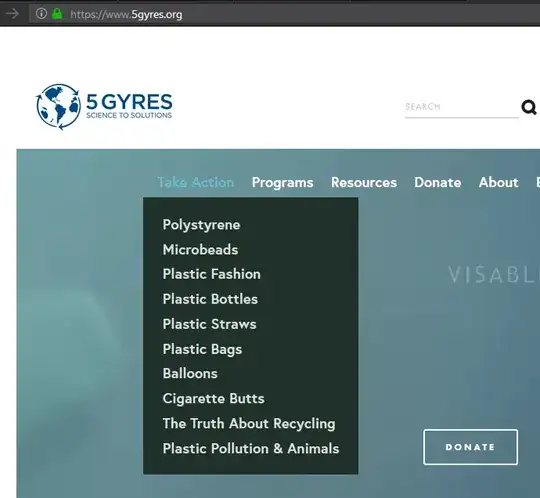
And if you're not able to contribute financially, 5 Gyres provides a list of 10 different ways you can take action immediately to reduce the pollution that goes into the oceans:
Note: I have no ties to either organization.