12

I keep a lot of my stuff organized in normal disposable plastic bags I have left after shopping at various markets. And it works fine, except after a couple years I often find a bag in shreds, simply falling apart. Biodegradable - reaching their end of life, making a mess in my stuff and not serving their purposes. I'd be better off disposing of them or not getting them in the first place. Sometimes they are labeled, but sometimes there is nothing to signify whether they can last years or will fall apart.

Is there a reliable way to distinguish these from non-degradable plastic bags before they start falling apart?

THelper
  • 14,470
  • 7
  • 60
  • 147
SF.
  • 677
  • 1
  • 5
  • 15

2 Answers2

12

Most non-biodegradable plastic bags are made of Polyethylene (PE) and often have a marking or logo like this:

High-Density Polyethylene resin identification logoLow-Density Polyethylene resin identification logo

There may also be a marking that say 'PE', 'PE-HD', 'LDPE' or 'PE-LD'

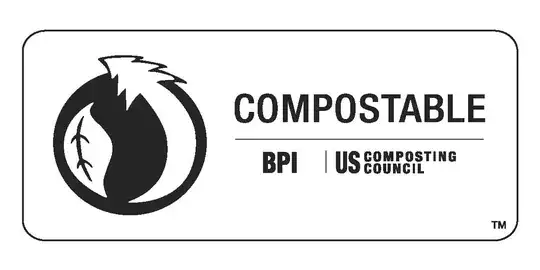
Bags that are biodegradable usually have a logo on it containing the words 'biodegradable' and/or 'compostable', e.g. something like this:

EU compostable plastic logo Australia's home compostable logo USA BPI compostable plastic logo Note that there is 1 controversial type of plastic called 'Oxo-biodegradable'. Opponents say that oxo-biodegradable plastic just falls apart into microplastics that continue to pollute the environment. The manufacturer however refutes this and says it falls apart into biodegradable components.

Oxo-biodegradable plastic logo

If there is no logo or description on the plastic it's most likely PE, but you can't know for sure unless you get the bag tested in a lab.

BTW all types of plastic will degrade very slowly under normal circumstances. I don't think biodegradable plastics degrade much faster than non-biodegradable plastics. Most biodegradable plastic bags are made from Polythene film or corn-based materials like Polyactic Acid (PLA). For biodegradable plastics to degrade (in a reasonable timeframe) they need to be heated to very high temperatures for several days.

THelper
  • 14,470
  • 7
  • 60
  • 147
  • 1
    Does this answer apply world-wide, or are those logos particular for certain parts of the world? – gerrit Feb 06 '14 at 09:42
  • 4
    AFAIK there is no logo that is used world-wide, but in Europe I most often see the first 2 biodegradable logos I've posted. I think the used logo often depends on the (imagination of) bag's manufacturer. – THelper Feb 06 '14 at 09:49
  • 2
    I remember several years ago going to a fast food chain and getting my take out in a biodegradable bag. The employees were very enthusiastic about explaining that the bags would break down on their own within a year. There was never an answer when I pointed out that I had several of the biodegradable bags in a drawer in my desk for over a year, and none looked any worse for the wear. The chain has since started using paper... It's always good to be realistic about the biodegradability of these bags! – michelle Feb 06 '14 at 15:21
  • Compostable plastics degrade quickly, for example, within 35 days. – BryanH Apr 09 '14 at 19:02
  • 1
    @BryanH Only if you put them on a compost heap that has generated a lot of heat or if it is 'home compostable' plastics (see also this post and answer). In all other cases compostable plastics degrade very slowly. – THelper Apr 10 '14 at 07:06
  • I can definitely tell some biodegradable bags degrade quite efficiently. ...after having to repack some sweaters packed in them, moth-sprayed and left sitting in the wardrobe for a couple years, as the bags would come apart at smallest tug. – SF. Oct 20 '15 at 10:19
  • @SF 'a couple of years' doesn't sound very efficient. BTW, degradation like this can happen even to non-biodegrable plastic bags (but mostly if they have been exposed to sunlight). – THelper Oct 20 '15 at 11:31
  • @THelper: The "reusable" pastic bags didn't require replacing though. It's often the matter of conditions - plastic reacts poorly to freezing, becoming brittle, so bags exposed to frost will degrade much faster - but that was indoors, so the degradation definitely progressed faster than in non-biodegradable ones. – SF. Oct 20 '15 at 12:18
-1

Amazon sold me several years' worth of allegedly compostable bags (so also biodegradeable, one would hope), my intent being to transfer compost from kitchen to garden pile every week or so. We dig the stuff in each time, of course. So I was not pleased to find an intact bag, still with the orange rinds from a couple of months ago, when our tree finished that fruiting session, still intact. I pulled it out and weighted it down with a rock nearby, in full sun and rain. It's perhaps too soon to tell whether it failed THAT test. But this discovery led me back to the stock I have on hand, which has a paper label that describes them as "starch based garbage bags," adding "PSM starch based." (Wouldn't that suggest they'd dissolve in, say, hot water?)

Anyway, I'm thinking that paper label is more than just a bad translation from Mandarin.

Oh, and as for logos: the paper label (only) has a plain-Jane "recycling" logo (triangle of three arrows). The bags themselves...nada.