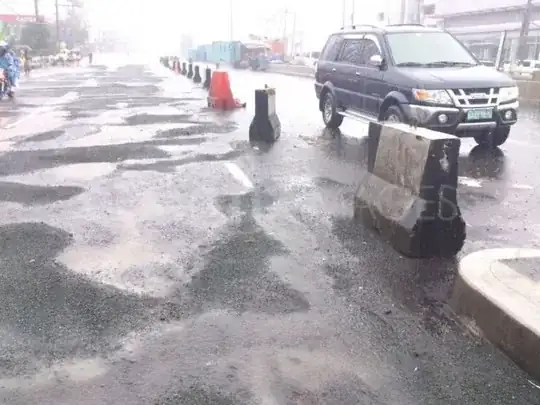
As a vehicle travels over a wet road, the tyres push the water into the surface. Depending on the type of surface, it can either push water through the top layer (eg with a chip seal), or wash away away some of the fine material which binds the surface together (eg with an unsealed road). In both cases, this can cause damage.
One of the key ways of preventing damage is to provide a slope (cross-fall) for the water to drain away. I think a gravel (ie unsealed) road requires a higher cross-fall than a sealed road, which makes some sense (the material tends to shift around more, so could more easily puddle).
Another issue is that the water needs to be able to drain away from the side of the road without eroding it or softening it.
Limiting speed of traffic over a wet or damaged road should reduce further damage. A neat psychological trick for doing this is to provide lanes that feel narrow for traffic to drive through. The narrower it feels, the slower people driver. You can make it feel narrower by using taller and more conspicuous sides (eg like the movable barriers in the photo rather than just road cones).
It's hard to understand what damage has been done from a photo taken in such wet weather. Also, it would be useful to know what it was previously like.
My understanding is that the most cost effective way to repair or rebuild can depend heavily on how you measure the cost (if you're the government, then increased productivity essentially offsets cost, for example), what labour and machinery costs, and what materials are available (and how far away they are, and their transportation costs).
At a high level, optimising the benefits of the road for affordable cost is called Road Asset Management, which also fall under the category of Infrastructure Asset Management. An example of what's involved, for sealed roads, is available here from the New Zealand Transport Agency (which looks after NZ's State Highways).
If I understand it correctly, the first step in managing an asset is to start recording measurements about the asset so that you understand how it's changing, how much is being spent to maintain it, and in what way.