23

The term "Israel" seems to have a clear definition. It's a member state of the UN general assembly, and while its exact borders are controversial, I think in broad outlines people know the area it refers to. I'm less clear on what land qualifies as "Palestine", however. I'm aware that historically, all of the territory of that region was part of the British mandate of Palestine, but that would include modern-day Israel and Jordan as well.

So what is the meaning of the term Palestine as used today? Does it mean all the land in the former mandate of Palestine other than what's part of Israel and Jordan? Does it refer to the West Bank, the Gaza Strip, and the Golan Heights put together? Or does it just refer to the territory controlled by the "Palestiniean State", the new name for the Palestinean National Authority? A geographical dileneation of what the land outside of Israel is called would be good to clarify this.

Bregalad
  • 7,371
  • 4
  • 31
  • 67
Keshav Srinivasan
  • 9,043
  • 2
  • 35
  • 70
  • Slightly different from what I was expecting, but definitely easier to answer. – Publius Feb 04 '14 at 23:46
  • If anybody is curious, an interesting follow up to this question that I could answer would be "What is the current definition of Israel?" that answer would, to a certain extent, involve elements from this answer, but would also discuss such areas as East Jerusalem and the Golan Heights. – Publius Feb 09 '14 at 02:43
  • 1
    @Avi That sounds like an interesting answer as well. I just asked the question here: http://politics.stackexchange.com/q/2736/1953 – Keshav Srinivasan Feb 10 '14 at 23:11

3 Answers3

16

It really depends on whom you ask. Depending on the context, people talking about "Palestine" could be referring to a few different things, though some definitions are more controversial than others. Barring historical definitions, like British Mandatory Palestine, Palestine could mean any of the following, in reverse order of controversy:


The least controversial definition of Palestine would refer to Areas A and B of the West Bank, as well as the Gaza Strip.

Areas of the West Bank

(Note that this image does not show the Gaza Strip.)

The Oslo Accords divided the West Bank and the Gaza Strip into three sections, areas A, B, and C. Area C is under full Israeli control, Area B is under Israeli military control but Palestinian civil control, and area A (comprising major Palestinian population centers) is under Palestinian military and civil control. An interim government, the Palestinian National Authority, was set up to manage Areas A and B until a final settlement could be reached. However, after Israel ceded all areas of the Gaza strip to the Palestinians in 2005, Hamas violently overthrew the Palestinian Authority government in Gaza and established control over Gaza.

This means that different governments control the Gaza Strip and Palestinian areas of the West Bank, but as these areas are under Palestinian control, and as Israel granted the Palestinians these areas, there is little controversy as to whether or not these areas should be under Palestinian control. All parties in the conflict recognize Palestinian control of those areas (though the PNA and Israel object to Hamas' control of Gaza), so we can, without much ambiguity, refer to Areas A and B of the West Bank, as well as the Gaza Strip, as Palestine.


However, Palestine is often used to refer to all of the West Bank and Gaza within the 1949 Armistice Lines.

1949 Armistice Lines

This would include area C (though the term more traditionally used for these areas, albeit still controversially, is "Palestinian Territories"). Here you will find much more controversy, as many classify area C of the West Bank as part of Israel, or at least not as Palestinian.

The 1949 Armistice Lines (often called the 1967 borders, or the Green Line) were created after Israel's war for Independence in agreements with the surrounding Arab states. Egypt had captured the Gaza Strip, and Jordan had captured the West Bank. The armistice lines defined temporary borders (the agreements stressed that the borders were temporary and only existed out of military necessity), and acted as borders until 1967. In 1967, Egypt blockaded the Straits of Tiran, which Israel had said it would consider an act of war. In response, Israel destroyed the Egyptian air force. Egypt, Syria, and Jordan attacked Israel, but Israel repelled the attack and defeated the Arab forces in six days.

Israel captured the West Bank, Gaza, and the Golan Heights (which are not usually considered part of Palestine). These areas are usually defined in terms of the armistice lines. Areas captured from Jordan comprise the West Bank and areas captured from Egypt comprise the Gaza Strip.

Israel's possession and sovereignty over territories beyond the Green Line are not internationally recognized, even in the case of Area C, which parties agreed in the Oslo Accords would be under Israeli control until a final settlement had been negotiated. Many countries and governments, including the Palestinian Authority, believe that all of the West Bank should belong to the Palestinians. As such, the West Bank and Gaza are often referred to as Palestine, or Palestinian Territories (or Occupied Palestine, or the Occupied Palestinian territories, etc).

However, such definitions are controversial. Israel is currently in control of Area C of the West Bank, as per the Oslo Accords negotiated between Israel and Palestine, and feels that Area C belongs to it until it should choose to withdraw from Area C as the result of a final settlement. If you want to refer to the West Bank and Gaza, it is probably best to just refer to them as the West Bank and Gaza, as these terms do not imply any rightful owner.


Finally, Palestine is occasionally used to refer to all land West of the Jordan River.
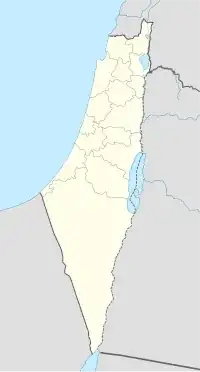
Israel, the West Bank, and Gaza

This would include Israel, the West Bank, and Gaza. Such usage is frowned upon, as it fails to recognize Israel's sovereignty within the parameters of the 1949 Armistice Lines. With the exception of most Muslim countries, North Korea, and Cuba, most countries recognize Israel's right to exist. This means that use of the term "Palestine" to refer to land including Israel is often used by extremists, like Nasrallah (leader of Hezbollah), who believe that Israel should not exist.


So, the meaning of "Palestine" isn't well-defined, but can be used to refer to areas under the control of Hamas or the PNA (without much ambiguity or controversy), can be used to refer to the West Bank and Gaza (which is not uncommon, though is definitely controversial), and can be used to refer to all land west of the Jordan River (which is an extreme and, to the degree that the existence and legitimacy of countries is an objective matter, incorrect usage of the term).

Glorfindel
  • 3,212
  • 3
  • 24
  • 42
Publius
  • 10,484
  • 42
  • 61
  • 4
    A small note I'm going to put in the comments because it's a bit of a nitpick and a tangent. I say that countries recognize Israel's sovereignty within the '49 armistice lines, and this is officially and technically true, but many (perhaps including me) would argue that these countries treat Israel in a way that doesn't respects its sovereignty, e.g. by failing to recognize Israel's choice of capital in Jerusalem, within the armistice lines. But officially, Israel's sovereignty over areas in the 1949 armistice lines isn't really in dispute. – Publius Feb 05 '14 at 00:42
  • So no one on the Palestinian side is claiming the Golan Heights? Then why does Netanyahu always say "We must keep the Golan Heights, otherwise we won't have security."? Also, Israeli foreign minister Danny Avalon seems to suggest, at around the 2:50 mark of this youtube video, that even the land east of the Jordan river was included as part of the land intended in the Balfour declaration: http://youtu.be/XGYxLWUKwWo?t=2m50s And I've heard Republican politicians like Rick Santorum claim that Israel deserves Jordan because it's part of "Greater Israel". So is it also considered "Palestine"? – Keshav Srinivasan Feb 05 '14 at 01:10
  • 2
    Also, you say "Egypt had captured the Gaza Strip, and Jordan had captured the West Bank." Who did they capture them from? Were Gaza and the West Bank originally supposed to be part of a new Arab state in the former mandate of Palestine, and then taken away by Egypt and Jordan, or were they taken by Egypt and Jordan away from Israel? Also, I think that when people talk about the 1967 borders now, they don't mean that Egypt and Jordan should have the territory they had in 1949, but rather that a Palestinian state should have that land, right? – Keshav Srinivasan Feb 05 '14 at 01:20
  • 3
    @KeshavSrinivasan Nobody on the Palestinian side is claiming the Golan Heights. The Golan Heights are claimed by Syria (and a small part by Lebanon). Also, there are some on the far right who think that the Balfour Declaration was promised to Israel, but that's because it's part of mandatory Palestine, not what would be referred to as modern Palestine. – Publius Feb 05 '14 at 01:22
  • 2
    @KeshavSrinivasan As to the second comment, they weren't captured from an existing country. Britain withdrew from the areas and left their division up the the UN. The UN drew up a plan that Israel accepted and the Arabs rejected. So there was a war, Israel captured some territories, the Arabs captured the others (though their capture was not recognized except by a few countries). – Publius Feb 05 '14 at 01:26
  • 2
    To clarify on the issue of the Balfour declaration. The Balfour declaration in 1917 called for "the establishment in Palestine of a national home for the Jewish people". At the time, not even mandatory Palestine existed, but some feel that that refers to a Jewish homeland in all of mandatory Palestine. However, a definition of Palestine in 1917 could not have been the same as a modern definition, because none of the modern borders or pseudo-borders existed. – Publius Feb 05 '14 at 01:29
  • Crap, another thing I forgot to address. When people refer to the "1967 borders", they aren't making a judgment of ownership. It's not a biased term, it's just not a very good one. They're calling them that because they acted as borders until 1967. However, there are many people that believe that a Palestinian state should be established with the '49 armistice lines as their borders. – Publius Feb 05 '14 at 01:48
  • 1
    Wen they say "we should return to the 1967 borders", what do they mean? They mean that a Palestinian state should get all the land that Egypt and Jordan conquered in the 1948 war, not that Egypt and Jordan should keep the land, right? – Keshav Srinivasan Feb 05 '14 at 01:53
  • @KeshavSrinivasan Oh, yeah, they probably mean the former. I mean, literally speaking, the statement only argues for Israel using the 1949 armistice lines as its borders. It does not explicitly detail to whom the land should belong outside those borders, but I've never heard that statement in a context other than one which would suggest that a Palestinian state should be established in those areas. Before 1967, the borders did exist as borders between Israel and Egypt and Jordan, but Egypt's and Jordan's annexation of the West Bank and Gaza were not internationally recognized. – Publius Feb 05 '14 at 01:55
  • So no one in Egypt and Jordan are making any claims on the Gaza and the West Bank anymore? – Keshav Srinivasan Feb 05 '14 at 02:00
  • By the way, on a side note you said "there are some on the far right who think that the Balfour Declaration was promised to Israel, but that's because it's part of mandatory Palestine". Are you equating the Balfour declaration land with the mandate of Palestine land? The youtube video I linked to suggests that the Balfour declaration was intended to apply to both sides of the Jordan river, while the mandate only applied to the west side of the Jordan river. Is that accurate? – Keshav Srinivasan Feb 05 '14 at 02:01
  • @KeshavSrinivasan To the first question, Egypt and Jordan renounced their respective claims. To the second question, it wasn't clear whether the Balfour declaration meant all or some land in Mandatory Palestine, but it was clearly later interpreted to refer to just some. And, in my opinion, given the number of Arabs in Palestine, even back then, creating a Jewish state in all of Mandatory Palestine wouldn't have made much sense. – Publius Feb 05 '14 at 02:06
  • 1
    Good answer, but it omits a very important view of "depends who you ask". Most official PA documents, schoolbooks etc... exclude modern Israel from "Palestine", e.g. go with definition #3. That it's an important detail for anyone to know who tries to understand the situation and the "peace" process. – user4012 Feb 05 '14 at 02:12
  • On a separate note, you should use horizontal rulers to divide the answer "----" – user4012 Feb 05 '14 at 02:13
  • @Avi What the youtube seems to be suggesting is an even more extreme view, that the Balfour declaration was meant to encompass even more land than the mandate of Palestine. – Keshav Srinivasan Feb 05 '14 at 02:20
  • @KeshavSrinivasan Jordan was in the Mandate of Palestine. So if people say Israel should comprise the West Bank, Gaza, Israel, and Jordan, that's mandatory Palestine. – Publius Feb 05 '14 at 02:26
  • @DVK Good idea on the HRs. As for the textbooks, they've sort of removed it from the textbooks but kept teaching it anyways, and I didn't really want to get into that whole mess. But yeah, I'd need to look for the specific poll data, but Palestinians tend to think of Israel as just occupying Palestine, which they may temporarily allow it to as part of a negotiated settlement. – Publius Feb 05 '14 at 02:27
  • Cuba definitely recognizes Israel (before 1973 they also had diplomatic relations) http://havanajournal.com/travel/entry/despite_lack_of_diplomatic_ties_israeli_tourists_flocking_to_cuba/ and Castro also supported Israel's right to exist http://www.google.com/hostednews/afp/article/ALeqM5gTESm0GlM9yQizdmGzrIOoEGdq0w, I do not know about North Korea, this also may be the case. Thus, -1 for the US propaganda. – Anixx Feb 12 '14 at 07:16
  • 1
    @Anixx check the wikipedia article. I fail to see how this was "US propaganda". I was just listing the countries the wikipedia article specified did not recognize Israel. – Publius Feb 13 '14 at 08:34
  • @Avi the Wikipedia article refers to the US government sources. What we know now is that Cuba recognized Israel in 1949, accepts Israeli papers now and their leadership expressed support for Israel's right to exist. All besides this is propaganda. Seemingly the US source is biased and mixes deplomatic relations with recognition. – Anixx Feb 13 '14 at 14:03
  • @Anixx Fidel was out of power by the time he made that statement. the sources I have indicate that cuba doesn't recognize Israel. Personally, I don't think it's a particularly relevant fact, but I cited it and it so far hasn't been refuted, so I'm having trouble your grievances, especially when it comes to the accusation of "propaganda". – Publius Feb 13 '14 at 23:10
  • @Avi what are your sources except those from the US government? Given that the USSR was always recognizing Israel, I hardly doubt Cuba could step much further. I already linked that Cuba recognizes Israeli papers and passports: http://havanajournal.com/travel/entry/despite_lack_of_diplomatic_ties_israeli_tourists_flocking_to_cuba/ Also: https://www.timaticweb.com/cgi-bin/tim_website_client.cgi?SpecData=1&VISA=&page=visa&NA=IL&AR=00&PASSTYPES=PASS&DE=CU&user=DL&subuser=DELTAB2C – Anixx Feb 14 '14 at 00:19
  • @Anixx I don't understand why my US / wikipedia source is invalid or how it constitutes propaganda, nor do I understand how allowing Israeli tourists is identical to recognizing Israeli sovereignty. – Publius Feb 14 '14 at 06:42
  • @Avi there is no such thing as "wikipedia source". The only source you cite is from the US department of state. Recognition of a state constitutes exactly of recognizing its citizenship and treaties which Cuba does. – Anixx Feb 14 '14 at 14:43
  • @Anixx in this context the relevant factor is whether Cuba recognizes Israel's sovereignty. – Publius Feb 15 '14 at 00:16
  • "The least controversial definition of Palestine would refer to Areas A and B of the West Bank, as well as the Gaza Strip." that is ONLY non-controversial from an insanely colonizer viewpoint. For anyone not fully indoctrinated by Israel the proposition that "Palestine" has been successfully reduced to these mere specks of land is highly offensive – Hobbamok Mar 07 '24 at 11:49
13

The term "Palestine" can mean a number of things, and Avi's answer describes them well.

However, there's another common usage, which refers to all of what is now Israel, the West Bank, and sometimes Jordan. After the Bar Kokhba revolt, the Romans renamed the area from Judea to Palestine, which was the name used (with minor variations), even by Zionists, until 1948, when the State of Israel was declared. Hence, the term Palestine may refer to the entire region, irrespective of the modern political boundaries.

Incidentally, this is also the usage followed by Wikipedia.

Ypnypn
  • 231
  • 1
  • 4
  • This is a decent answer from a historical perspective. If you want, it might not be a bad idea to expand on it, especially in the history SE. The usage of the term Palestine has a rather long history, whereas my answer really only applies post-2005. – Publius Feb 05 '14 at 03:52
3

Well, it depends on who you ask. If you ask official PA (same people that Israel is supposed to sign the Peace deal with), their official non-English-speaking-word-speaking position - including in their textbooks, official media, communications with other Islamic countries, etc... is that "Palestine" means everything from Jordan to the sea... including what Western world calls "Israel".

Sources: [1], [2]. The second link lists hundreds of examples, including both maps, images, official references to cities in Israel as being "occupied Palestine" (Jaffa, Tel Aviv, Be'er Sheva, Acre, Safed, Lod, etc...

Some examples (by no means exclusive) of the maps:


Source: Official Palestinian Authority TV, Oct. 26, 2013 PA Minister of Agriculture Walid Assaf presents a gift to a delegation of journalists from Oman. The gift is a map carved in wood including all of Israel and the PA areas. The Palestinian flag is on the map and the word “Palestine” is carved in wood as well as another shape bearing the PA’s logo.

enter image description here


“Al-Tarbiyah al-Wataniyyah” (“National Education”)- 3rd grade, page 49, academic year 2002-2003:

enter image description here


user4012
  • 92,336
  • 19
  • 225
  • 386
  • +1, good collection of examples. Given the deliverate inconsistency of Palestinian officials, schools, and textbooks on the matter I did not want to dissect in my answer who in particular felt that Palestine also comprise all of Israel, but this answer is reasonably well sourced. – Publius Feb 09 '14 at 02:35
  • the only thing I might add is that in more modern Palestinian textbooks they've removed such definitions of Palestine, though of course the schools continue to teach it regardless. – Publius Feb 09 '14 at 02:36