44

Let's say that we have 2 tennis balls in space, one being in motion (say, pushed by an astronaut), and the other one still.

If we could take a snapshot of both tennis balls, would there be any evidence that could suggest that one is moving and the other one is still? Is there anything happening, at the atomic level or bigger, being responsible for the motion?

If there isn't, and both balls are absolutely identical, then how come one is still and the other one moving? Where does the difference of motion come from?

Qmechanic
  • 201,751
GaelF
  • 591
  • 60
    Current theories don’t support an absolute notion of motion at all. They support notions of relative motion and of absolute changes in motion. – dmckee --- ex-moderator kitten Oct 13 '19 at 21:15
  • To achieve motion, a force must be applied and this is where you might be able to distinguish between the two tennis ball, if by snapshot you include thermal imaging, (detection of a slight temperature at the point of contact) –  Oct 13 '19 at 22:01
  • 11
    @StudyStudy Your comment seems to suggest that if I see an object moving relative to me that a force must be acting on it. This is not the case. – BioPhysicist Oct 14 '19 at 05:53
  • 8
    @StudyStudy No, force is a required for acceleration. If either ball is changing velocity, then detecting forces might work, but then you'll probably have better ways to determine that than looking at the heat created by material deformation as a consequence of an outside force. (for one, it might be gravity doing the acceleration - good luck detecting a local heat change from that) – Gloweye Oct 14 '19 at 08:02
  • 1
    Just as a side comment, at an atomic level, there is a lot of motion. Electrons speeds are pretty high and quarks(things protons are made of) move with speeds very close to light. So, everything is not so stationary as you might think. – Rishabh Jain Oct 14 '19 at 09:49
  • Are you asking about human perception and real world limitations, or is any difference (even if imperceptible but theoretically measurable) valid for an answer? – Flater Oct 14 '19 at 10:07
  • "If [...] both balls are absolutely identical, then how come one is still and the other one moving? Where does the difference of motion come from?" - The difference comes from you. If you move along one of the ball, it is still to you. If you move along the other, that one is still. – Stéphane Rollandin Oct 14 '19 at 10:35
  • 10
    Your question contains an inherent contradiction. You're asking about motion, but with the constraint that there be no passage of time (i.e., all you have is a snapshot). The problem is that you can't define motion without the concept of time. If you could relax the constraint (say, with multiple snapshots taken at different times), then you could start to define motion. But as it is, you can't, and therefore the question can't really be answered. – Richter65 Oct 14 '19 at 17:55
  • 1
    You took us to space for your thought experiment but you seem to ignore the fact that you are never "still" in space ... You are moving at already incredible speed orbiting which ever body you are around. You don't have a ball still and another one moving. They are both in motion, just not the same motion. – Hoki Oct 15 '19 at 12:42
  • 3
    @Richter65 I think it is valid to ask what is the evidence collected from a still snapshot that an object is moving, because in terms of latent properties, the masses have nonzero momentum with respect to each other. The inability to observe such a property from a projection down to a single point in time does not contradict the existence of such a property, which becomes evident as time progresses. What the OP is asking is whether there is any remnant or indication of the momentum effect that could be observed from a single instantaneous observation. – pygosceles Oct 15 '19 at 18:54
  • 1
    By incident I stumbled across the quantum analogy of that idea. Its the question if and how and under which conditions a particle density function determines the probability current. – Raphael J.F. Berger Oct 16 '19 at 08:33
  • @pygosceles I guess what I'm saying is that -- by definition -- you can't observe the passage of time from a single instantaneous observation. And if you can't observe it, you can't make any observations that depend on it -- again, by definition. It would be like trying to infer the 3-dimensional properties of an object by looking at single 2-dimensional slice (i.e., the intersection of the object and a 2-d plane). The only way to do that would be to make certain a priori assumptions about the nature of the object, which might be right but in the end are fundamentally unprovable. – Richter65 Oct 18 '19 at 18:19
  • @Richter65 It is not necessarily the case that a projection down to 2D loses all information about the third dimension. One can without too much difficulty discern some three-dimensional structure from two-dimensional projections, for example via translucency, texture, or lighting and shadows. Viable methods do exist that infer three-dimensional structure from even solitary 2D projections with some accuracy. Such a mechanism would not preclude illusion, nor however would it preclude the ability to make some reasonable predictions about the motion properties, which is what the OP is asking. – pygosceles Oct 18 '19 at 18:31
  • @Richter65 I understand that due to the dimensionality reduction it may not be possible to reconstruct the motion profile unambiguously in all cases or even in any case. However, it may be possible to eliminate some cases or otherwise constrain or inform the analysis such that it has some predictive power, even if it is not 100% accurate. It may still be possible to construct an inference technique that is accurate enough to be useful. – pygosceles Oct 18 '19 at 18:34
  • @pygosceles Agreed: projection to 2D does retain some information from the 3rd dimension. But it's a many-to-one mapping (many 3D objects can produce the same 2D projection); it's not one-to-one. So if you want to do what the OP asked and infer properties of motion, what you're really doing is deciding which assumptions about the object you want to make. You can't unambiguously determine evidence of motion (by definition); the best you can do is what you said: "construct an inference technique that is accurate enough to be useful", which is equivalent to deciding on the assumptions. – Richter65 Oct 18 '19 at 19:05

12 Answers12

49

According to classical physics: no. It is impossible to tell how fast something is moving from a snapshot.

According to special relativity: yes. If we choose a frame of reference where one of the balls is at rest then only that ball will look normal. The other ball is moving in this frame so it will be length contracted. If its rest length is $L$ then its length will now be $L\sqrt{1-v^2/c^2}$. Since $1-v^2/c^2<1$ the ball will be shorter in the direction it is moving.

According to quantum mechanics: yes? In quantum mechanics particles are described by a wavefunction $\psi(x)$ which (handwavingly) says how much of the particle is present at a certain point. A tennis ball is also described by a wavefunction which you can get by combining all the wavefunctions of its atoms. The wavefunction actually contains all the information you can possibly know about an object, including its velocity. So if you could pause time and look at the wavefunction you would have enough information to know its (most likely) velocity. In real life you can't actually look at wavefunctions: you have to perform an experiment to extract information from the wavefunction. At this point you might wonder if that still counts as taking a snapshot.

  • So the length (in the astronaut's referential at least) would be different, right? So the astronaut could indeed watch both snapshots and conclude which ball is moving. That seems to be the answer I was looking for (although lots of comments were also very helpful and relevant) – GaelF Oct 14 '19 at 11:14
  • @Skeptron Yes that's the case. It depends on your frame of reference how much each ball is length contracted but if you know both the rest and contracted length you can calculate the velocity from a snapshot. – AccidentalTaylorExpansion Oct 14 '19 at 12:08
  • 34
    "According to quantum mechanics: yes?" Had a good chuckle at that. The most quantum of answers. – Smeato Oct 14 '19 at 12:40
  • 8
    With an ideally perfect camera and ideally identical tennis balls, with motion not perpendicular to the camera, could you not use doppler shift in the spectrum to tell at least one of them was moving relative to the camera, (And which one, if you had the tennis ball to compare the photos to?) – notovny Oct 14 '19 at 12:49
  • @notovny You would be able to determine the velocity yes, but it takes time for a photon to bounce off of the object. So I would say that doesn't apply to this snapshot situation. – AccidentalTaylorExpansion Oct 14 '19 at 12:58
  • 14
    You are ignoring the Penrose-Terrell effect. A photograph would not show the flattening that special relativity predicts. http://math.ucr.edu/home/baez/physics/Relativity/SR/penrose.html – D. Halsey Oct 14 '19 at 13:00
  • @D.Halsey in my answer I assume time freezes and I don't consider visual effects. I consider what exists, not what you see. I have never heard of that effect so good that you bring it up to clarify things. – AccidentalTaylorExpansion Oct 14 '19 at 13:33
  • 2
    @user3502079 Travel time of the photons is irrelevant. At the instant of the snapshot, the photons have already bounced off the moving and the stationary ball, and if one has any velocity component towards or away from the camera, it will be blue- or redshifted in the image compared to the other one. If you're assuming a time-freeze situation rather than an image, you should definitely mention that in your answer. – notovny Oct 14 '19 at 13:43
  • 3
    According to special relativity: no. All that the snapshot tells you is that one ball is stationary relative to the camera. How do you know that the camera is not moving ? In special relativity there is no absolute motion, only relative motion. – gandalf61 Oct 14 '19 at 14:50
  • 1
    @gandalf61: It's worse than that. All the snapshot can tell you is the diameter of each ball relative to the camera. We have no idea how those diameters came to be, and hence no reason to expect that the ball with the shorter diameter is the one that's moving relative to the camera. Maybe both are stationary and one happens to be smaller than the other. Maybe they were both identical, and one accelerated in a way that caused it to shrink relative to the camera. Maybe they were both identical and one accelerated in a way that caused it to expand relative to the camera. Etc. – WillO Oct 14 '19 at 14:53
  • 14
    You should specify in the answer what you mean by "snapshot". You seem to have interpreted it not as a photo but as a slice of the universe at a fixed coordinate time. There's no way to actually freeze a slice of the universe, so your answers end up depending on arbitrary assumptions about the magical process by which this was done. There's no record of the motion in the Newtonian case not because of any property of Newtonian mechanics, but because your magical process saved only the positions and threw away the velocities. – benrg Oct 14 '19 at 16:22
  • 1
    I would say the answer is still no, even with relativity and QM. Your relativity answer assumes the two balls are identical and perfectly spherical, which isn't known a priori. Without that sort of assumption, you can't tell from SR. QM doesn't help either. Position and momentum are canonical variables and both are inherent in the wavefunction, but without time (i.e., using just a snapshot), you can't define momentum and can't learn the wavefunction, even in principle. – Richter65 Oct 14 '19 at 18:05
  • Speaking of wavefunctions, here’s a good visualization: https://www.youtube.com/watch?v=KKr91v7yLcM. It shows a complex-valued function of one coordinate, and in 3D it appears to twist around the axis. Roughly, the chirality of that twist shows the direction of the motion and the angular velocity around the axis shows the speed. – Roman Odaisky Oct 14 '19 at 23:28
  • 7
    I don't quite understand the QM answer. Classically, a system's state is the position and velocity of each particle. If you're saying a quantum snapshot contains the full wavefunction information, then surely a comparable classical snapshot contains both position and velocity! Saying that this is somehow a feature of quantum physics is misleading. – JiK Oct 15 '19 at 08:25
  • @JiK A wavefunction is complex-valued and the phase of these complex numbers contain the additional information about its momentum. Like Roman mentioned, the twisting of the phase tells you roughly how fast the particle is moving. You can get the momentum wavefunction $\phi(p)$ by fourier transforming $\psi(x)$. So if you know $\psi(x)$ at a certain time you also know its momentum (momentum probability). In classical mechanics you can't extract the velocity just from a snapshot. – AccidentalTaylorExpansion Oct 15 '19 at 08:55
  • 2
    @user3502079 The classical state of a particle both the position and velocity. A wavefunction (in any basis you prefer) is a representation of the quantum state of a particle. – JiK Oct 15 '19 at 09:47
  • 5
    @user3502079 What definition of "snapshot" are you using if you only take half of a classical state but the full quantum state as your snapshot? – JiK Oct 15 '19 at 09:49
  • So from what I understand. If the snapshot was taken along side the ball at rest, the ball in motions length will be shorter. What if the camera was following the ball in motion, what would the two balls look like? Rest = Normal & Motion = Short; Rest = Short & Motion = Normal; Rest = Longer & Motion = Normal; etc – Reimus Klinsman Oct 16 '19 at 20:16
31

If we could take a snapshot of both tennis balls, would there be any evidence that could suggest that one is moving and the other one is still?

We can't. Problem solved.

Well, almost problem solved. So in reality, we can take shorter and shorter exposures. I can take a 1 second exposure of the scene, where the moving tennis ball will be heavily blurred while the stationary one will be crisp. I can capture the same scene at 1/100th of a second, and moving ball will look more crisp like the stationary one. I can capture the same scene at 1/1000th of a second, and it will be very difficult for the human eye to discern which one is in motion. I can make these snapshots shorter and shorter. Indeed, we have looked at imaging scenes at such exacting shutter speeds that we can watch light propagate through the scene. But we never quite hit a perfect standstill. We never hit an infinitely fast shutter speed.

Now forgive me if I handwave a bit, but there is an unimaginably large body of evidence that motion exists. In particular, you'll fail to predict very much if you assume no motion occurs. So from that empirical point of view, we should find that motion exists. From a philosophical point of view, there's some interesting questions to be had regarding endurable versus perdurable views of the universe, but from a scientific perspective, we generally agree that motion exists.

So how do we resolve the conundrum you are considering? The answer is calculus. Roughly 400 years ago, Isaac Newton and Gottfried Leibniz independently developed a consistent way of dealing with infinitesimally small values. We generally accept this as the "correct" way of handling them. It does not permit us to consider a shutter speed which is truly infinite, letting us isolate a moment perfectly, to see if there is motion or not, but it does let us answer the question "what happens if we crank the shutter speed up? What if we go 1/100th of a second, 1/1000th, 1/100000th, 1/0000000000th of a second and just keep going?" What happens if we have an infinitesimally small exposure period in our camera?

Using that rigor, what we find is that modeling the world around us really requires two things. The first is the values you are familiar with, such as position. And the second is the derivatives of those familiar things, such as velocity. These are the results of applying the calculus to the former group.

We find that models such as Lagrangian and Hamiltonian models of systems work remarkably well for predicting virtually all systems. These systems explicitly include this concept of a derivative in them, this idea of an "instantaneous rate of change." So we say there is motion, because it seems unimaginably difficult to believe that these patterns work so well if there was not motion!

As a side note, you set up your experiment in space, so there's nothing much to interact with. However, had you set the experiment up in the water, you would find the chaotic flow behind the moving ball very interesting. It would be ripe with fascinating and beautiful twirls that are very hard to explain unless associated with some forward motion.

Cort Ammon
  • 48,357
  • 2
    I'm not in the slightest suggesting that motion does not exist, it would be absurd. I completely get all the newtonian - and other - sciences around motion, I'm not a conspirationnist. I'm just saying that it baffles me that in true life, when you look at the balls, you can't see any difference at all between them, yet one ball is moving and the other one isn't. It truly is fascinating to me. It doesn't seem to make sense that 2 objects in the very exact same state can have different behaviours. How come? Where is the difference stored? – GaelF Oct 14 '19 at 06:25
  • 22
    @Skeptron they don't have the same state though - they have different velocities. They only appear to have the same state when the means by which you choose to observe the state are contrived to limit perception of the aspect of their state you're interested in. There is no such thing as directly observing something's state; only inferring it from interacting with it. If your interaction somehow takes place in infinitesimal time then velocity is imperceptible, but I'd argue this is impossible in absolute terms. Even with infinitesimal shutter speed, red-shift will still differentiate them. – Will Oct 14 '19 at 08:37
  • 19
    @Skeptron There would also not be the slightest difference between a green ball and a red ball if you decided to observe them only in the dark ... – Hagen von Eitzen Oct 14 '19 at 09:38
  • @HagenvonEitzen My question was about observing everything, but confined to the ball's referential, not any external system. I wondered if the ball held information about the motion. The ball does indeed hold the information about its color, whether you observe it in the dark or not – GaelF Oct 14 '19 at 11:16
  • 1
    @Skeptron they also "hold information" about their velocity, whether you observe them over a finite time interval or not. Indeed, even the different-colored balls would be differently-colored again if they had no thermal energy, so the distinction is at best one between ordered and disordered kinetic energy. – Will Oct 14 '19 at 12:58
  • @Skeptron Ahh. Your question said nothing about taking the snapshots in each ball's reference frame. It just talked about a snapshot, and motion. The reference frame version is simpler: The balls appear motionless in their reference frame because they are motionless in their reference frame, by definition. In that case, it is the universe that moves around them. – Cort Ammon Oct 14 '19 at 15:06
  • 5
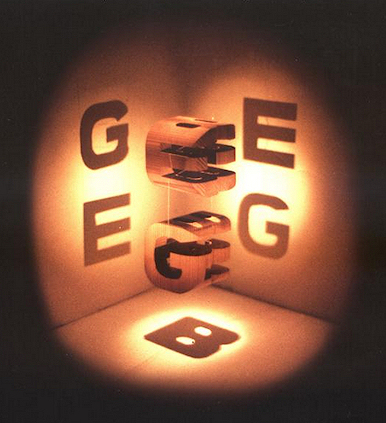
    But I think some of the issue you're having is mentioned in the last sentence of your comment. "... 2 objects in the very exact same state can have different behaviors." The two balls are not in the same state. The position only captures part of the state, not all of it. It's akin to the clever projections of the Godel Escher Bach book. In the case of that cover, a 2-d projection does not fully capture the 3d state of an object. In your case, a 3d "snapshot" of its position does not fully capture... – Cort Ammon Oct 14 '19 at 15:09
  • 1
    ... the state of an object relative to any reference frame other than its own. It's missing the velocity components. – Cort Ammon Oct 14 '19 at 15:10
  • Note that this also introduces issues of simultaneity in what you mean by "snapshot". Clocks on each ball, and each part of each ball will read differently depending on the reference frame of your camera. This is how you explain running really fast with a 10m ladder to fit it in a 5m barn through length contraction. ;) – throx Oct 15 '19 at 00:41
  • @GaelF u're asking a deep question which is not taught in schools. Leibniz once had similar question and later proposed his famous vis-viva (kinetic energy) theory to try to counter Descarte/Newton's momentum theory and it triggered a long academic debate. Leibniz believed his energy formulation like a human's soul with vitality to really identify "true" motion from "false" motion. Anyway in fact both momentum and kinetic energy capture the essential remaining part of the true definition of motion, as laypeople only can perceive positions with its corresponding time instants as motion... – cinch Mar 08 '21 at 06:55
12

Cylinders Don't Exist

If I show you a picture of two round objects and tell you that one is a sphere and the other is a cylinder you are looking at head-on, how can you tell whether I am telling the truth or lying? You can't, and therefore, I conclude that there is no difference between spheres and cylinders, because we lack the proper evidence for their existence.

Projection

The point here is that motion requires time, and a snapshot is a projection of a 4-D extended object into 3- or 2-D. The most naive such projections will necessarily destroy information about additional dimensions. If I remove one of the axes which would help you distinguish a cylinder from a sphere (ignoring light reflections, etc.), this is no different than you removing the time dimension to make it impossible to distinguish between a moving or a static object.

Conclusion

If you want to establish the separate existence of spheres and cylinders, you must examine them in all the dimensions which make them different. If you want to establish the existence of dynamic 4-D objects (objects which vary in the time dimension), you must examine them in all the dimensions which differentiate them from purely static objects (ones which are constant along the time dimension).

  • Who said anything about cylinders? – John Alexiou Oct 14 '19 at 20:24
  • 6
    @ja72 This answer introduces cylinders/spheres as an analogy for moving/not-moving. – Stig Hemmer Oct 15 '19 at 07:42
  • 1
    I think this answer is underrated. None of the others even attempt address the perceived problem in the question. If you think about all 4 dimensions as having all their points being simultaneously present, and our perception of time as just hindered, then what you have is really the equivalent of a 4d, unchanging model, like a display piece. This feels off, as it precludes change on the model itself, but can't think of how you would disprove it. Zero information transmitted (directly, not via inference or prediction) between moments in time seems suspect, if all moments are already exist. – Brandon D Jan 21 '21 at 23:56
11

It is about the frame of reference, in the frame of reference of the tennis ball pushed by the astronaut, it could be considered as standing still and the other ball, the astronaut, and everything else as moving. For the frame of reference of the other ball it could be considered as standing still, and the first ball as moving. If you were with either one, in it's frame of reference, all of the physical laws of the universe would be the same and neither could be preferred as absolute. This is one of the basics of relativity.

  • One realization which helps understand that motion is only relative to an arbitrary inertial system is that the common cases we refer to as "standing still" (e.g., my keyboard as I type appears to be motionless -- I can hit the keys pretty reliably!) are in reality hurtling through space at enormous speeds and on complicated trajectories composed of the rotation and orbits of the earth, sun, galaxy, local group and space expansion. One could make a cosmological case for using the microwave background as an absolute reference frame but that wouldn't change special relativity of motion. – Peter - Reinstate Monica Oct 14 '19 at 10:04
  • 2
    To elaborate on "we are not standing still": Not only are we moving from most reasonable points of view; we are not even in an inertial system because of the rotational components. We are under permanent acceleration: We are not standing still relative to any inertial system. – Peter - Reinstate Monica Oct 14 '19 at 10:07
3

Your question assumes one ball is moving and the other is still. That assumption is meaningless without specifying a frame of reference. All motion is relative. To each of the balls it would appear that the other was moving. The 'evidence' that they are moving includes the fact that they would appear smaller to each other, and that their separation was changing.

Marco Ocram
  • 26,161
3

You are limiting your snapshot to a 3D picture.

If you took a 2D snapshot, it would be impossible to tell how deep your tennis "balls" are (in addition to being unable to tell their motion).

So, take a 4D "snapshot", and all'll be fine.

  • 2
    This answer could explain what a 4D snapshot means and why it would show motion. – JiK Oct 15 '19 at 10:28
2

If we could take a snapshot of both tennis balls, would there be any evidence that could suggest that one is moving and the other one is still? Is there anything happening, at the atomic level or bigger, being responsible for the motion?

If the balls are truly identical and you are at rest with respect to one of them, the light of the one moving will look more red or blue, depending on whether it is moving toward or away from you, by the Doppler shift. This would be most evident if you were positioned between the balls and on their axis, but you would always be able to do it as long as the moving ball is at least partially approaching or moving away from you.

user1717828
  • 1,428
  • A friendly addendum: this only identifies a ball in motion relative to the observer, not that one of the balls has intrinsic motion that the other ball does not have. You can freely choose the frame of reference of the observer to make one ball, or the other, or both, be in motion. – asgallant Oct 15 '19 at 17:10
1

The photos would look identical, but you would have to take each photo from a different inertial frame of reference. You have to be moving in a different speed in a different direction to take the photo. This shows that there is inherent differences between objects in motion.

1

If there isn't, and both balls are absolutely identical, then how come one is still and the other one moving? Where does the difference of motion come from?

I don't think this question is nearly as perplexing as you might think nor do I think it requires sophisticated physics like the best answer describes. Ask yourself, how do you show with a snapshot that a bowl of soup is at a cold 5 C vs a warm 45 C? Or how could you show that a radio is turned off or is blaring music? Intuitive solutions to these questions would be to take a picture with a thermometer or an oscilloscope attached to a microphone respectively in the same frame.

The easiest way to show with a snapshot that a tennis ball is moving, is by taking a picture with a speedometer reading in the same frame as the ball.

These examples are hard to show directly in a single snapshot in time because they all involve the collective motion of small particles (uniform velocity for motion, random for thermal, and periodic for sound). And motion is described as the change of movement with time, but a snapshot captures an instance in time not a change.

Cell
  • 111
0

It is perhaps interesting to think about Mach's paradox in this context. I'll get back to your question and the limits of the two-body way of discussing special relativity in the end. One form of the paradox is this: imagine a bucket of water standing on the floor. The surface is (almost) flat. Now start spinning it. The water's surface begins to form a paraboloid. How does the water know it's spinning? Why is the frame of reference in which the water's surface is flat the same frame in which the stars do not move relative to the bucket (which almost coïncides with the frame where the Earth is still)?

The answer is that the presence of the stars determines the global geometry of the universe, and thus the local free-falling frame in which the bucket finds itself up to small corrections due to Earth's gravity and rotation (which is in free fall around the sun which is in free fall through the galaxy which is in free fall through the universe).

Now how does all this relate to your question? Well, we can determine accelerations relative to a global frame given by the fixed stars with as simple a tool as the aforementioned bucket. But if we accept that global frame as special, then we can also detect motion relative to that global frame, which is in a sense absolute as it is given by the universe in its entirety. To do this, you'd need a long exposure and a clear night-sky. You would then compare the motion of your tennis balls to the motion of the stars and you could in a meaningful sense call the difference of the motion relative to the stars an absolute motion, as it is relative to the universe as a whole (well, to good approximation depending on how many stars you can actually photograph). Since this is literally the opposite of what you had asked, it doesn't literally answer your question, but I think it answers the same question in spirit, namely whether there is a physical difference between "moving" and "stationary."

NB It may seem that I'm upending all of special relativity by that line of thinking but that's not true. Special relativity is a good law of nature, one just has to be aware of other objects which are present when applying it, and whether they have any influence on the question studied -- and that statement is a trivial truth which certainly was on Einstein's mind when he wrote the time dilation law for the first time.

tobi_s
  • 1,299
0

It is possible to measure absolute motion relative to the cosmic microwave background.. A system in rest with the moving ball would measure a dipole in the background radiation.

p6majo
  • 441
-1

If we look past your example with snapshots we can just look into modern technology and find a little thing called videos. They can record motion pretty easily. "Is there any physical evidence for motion", videos?