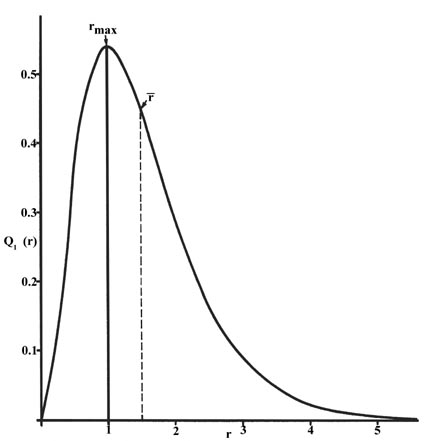
I've always thought that the binding energy decreases as the electron moves/jumps away from the nucleus.
Then when I see the radial probability distribution for $1s$ electron, there is a probability for finding the electron everywhere. Since the binding energy depends only on $n$, does this mean the binding energy remains constant no matter where the electron is found ?
If that's the case, kindly consider this situation :
1) A $1s$ electron is $100m$ away from the nucleus.
2) It absorbs a photon and jumps into $2s$ orbital. Now can the electron in this orbital stay closer to the nucleus(say at $20m$) ? If yes, isn't this counter intuitive ? (How can the far away $1s$ electron have greater binding energy compared to the closer 2s electron)