Lifting the relevant section from another answer of mine:
Basically, the larger the aperture is, the larger the angle of light rays on the outside of the lens has to change:
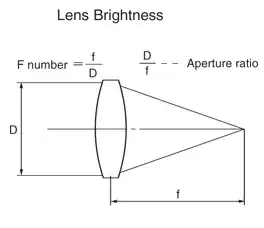
Look at the image and imagine that D increases while f stays the same - it should be clear that the light rays then need to "bend" more. And making optics that refract light rays at large angles without incurring all kinds of distiortions and aberrations is very hard. It requires exotic materials and more lens elements for correction, and of course all of them have to be large (= expensive to make) because, well, it's all about making that opening larger.
And according to the book "Applied Photographic Optics: lenses and optical systems for photography" by Sidney F. Ray, there is a theoretical maximum of f/0.5 beyond which spherical aberrations are unavoidable.


