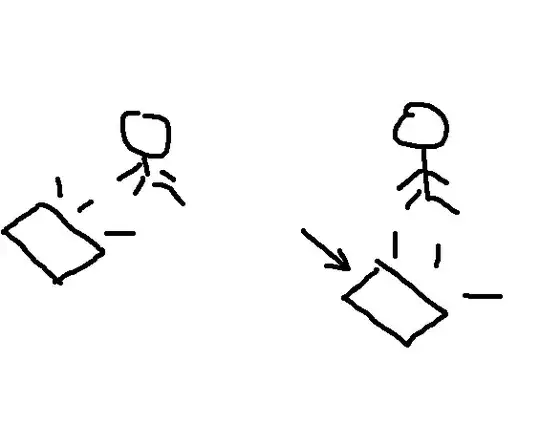
"Feathering" is sort of a short-hand term in this usage.
What you are doing with the light is often similar to feathering. That is, you are moving the light in relation to the subject so that the subject is lit by the indistinct edge of the lighting pattern. That's something that's "more real" when using hard lights, and it's mostly about controlling the apparent fall-off of the light at the subject position.
In this case, you aren't so much feathering the light as making better use of it. Unless your light is nearly on-axis with the camera, when you aim a softbox (or umbrella or large soft reflector) so that the centre is pointed at your subject, nearly half of the light is either lighting the back side of the subject or passing behind the subject. Moving the light so that the rear edge of the light is aimed at the subject is pretty much the same thing as using a softbox that's twice as wide with the subject in the centre — without all of the wasted light (lighting the back of the subject and dead air behind the subject). Yes, you are "wasting" some light in front of the subject, but the subject sees a much larger light source (and you were going to waste that light somewhere anyway).
You can keep moving the light so that you are actually feathering it, which will throw less light on the closer part of the subject and more on the farther part, but that's an "effects" look you don't often want.