Obviously, chromatic aberration is created by the lens, and the amount of CA is the same.
However, film as a medium and the sensor respond a bit differently. True perpendicular light is handled in a similar way in both, but angled light meets a different surface when using film and when using a CMOS sensor.
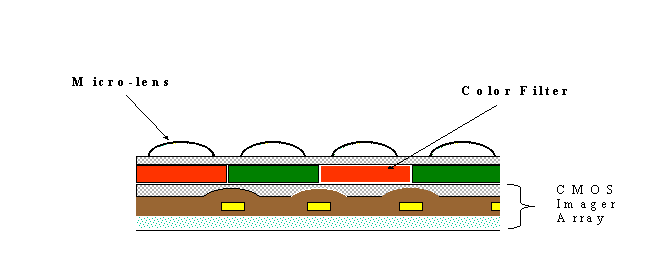
CMOS sensors have tiny lenses over the color filter (see here), and it is pretty hard to provide a uniform group velocity inside a small lens for all kind of light wavelengths, so these create an angle-dependent and wavelength-dependent response to arriving light. (Consider white light going through a prism - same effect).
A film has much less sensitivity to incident angle. So you will just photograph the CA.
On the other hand, R, G and B coming from an angle will see different sensor sensitivities (each is different) than RGB coming perpendicular to the sensor. So that will show up as color shift or color change, making CA worse.
Well, this is the explanation I can think of for your question.
(And a good test would be to use directed white light on a CMOS sensor, and make photos starting from perpendicular and then tilting it more and more. I would expect a bit of color shift. But do not try this at home :-) ).