8

Does difficulty in focusing have anything to do with 1.4F (Nikon G)?

Will it be still difficult if I use manual focus?
Is auto focus too slow?

Is there a way to counter it?

This example photo (from a photozone review) was taken taken at f/1.4. Isn't the whole trunk in focus here? If it's so hard to get everything in focus at f/1.4, why aren't some parts of trunk out of focus?

mattdm
  • 143,140
  • 52
  • 417
  • 741
Aquarius_Girl
  • 5,602
  • 16
  • 59
  • 115
  • 2
    It would probably help you to explore the relationship between sensor size, focal length, subject distance, and depth-of-field. It will help you understand this and your other question about f/1.4. For example: http://www.dofmaster.com/dofjs.html – djangodude Feb 17 '12 at 16:15
  • @djangodude Actually I didn't mention but I assumed that focal lenghth is 50mm. (on both the questions.) – Aquarius_Girl Feb 17 '12 at 16:29
  • That tree photo was probably taken from about eight to ten feet away (judging from the chainsaw nose pattern on the stump of the tree's twin), and remember that the total depth of focus only has to be half of the tree's diameter. The branches at the top of the frame are nearly parallel with the camera, so they're mostly in focus too — but notice that the bigger branch drifts out of focus toward the right. Depth of field is greater at greater distances. For what it's worth, I spent years shooting very fast lenses, and focus isn't difficult once you learn how to manage the plane of focus. –  Feb 17 '12 at 16:36
  • @StanRogers: exactly right, focusing isn't difficult; getting the subject into good focus can be. – djangodude Feb 17 '12 at 16:41
  • @AnishaKaul: OK so you now have 2 variables (aperture, focal length) out of four to work with. If you'll visit the link I posted or any other DOF calculator, you can plug in your sensor size and play around with the subject distance to see the effect on depth-of-field. – djangodude Feb 17 '12 at 16:42

4 Answers4

9

No matter what the maximum aperture of the lens, the plane of absolute focus is the same. That is, if you shoot with a 50mm f1.4 or a 50mm f2.8 at, say, 10 feet out, it is focused on the exact same specific point of your subject. The difference is that at f1.4 a thin slice appears to be in focus and at f2.8 a thicker slice appears to be in focus.

So, let's say you are using the 50mm f1.4 lens set to f8. The resultant picture shows a thick slice of area in focus, just as a normal zoom lens set to f8 would. When you are focusing to take that photo, regardless of which lens and what focusing mode you use, you aim to focus on the exact same plane. In that regard, focusing with either lens is neither more or less difficult.

Of course, experience says that's not quite true: most will agree that focusing an f1.4 lens is more difficult than focusing an f5.6 zoom lens. The reason it's considered more difficult is because of that narrower plane of focus which shows less in focus and therefore makes it a little difficult to tell what precisely has been focused on. That's sort of a misnomer, however, because if your lens is set to f8 placing the plane of focus in exactly the correct location is irrelevant: the resulting photo will have a larger depth of field and hide any inaccuracy you had when focusing.

But, people don't buy an f1.4 lens to shoot at f8; they buy them to shoot at f1.4! If you misfocus slightly when shooting at f1.4, it won't be hidden like when shooting at f8. You do need to worry about being more precise in placing focus where you want it when shooting with such a large aperture. Is it more difficult? I think that depends upon your perspective and understanding:

  • Perspective: a thin plane of focus means it's easy to see exactly what is in focus. You can tell precisely where you have focused and it's no surprise what the resulting photo looks like.
  • Understanding: using a wide-area AF mode is almost asking for trouble, for example, because it's trying to focus on much of your scene, which can't be rendered entirely in-focus at f1.4. Use a single-point AF mode to place focus precisely. If using manual focus you need to have a feel for how much throw the focus ring has to recognize how much to turn it to pull your subject into focus -- just racking back and forth trying to find it will get you nowhere.

Working with an f1.4 lens isn't anything to be concerned with, IMO, because after using it for a while you'll have a good feel for it and know best how to use it.

Regarding your example photo:

Isn't the whole trunk in focus here? Why aren't some parts of trunk out of focus then?

Look close -- the whole trunk is not in focus. near the edges of it you can see it's a little soft. I bet that they could have stopped down to f1.6 or 1.8 and the edges would be a little more in focus, and the rest of the scene would basically be unchanged.

Dan Wolfgang
  • 12,492
  • 2
  • 28
  • 49
  • Thanks for your detailed answer, but I didn't understand this: If using manual focus you need to have a feel for how much throw the focus ring has to recognize how much to turn it to pull your subject into focus -- just racking back and forth trying to find it will get you nowhere. – Aquarius_Girl Feb 17 '12 at 15:19
  • 1
    When you take a photo and look through the viewfinder to see your subject not in focus, how far do you turn the focus ring to achieve focus? No doubt when you first have the lens you will struggle trying to get it right, but you really need to develop a "feel" for just how much to turn the ring to bring the subject into focus. Because the DOF is so thin you need to turn the ring small amounts to achieve focus. If you just keep turning the ring back and forth and back and forth trying to find focus, you'll get nowhere and be frustrated. – Dan Wolfgang Feb 17 '12 at 15:32
  • Dan, now you have made it clear. :) I haven't yet "touched" any external lens. :) The one I am thinking of purchasing is "G" (Nikon) doesn't have any aperture ring. Will it still be difficult then to use the aperture "button"? – Aquarius_Girl Feb 17 '12 at 15:38
  • 1
    "But, people don't buy an f1.4 lens to shoot at f8; they buy them to shoot at f1.4!" Not the first time I've heard this, but I've always disagreed. I have my 1.4 and I choose it over the various 1.8's because it was sharper when stopped down in the 2'ish range where I normally use it. Its very rare for me to use it wide open. – rfusca Feb 17 '12 at 15:38
  • @AnishaKaul, I'm not sure what you mean about the aperture button. – Dan Wolfgang Feb 17 '12 at 15:45
  • Dan, I meant that the DSLR bodies have an button by which we can set the focus? Sorry aperture was wrong word. – Aquarius_Girl Feb 17 '12 at 15:46
  • @rfusca, you're right, of course; I exaggerate for effect! My experience mirrors yours. But by the time you get to f8 (or even 5.6, I bet), both a 1.4 and 1.8 are probably almost always nearly the same. (Right?) – Dan Wolfgang Feb 17 '12 at 15:47
  • I'm still confused, @AnishaKaul. A DSLR has a button by which you can set focus: the shutter release activates AF, typically. But I don't understand how you see that relating to the aperture ring. As I said, I'm confused. – Dan Wolfgang Feb 17 '12 at 15:50
  • It is my fault, I was talking of focus and you were talking of aperture. Pardon. have edted the question. – Aquarius_Girl Feb 17 '12 at 15:59
  • @Dan - Indeed, and often before that even. I seem to hover a lot in the 2-4 range. – rfusca Feb 17 '12 at 16:05
  • Just one minor detail to add: although it's not really intended, the focus of many (most, really) lenses shift slightly as you stop them down, so identical distance and identical focus adjustment but different aperture actually will usually change the distance of optimum focus (though only very slightly in most cases). Obviously this tends to be most visible at large apertures, but (for example) it's often quite visible going from f/1.4 to f/2. – Jerry Coffin Feb 17 '12 at 18:12
  • @rfusca: I think that a LOT of people who shoot portraits really DO buy an f/1.4 or f/1.2 lens to shoot at maximum aperture, and explicitly want the softening effect that is produced by the slight CA and spherical aberration at such an aperture. When I was researching which 50mm lens to buy, I found thousands upon thousands of shots on Flicker taken with 50mm lenses from all variety of brands, shot between f/1.2 and f/1.8...with fantastic bokeh and wonderfully soft focus. It was much less frequent that I found anyone shooting those lenses at f/8. – jrista Feb 18 '12 at 03:22
  • @jrista I didn't say f/8. But if you compare all the shots taken with a 50mm f/1.4, I bet the majority are not at 1.4 . – rfusca Feb 18 '12 at 03:58
  • 1
    The f/8 was mentioned by Dan. Not all the shots I found were at maximum aperture, but the range was between f/1.2 and f/2.8, and rarely much above that. Generally speaking, people buy a fast lens to shoot fast, not to shoot slow. I'd say the 50/1.2 is shot between 1.4 and 2.8 more frequently than at other apertures, and the 50/1.4 is shot between 1.8 and 2.8 or maybe 3.5 most frequently (at least, that was based on digging through god only knows how many nifty fifty shots on Flickr.) – jrista Feb 18 '12 at 06:58
  • As I said, I exaggerated for effect. Anything shot at f8 is going to have such a large DOF that focus imprecision is a non-issue, so it serves as a fine example. – Dan Wolfgang Feb 18 '12 at 13:35
4

If you are going to use a fast lens in manual focus mode, do yourself a favour and replace the matte screen in your camera. The mattes that cameras are delivered with these days are optimized for slow zoom lenses (the f/3.5-5.6 kind of thing), this has been achieved at the expense of focus accuracy. Such a matte is physically unable to show accurate depth of field for lenses faster than about f/2.8. Manually focusing an f/1.4 lens with such a screen is a pure crapshot - the camera will see a thinner depth of field than you see in the viewfinder.

Nikon makes replacement mattes for a number of their cameras, what you want is one that is optimized for fast lenses. I've no idea what these are called in Nikonese, but on Canons they are the "S" screens. If Nikon does not sell such a matte for your particular camera model, there are third-party options out there.

Staale S
  • 7,514
  • 24
  • 32
3

Yes, absolutely!

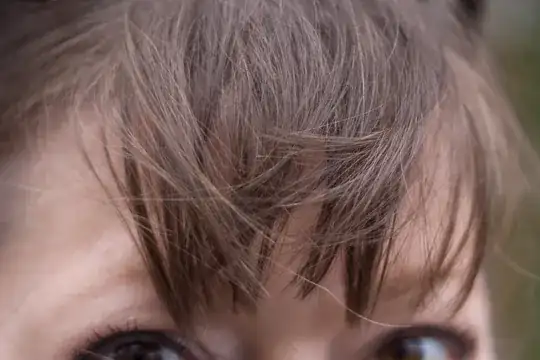
1.4 is fast which means it has a very narrow depth of field. Check out this image:

enter image description here

This is a crop of a shot I made. It was taken with a Canon 50mm f1.8 on a Canon crop body. I was also fairly close to the subject. Notice how part of her hair is in focus. But the wisps that stick out towards me are not and as the forehead recedes the hair blurs.

Look at her right eye, blurry. Now look at her left, it is even blurrier because it is slightly farther away. That is how shallow the DOF is.

I've never shot at 1.4. I can't imagine how hard it must be!

As for auto vs manual. No difference, the depth of field will be the same. The speed of the focus will only matter if the subject is moving, and if the subject is moving, well, good luck with it!

And to counter it, sadly, the only way I know of is to not shoot at 1.4 or 1.8. I still go out with my 1.8 only to enforce discipline. I've only ever taken 1 good shot with it. One.

Paul Cezanne
  • 6,468
  • 4
  • 34
  • 67
  • 3
    A couple of things can help (besides stopping down): understanding the relationship between focal distance and depth of field (the closer you are, the shallower the DoF will be at a given aperture), and where the plane of focus lies. In this picture, you are shooting down on the subject and focused on the forehead; if you had gotten lower, so that the main plane of the face was more-or-less parallel with the camera's sensor, you should have been able to focus on the eyes (or the frontmost eye) and just get the nose and the cheeks almost back to the beginning of the ears acceptably sharp. –  Feb 17 '12 at 12:22
  • 1
    Also bear in mind that it's only tricky to focus a large-aperture lens with a moving subject (and photographer). If you were shooting, say, food, you could just use a tripod and take your time. Also, even with a moving subject, proper use of spot focusing settings means that it's by no means impossible to get sharpness where you want it. – ElendilTheTall Feb 17 '12 at 13:28
  • Paul, @Stan see the edit in question please – Aquarius_Girl Feb 17 '12 at 16:00
2

I wouldn't say it's difficult to focus, as with a lens as wide open as f/1.4, it's easier for a camera's autofocus system to work, even in low lighting conditions. What's difficult is determining what to focus on, as with the shallow depth of field inherent in such a wide aperture you don't have much margin for error.

For portraits, especially close-up, it's critical to focus on the eyes. To ensure both eyes are in focus you should have your subject hold their face parallel to the plane of the sensor, however if they are turned away slightly it would be better to focus on the eye closest to the camera.

It would be impossible to cover all scenarios where you might want to use f/1.4 in a single post, but the main advice I would give would be to decide what is most important in your image, and focus on that, making full use of your camera's AF selection points. And remember, the further a subject is from the camera, the wider the depth of field. There are many situations where a shallow depth of field is desirable, so I wouldn't necessarily avoid using f/1.4 altogether, just practise using it to work out the techniques that work best for you.