You need a different flange distance, not a different focal length. Flange distance is sometimes referred to as "flange focal length" or "flange focal distance"... but that is best understood as the flange distance portion of the focal length/distance.
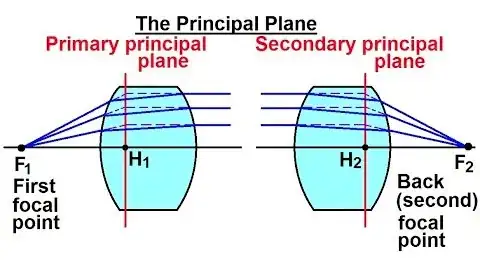
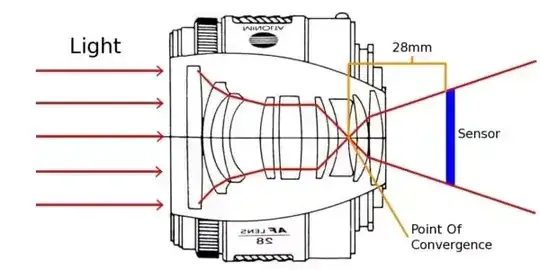
Focal length is the distance from the second principal plane (nodal/primary point) to the second focal point (image plane).
This drawing shows the principal points in a simple (thick) lens.
This shows the second principal plane of a more complex 28mm lens design (labeled as point of convergence).
Here I have added an element and second principal planes to the drawings @ossulic provided to make them correlate more accurately. It shows the focal length as 50mm for both, but with different flange distances (44mm/18mm) and different placements of the second principal plane in front of the lens mount/flange (6mm/32mm).

Note that the drawings are not to scale nor a correct combination of elements... depending on the lens design the second principal plane can fall anywhere inside a complex lens; or even outside of the lens itself (e.g. a telephoto lens).
And finally, a lens' focal length defines its' angular field of view; it is not variable. I.e. all true 50mm lenses have the same angular field of view.
$$\mathrm{AFOV} = 2\tan^{-1}\left({H\over2f}\right)$$
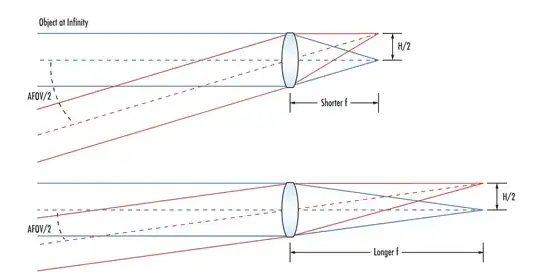
However, different sized sensors will record different amounts of that field of view... so if your mirrorless camera also has a smaller sensor ("crop sensor"), then you would need a different focal length for the same recorded field of view.


