Let me use a different scenario, a studio setup.
The incident light meter (sphere) measures how much light comes to a scene. The incident light knows nothing about your product's color on the table. It can be some white shoes or black ones.
But a reflected light measure is affected now by what the object on the table is, but the measure does not know what it is. Does not know if it is a white or black object, so its goal is to assume it is gray.
I read your comment on the zone system. And you are right. The zone system gives us a hint on what tone overall is what we are seeing and provides that information to whatever setup we are dealing with.
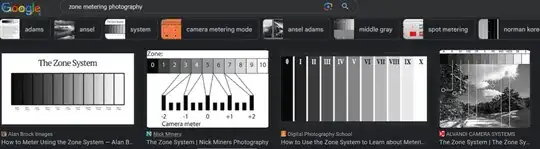
In this case, the compensation means that we are not seeing a green grassfield during daytime, which we could expect to turn gray on a black-and-white photo, but a nighttime when we need that zone to be mostly black.
The same would be true when measuring a white beach zone or snow, or if we need a high-key photograph or low-key one.
On a cityscape is quite hard to define where the midpoint is. You probably have deep blacks, but that depends on if there is haze, clouds, full moon, etc. And you probably have strong lights that are expected to blow the whites, but we do not really know the intensity of them.
It makes no sense to measure a dark spot and define it as a zone 0 because it tells you nothing about how deep the deep black is. So in some cases, IMHO, the spot metering is not really useful, unless you really have an illuminated zone, like a specific wall that is on the frame. Otherwise, it is probably a good idea to adapt a generic rule like the Sunny 16 rule and compensate for the necessary EV steps.


