The bowline knot (picture below, source) has a great reputation as a very safe knot. Is it really completely safe in all situations and loads, or are there use cases where it may fail?

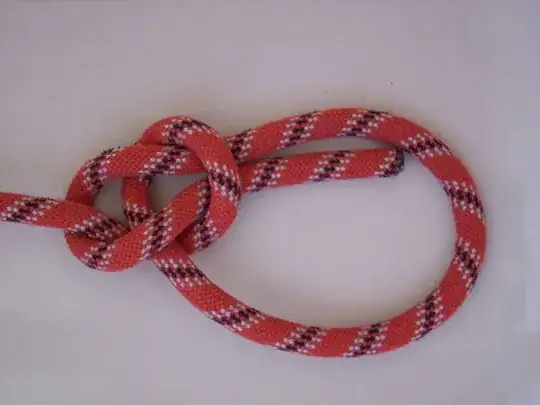
The bowline knot (picture below, source) has a great reputation as a very safe knot. Is it really completely safe in all situations and loads, or are there use cases where it may fail?


The bowline knot is very safe if loaded correctly. This is the usual, safe way to load it:
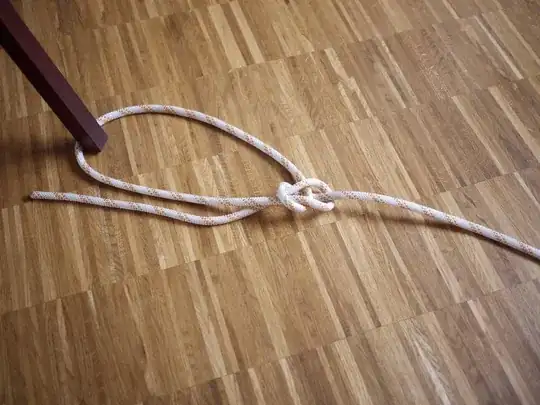
The chair foot is the body (sorry for not offering naked models), the part of the rope leading away from the picture will take the load. In this use case the knot should hold perfectly. On the other hand, you might get the idea to use the bowline knot to create a sling, say to rappel down from a tree:
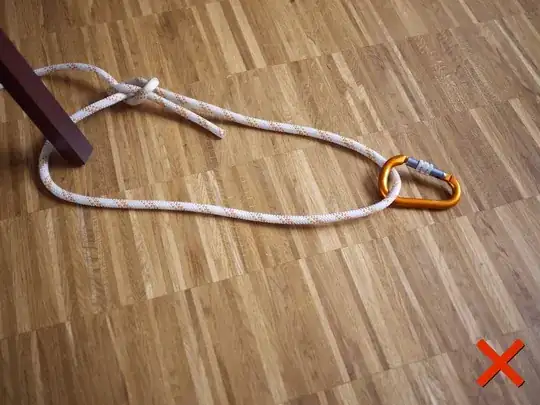
This is wrong and if you rappel down from that carabiner you might get yourself killed, because the knot can slip when loaded “sideways”, pulling the main loop apart. There are other similar wrong use cases, all depending on the knot being able to hold when pulled sideways – which the bowline knot isn’t.
This was discovered during an investigation of a fatal fall in Germany in the 1960s. The case went to the court and after that the Germans have done a series of tests on the knot to realize that it can indeed slip under side load, which is why it’s considered unfit for climbing today. See Pit Schubert, Sicherheit und Risiko in Fels und Eis.
In the context of rock climbing, compared to a figure-8 knot, bowlines are:
BUT:
Both the figure-8 and a bowline (and its variations) will fail if loaded in the manner your picture indicates. Any knot is only useful for the scenarios it was designed for, and part of knot-craft is knowing what the knots are designed to do, not just how to tie them.

In addition to zoul's excellent answer, the Bowline has another drawback in that it can come loose (or even undone) after repeated load/unload cycles (i.e. weighing and unweighing the rope).
This means that the bowline is not as good as the figure-8 to use to tie-in a climber, especially for multi-pitch climbing, gym climbing, etc... (That said, many good climbers do use the bowline to tie in.)

None of the photos show the bowline with the loose end tied off. In this (untied off) form the knot is unsafe as there is a strong chance of slippage. It's also easy to tie badly with fatal consequences. On the plus side its possible to tie one single handed in about 4 seconds.
When tied off with a single or better double hitch though then this knot is pretty safe, for most situations it still would not be my knot of choice though.
The Bowlines best application is possibly tree or post belays, but even here after moderate loading it can be hard to untie and a better choice would be round turn + 2 half hitches.
For heavy loading situations the double figure of eight (or fig 9 for super heavy) is a better knot but lacks the ease of set up.

In the first instance, the simple #1010 Bowline (as shown by the OP) - is not and never was intended for climbing. Its sort of like asking; "Is a Lamborghini sports car suitable to drive off road in very rough terrain?" Clearly, the answer is "No".
The simple #1010 Bowline was 'invented' hundreds of years ago for nautical (sailing) purposes. It was not designed (or intended) for life critical applications such as rock climbing.
There are many different types of 'Bowlines'. If you are going to select and use a 'Bowline' for life critical applications, you should select a type that is 'inherently secure'. Inherently secure knots do not require any form of 'backup stopper knot' to make them secure.
Inherently secure 'Bowlines' include:
All 'Bowlines' have the advantage of being Post Eye Tiable (PET) and totally jam resistant.

