25

I may have a number of reasons for wanting to intentionally expose myself to the coronavirus. (Examples: I feel more capable of surviving it while I am younger. It reduces my ability to carry and spread the virus once my immune system has developed antibodies. It may strengthen the immune system against related viruses.)

Can a government legally prevent me from intentionally infecting myself with a virus?

feetwet
  • 21,795
  • 12
  • 80
  • 175
bandybabboon
  • 564
  • 1
  • 4
  • 14

4 Answers4

30

Governments have a significant interest in controlling pathogens and preventing outbreaks: they are dangerous to dense & unimmunized populations.

Can a government legally prevent me from intentionally infecting myself with a virus?

Yes, governments have the broad authority to enact laws. The US prohibits and regulates pathogen experimentation (self-infection). There are also rules regarding shipping and export (ITAR). Furthermore, in the US, there are (FL, NY state) laws that prevent patients from being tested unless the order is given by an authorized health care professional. Hopefully, you do live in a state that does not have this regulation (AZ).

While I do believe in one's right to do as one sees fit with one's own body, there is the counter-argument: there must be limits when it comes to unnecessarily exposing the community to pathogen risk. I hope that this question is theoretical and that nobody actually believes the immunity supposition without a credible peer-reviewed scientific publication. Unfortunately we live in an age where misinformation is propagated at novel speed and scale.

I wish the OP well. That being said, I have concerns regarding the underlying assumptions of the question. While I am comfortable with the OP question, the underlying assumptions give me great pause.

UPDATE

IMHO: I hope that no reader will seriously consider amateur experimentation in self-infection in the hope of conferring immunity. Giving a pathogen uncontrolled safe-haven to propagate and possibly infect others seems irresponsible.

I doubt that the government cares if any individual manages to puts themselves in an early grave, however, it does care if amateurs create an unnecessary pandemic risk. I would think that any government would view pathogen experimentation much like nuclear device experimentation, because of the mass casualty risk. I hope that readers understand the implications of an amateur uncontrolled experiment.

gatorback
  • 7,205
  • 2
  • 39
  • 78
22

Yes, the government gets to regulate how people work with pathogens. Not least, Coronavirus must be handled in a Biosafety Level 3 facility.

It's a good way to collect a manslaughter charge, and a reckless endangerment lawsuit.

The problem is you would then become responsible for all unintended consequences that could be connected to your actions. And the eggshell skull rule will apply in spades: "You take the victims as you find them". If the consequences for your sickening a person are unusually bad, that's all on you. You get no slack for them having an already weakened immune system.

And this is no subject to toy with. Given that the level of public alarm is comparable to a moral panic (but not one, so you can't claim that), you really don't want to be on the wrong side of a jury box on this one. No jury on earth will acquit you.

Meanwhile, you'll be swept up a real moral panic: the blind rage over so-called "anti-vaxxers". Since this actually is "alternative vaccination".

Yeah, you could sell tickets and popcorn at the voir dire. You'd have pushed the hot buttons of every possible juror. (but that's kinda what this is about, isn't it?) Maybe you could get a fair trial with the Sentinelese.

Harper - Reinstate Monica
  • 19,563
  • 2
  • 27
  • 81
  • 5
    All correct and relevant, but you don't answer the direct question at all. – chrylis -cautiouslyoptimistic- Mar 14 '20 at 04:37
  • 1
    @Harper - Reinstate Monica Science would be on my side when the jury are plied with public alarm and moral panic... That is exactly what the court systems are designed to avoid and dispel. "The defendant decided to continue living normally and let nature take it's course, so that he can isolate sooner and not be availble to transmit the virus later thanks to immunity, when everyone else is still vulnerable" – bandybabboon Mar 14 '20 at 09:13
  • @chrylis I fixed that 3 hours after you commented. Nobody noticed lol. – Harper - Reinstate Monica Mar 14 '20 at 17:11
  • 14
    @com.prehensible You are assuming that contracting the disease confers immunity, which is not known. – TRiG Mar 14 '20 at 23:11
  • 1
    @TRIG A super contagious equivalent of AIDS would be regrettable for humanity! i would avoid it. that's indeed a virus which evades the immune system. Fortunately what you say is non-science. If people don't gain immunity, they produce the virus indefinitely and probably die, which is not true for any coronavirus, although it's true for AIDS. – bandybabboon Mar 15 '20 at 03:09
  • 3
    @com.prehensible: yes, you can fight off an infection of COVID-19, but that's different from becoming immune for the long term. That's how it works for many viruses, but unfortunately maybe not this one. another answer links to a news story: "CAN YOU GET COVID-19 TWICE OR DOES IT CAUSE IMMUNITY?" about a patient who got it twice, and that the antibodies seem not last long in your body. – Peter Cordes Mar 15 '20 at 18:08
  • 6
    @com.prehensible, you know how you can get the common cold multiple times? It's in the same family. – Charles Duffy Mar 16 '20 at 03:01
  • @Charles Duffy Well over 200 virus strains are implicated in causing the common cold, with rhinoviruses being the most common. which of the 200 virus strains are you talking about? The topic refers to a virus not a symptom. I can get common flu multiple times too, I get cold and flu about once every 4 years because my immune system is relatively vigorous. – bandybabboon Mar 16 '20 at 07:45
  • I think social panic is the more appropriate term here. Moral panics are perhaps the kind of social panic that most often produce notable examples of these kinds of extreme reactions en masse, but moral ills are clearly not the main subject of this particular panic. – Will Mar 16 '20 at 12:20
  • I have a feeling trial by combat is kinda the only thing the Sentinelese have available for OP... and no options to pick a champion. – unknownprotocol Mar 17 '20 at 17:09
  • @unknownprotocol Yeah, probably end badly, but an unknown dangerous experience is what OP is after... – Harper - Reinstate Monica Mar 18 '20 at 01:09
  • @TRiG if that were true no one would ever recover from the virus, as your immune system would be unable to kill it. And working on a vaccine would be pointless, as vaccines work by stimulating the immune system. This whole "you can be reinfected" meme is fake news. – JonathanReez Mar 20 '20 at 15:37
  • People can contract measles more than once, as well as various other diseases. As yet, nobody knows whether you can be reinfected with SARS-CoV-2 because there is just not enough data. So while Trig's point might not be useful right now, he does have a point. – Rory Alsop Mar 21 '20 at 14:53
  • @JonathanReez The biggest problem is nothing is absolute because we simply do not know enough about the virus yet. We're just throwing everything and the kitchen sink at it. It may be in the same "family" but viruses do not care for human classifications. They don't have to do anything according to our rules. – Nelson Mar 23 '20 at 15:38
  • 1
    @Nelson its funny to reread this in the future, now that we know that not only getting infected makes you immune, it actually makes you immune better than the vaccine: https://www.sciencemag.org/news/2021/08/having-sars-cov-2-once-confers-much-greater-immunity-vaccine-no-infection-parties. – JonathanReez Aug 28 '21 at 05:45
11

Anything related to legality for something like this, depends on where you live.

Self-harm or attempted suicide can be illegal in some countries such as Japan. It is a criminal offense in others: see here for a list. You might not consider purposefully contracting coronavirus to be attempted suicide, and maybe 90% of the population will agree with you, but that does not matter if the judge involved in the case does not agree with you. This will depend very much on where you are living (do you live in a place where culturally, doing anything silly is taken extremely seriously and with harsh punishments? do you live in a place where judges follow the law to the letter or is it normal for them to act based on feeling? what is the "case law" or past jurisprudence in your country, for similar cases in the past?). The answer to your question is "yes" or "no" depending on a lot of factors.

The likelihood of you dying if you are between 10-39, is actually higher than you might think:
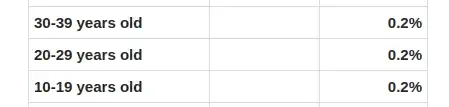
image showing what I said it shows

This means 2/1000 or 1/500. That is a higher chance of death than many types of "real" suicide attempt. If I offered you $5000 to take a pill which had a 1/500 chance of causing you death, would you take it?

Appart from "self-harm" or "attempted suicide" you could also be endangering others (via recklessness, negligence, mischief, or a number of other possible things depending on where you live). If you live in a place where healthcare is funded by tax-payers, you may be abusing the healthcare system.

Finally: having coronavirus once does not mean that you will be immune to it. Already there has been a case in Japan where someone released as "recovered" was diagnosed with coronavirus a second time. See this article: "CAN YOU GET COVID-19 TWICE OR DOES IT CAUSE IMMUNITY?" which says that the anti-bodies (that means "immunity") you develop from having coronavirus once, seem not to last very long at all.

And this article says that people that recover from coronavirus might have 20-30% of the lung function they had before.

Please do not purposefully infect yourself with coronavirus.

Nike Dattani
  • 628
  • 5
  • 25
  • Just note that this is really, REALLY a new virus. We have NO IDEA what its long term effects are (it only made us sick for less than half a year). We're gathering more information about things like incubation period, and effects like Antibody Dependent Enhancement (having weak/wrong antibodies makes the second infection worse). We also don't know the long term damage. Lung damage is one. Lower male fertility may be another. – Nelson Mar 16 '20 at 02:20
  • My point exactly. – Nike Dattani Mar 16 '20 at 02:41
  • I'm not necassarily disagreeing with your overall point. However, aren't those stats fairly misleading? People with other serious medical conditions are the ones most at risk and so I suspect if you have none of those and fit in that age bracket, your risk is far lower still which presumably OP is. – Jason Mar 16 '20 at 11:17
  • @Jason: If I play the angel's advocate for you, I can force myself to see your point, which is that I have only shown the likelihood of death for "people aged 10-29", rather than the likelihood of death for "people aged 10-29, and with an extremely healthy lifestyle, extremely healthy diet, and low genetic pre-disposition to death by viral infections". However, such stats are never going to be found anywhere, and also: the question did not specify that the OP is at low risk. S/he simply said that s/he was "younger" so I gave the stats for people aged 10-29. – Nike Dattani Mar 16 '20 at 15:51
  • @user1271772 Yeah okay, I think I was just considering a diffenent and important angle though. Someone with a serious medical condition e.g. cancer will presumably not intentionally get infected. Therefore, that 0.2% could well be fairly inapplicable to a fortunately much healthier person, in that their risk could easily be 10's, 100's or maybe even 1000's times lower. Of course as you said it's very unlikely we'll find definitive stats but I just felt it was an important addendum. – Jason Mar 16 '20 at 20:36
  • @Jason: I agree that 0.2% is an average over all people between 10-29 for whom we have data, and as we get more specific (death percentage for cancer survivors, death percentage for elite athletes, death percentage for malnourished people, etc.) the number will change. You might be right that healthier people will have a lower death rate than less healthy people. Do we know enough about coronavirus in these 3 months to be 100% sure that the number would change (meaning 0.1% instead of 0.15% which equals 0.2% when reported with the number of digits given)? probably not. You are right that – Nike Dattani Mar 16 '20 at 20:40
  • the number can be made more accurate with more research. I do not think I was trying to "mis-lead" anyone. I gave the best numbers I could find. A healthy person might have a better chance of surviving than 0.2%, but I'm not even 100% sure yet that there's a huge difference! – Nike Dattani Mar 16 '20 at 20:41
  • These statistics are reciprocal to the fraction of infected people who aren't tested. From recent antibody studies in Gangelt and Santa Clara, less than 10% of infections are confirmed, thus death statistics based on confirmed cases are likely elevated by a factor of 10. Considering young people are tested even less than the general population, the factor is expected to be considerably larger. Additionally all "apparent reinfections" are more likely to be caused by false negatives and false positives than they are real reinfections; that's the classic Base Rate Fallacy – JoseOrtiz3 Apr 22 '20 at 02:15
  • @OrangeSherbet my answer was on 15 March when things were very very different. I do agree that the death rates can account for more factors and become more accurate by doing so, however I do not thing it is important at all. I do not think it is a good idea to purposely infect yourself with COVID-19, no matter how young you are, and no matter how healthy you are. It is simply not a good idea and it can cost tax-payers a lot of money if you purposely infect yourself and end up in a hospital. It is in the public interest not to do it. Also people are dying of COVID and not diagnosed as such. – Nike Dattani Apr 22 '20 at 02:36
5

The legality will depend on what exactly you plan to do in order to contract the virus.

If you plan to break into a hospital at night and steal virus samples, that will certainly be illegal.

If you plan to go out to a crowded place hoping to get the virus from someone, it will only be illegal if you break quarantine rules. Unless you're already sick or suspected to be sick, you won't be isolated and will be allowed to go out to buy food for instance. You may still be asked to leave if you are found to hang out in a store needlessly long, and refusing to follow a lawful order (from a policeman for instance) will be illegal.

If you have a friend or a family member who is getting sick but wasn't isolated yet, and you drink from his cup, you can't realistically be charged with anything.

Dmitry Grigoryev
  • 1,345
  • 11
  • 23
  • 1
    Since the question was about the law, I suspect they are asking if they can go through the last scenario you described, but do it in a less secret or roundabout manner and with openly stated intentions. You are suggesting that they cannot be prosecuted if their intentions maybe claimed to be innocent. But the question was whether there is anything illegal if they openly (and perhaps visibly) attempt contract the virus through social interactions. – grovkin Mar 14 '20 at 10:08