Ⅰ
Potsdam Conference of Three - USSR, USA, UK. The delegations leaded by Stalin, Truman(after Roosevelt gone in april), Churchill.
The main sense for Bulgaria was that USA and UK was agreed to admit the Italia membership in the UN and concluded a peace treaty, but they didn't want to admit Bulgaria, Hungry, Romania, Finland to the UN, because they was in the influence of "the Red zone", this cause had created problems for peace treaties with them:
The American delegation proposed to sign two separate documents with recommendations on Italy and other satellite countries of Germany, while the Soviet side advocated a single document...
In response to this ultimatum, I. V. Stalin blocked the issue of legitimizing of Italy, depriving it of support for joining the UN, and flatly refused to join the American draft resolution.
The final formula was:
The minutes of the conference stated that the Governments of the three Powers, "each separately, agree to study in the near future, in the light of the conditions that will then exist, the issue of establishing diplomatic relations with Finland, Romania, Bulgaria and Hungary to the extent possible before concluding peace treaties with these countries."
Thus Stalin played a key role in legalizing the status of Bulgaria(and others) - their acceptance in the UN, and laid the foundations for further peaceful private negotiations - the Paris Peace Conference lasted from 29 July until 15 October 1946 and finally the Paris Peace Treaties 1947..
Source:
- Russian Ministry of Defence. Berlin (Potsdam) Conference of 1945.
Ⅱ
It was not only Stalin personal wish, ofcourse, but the geopolitical cause and the historically friendship and brotherhood of Russia-Bulgaria were the basis of the strategic line of Stalin and the Soviet Union.
The Story began in 19-20 century and the first stage was ended in 1912-1913 - Balkan Wars. Bulgaria main purpose was to get access to the Aegean sea. The strengthening of Bulgaria was corresponded to the Russia geopolitical interests.
Bulgaria, Greece and some others Balkan states(also the new Albania) battled for the Osman Empire(Turkey) European territories. B.W. led to an aggravation of international relations. contradictions in Europe, hastening the beginning of the 1st World War.
(Western) Thrace belonged to Bulgaria 1913 - Bucharest peace treaty.
But in 1919 Western Thrace was tore off from Bulgaria to Greece by the Entente countries
The Soviet Union did not participate in the Peace Conference in Neuilly, nor in subsequent conferences that took decisions on this important area.(Novikov, memoirs), because of Russian civil war.


So, the question was about the Thracia territories - Northern and Western.
Bulgaria ceded Western Thracia to Greece by The Treaty of Neuilly-sur-Seine 1919:
to cede Western Thrace to the Entente (which awarded it to Greece at the San Remo conference) thereby cutting off Bulgaria's direct outlet to the Aegean Sea. wiki
The Russia-Bulgaria brotherhood goes deep to Russian Empire and deeper to Russian Orthodox faith - IX-X century. Bulgaria has more then 400 monument dedicated to Russian. Russian first printers and creators of Russian Alfabet was bulgarians ethnically, the Byzantines - Ciril and Methodius.
As you see Thracia is the geopolitical rift - East to Turkey and North to Bulgaria (combine with geopolitical interests USSR-Russia), and the new Western part to Greece (combine with interests of USA+UK.. in 1919)*
That is why Stalin, Molotov and USSR diplomacy had cared about Bulgaria-Greece boarders in 1944-46, with the sense that Greece belong to West block, and Bulgaria to Soviet Protection.
Ⅲ
The Paris Peace Conference
*USA+UK It is worth noting, that the UK position about all of the questions was radically to USSR's, and the US hold it would seem a more balanced position, but in clear sense it was like a method of "angry cop and kind cop" where the US was a "kind cop".
But SU and Bulgaria delegations tried to solve Western Thracia to the favor of Bulgaria.
T.V. Volokitina From the history of the post-war territorial settlement: the Bulgarian component of the "Greek question".(on rus) 1944–1946 уу.:
6 сентября 1946 г... Новиков
вернулся и к вопросу о Западной Фракии, поддержав болгарскую
поправку к статье 1 проекта мирного договора, выработанного
на сессиях СМИД. Согласно поправке, границы Болгарии предлагалось установить по состоянию на 1 января 1941 г., за единственным исключением: болгаро-греческая граница должна
соответствовать Бухарестскому договору от 10 августа 1913 г.,
по которому Западная Фракия отходила к Болгарии...
Таким образом, советский блок выступал за передачу Западной Фракии Болгарии и против «стратегического исправления» границы. О проекте «интернационализации» региона уже и не вспоминали. Другие делегации единодушно выразили противоположное мнение относительно Западной Фракии, но по вопросу о новой границе только Южно-Африканский союз поддержал Грецию. Остальные делегации или проголосовали «против», или
воздержались.
Стр 281-282
Tr.:
On September 6, 1946, Novikov
returned to the issue of Western Thrace, supporting the Bulgarian
amendment to article 1 of the draft peace treaty worked out
at the sessions of the Council of Ministers of Foreign Affairs. According to the amendment, the borders of Bulgaria were proposed to be established as of January 1, 1941, with the only exception: the Bulgarian-Greek border should
correspond to the Bucharest Treaty of August 10, 1913,
according to which Western Thrace retreated to Bulgaria ...
Thus, the Soviet bloc advocated the transfer of Western Thrace to Bulgaria and opposed the "strategic correction" boundaries. The project of "internationalization" of the region was no longer remembered. Other delegations unanimously expressed the opposite opinion regarding Western Thrace, but only the South African Union supported Greece on the issue of a new border. The remaining delegations either voted "against" or
abstained.
p.281-283
Процесс обсуждения в Комиссии по Болгарии осложнился
неожиданно возникшим «инцидентом». 13 сентября Пипинелис
предложил запросить «компетентное мнение знающих людей», а именно Военную комиссию конференции, о необходимости
«стратегической поправки» болгаро-греческой границы в пользу
Греции...
Скандал на заседании, кстати, единственный на конференции,
получил широкое освещение в печати... «New York Herald Tribune» 15 сентября 1946 г. писала: «Впервые на конференции заседание закончилось таким
замешательством и раздражением. Это означает прямой раскол
между Востоком и Западом…
Tr.:
The discussion process in the Commission on Bulgaria was complicated
by an unexpected "incident". On September 13
, Pipinelis proposed to request the "competent opinion of knowledgeable people", namely the Military Commission of the Conference, on the need
for a "strategic amendment" of the Bulgarian-Greek border in favor of
Greece.
The scandal at the meeting, by the way, the only one at the conference,
was widely covered in the press... The New York Herald Tribune wrote on September 15, 1946: "For the first time at the conference, the meeting ended in such confusion and irritation. This means a direct split
between East and West… p.283
According to Novikov (Novikov's memoirs):
... греческие претензии к Болгарии по территориальным вопросам были изложены в речи К. Цалдариса на пленарном заседании 3 августа. Премьер-министр Греции открыто потребовал аннексии болгарской Северной Фракии. Для Болгарии это означало бы потерю 10 процентов национальной территории с населением в 300 тысяч человек.
translation:
.. Greek claims against Bulgaria on territorial issues were set out in the speech of K. Tsaldaris at the plenary session on August 3. The Greek Prime Minister openly demanded the annexation of the Bulgarian Northern Thrace. For Bulgaria, this would mean the loss of 10 percent of the national territory with a population of 300 thousand people.
«Советский Союз никогда не одобрял этих решений и не присоединялся к ним, в силу чего Советское Правительство не считает себя связанным этими решениями, которые оно рассматривает как несправедливые в отношении Болгарии. В определении своей позиции на данной конференции Советское Правительство руководствуется соображениями восстановления исторической справедливости и с сочувствием относится к стремлению Болгарии возвратить отнятую у нее область, столь важную для нее по своему значению, как естественный выход к Эгейскому морю».
Tr.:
"The Soviet Union has never approved of these decisions and has not joined them, which is why the Soviet Government does not consider itself bound by these decisions, which it regards as unfair to Bulgaria. In determining its position at this conference, the Soviet Government is guided by considerations of restoring historical justice and sympathizes with Bulgaria's desire to return the area taken from her, so important for her in its significance as a natural outlet to the Aegean Sea."
So, the SU took a position that the maximum is to return the "natural outlet to the Aegean Sea" - Western Thracia to Bulgaria. And the US+UK position was to tore The Northern Thracia to Greece. The whole process of complex negotiations is outlined in the article From the history of the post-war territorial settlement: the Bulgarian component of the "Greek question".(on rus) 1944–1946 уу. - after p.273 - p.288...
But ofcourse to reset the boarders for the state up before 1919 was unreal ideal at that time. As Molotov had said(p.287):
...Надо знать меру. Это расстроило бы очень многие дела. Англичане и французы выступили бы против. У нас сразу бы получилась раскоряка в начале мирного периода. Этот вопрос поставили, но было невозможно... Желательно, но не своевременно.
tr.:
"You need to know the measure. It would upset a lot of things. The British and French would have opposed it. We would have had a trouble right away at the beginning of the peace period. This question was raised, but it was impossible... Preferably, but not in a timely manner."
And it was the clear sense that the country that was in the status of German ally couldn't to claim for an increase in the territory.
Result Paris treaties 1947:
But anyway the effort of Soviet diplomacy brought hole victory to Bulgaria saved almost whole of territories (the exception of the cession of Czechoslovakia to a small territory near the city of Bratislava) without cede nothing to Greece.
And i have to say, that if the Russia-cancelling movement will won in Bulgaria, Bulgaria have a great chances to cede territories again(like in 1919) if any occasion, or cease to exist a sovereign state.
More historical narrative details are following the sources:
1 From the history of the post-war territorial settlement: the Bulgarian component of the "Greek question".(on rus) 1944–1946 уу.
2 Novikov's memoirs - part 7 follow link.
3 България в секретния архив на Сталин
От правителството на Кимон Георгиев до смъртта на Сталин - and this one about Stalin, the new declassified archives 2009.
The official narration according to Russian MID article(Russian Ministry of Foreign Affairs):
Договор с каждой из побежденных стран разрабатывался при участии государств, подписавших с ней соглашение о перемирии или условия капитуляции. Этот принцип получил название формулы «4-3-2». Так, в подготовке договора с Италией участвовали СССР, США, Великобритания и Франция; с Болгарией, Венгрией и Румынией - СССР, США и Великобритания; с Финляндией - СССР и Великобритания. Советской делегации удалось отстоять следование этой формуле и отвести попытки англосаксов привлечь Францию и Китай к обсуждению всех 5 договоров.
Проекты 5 мирных договоров были опубликованы 30 июля 1946 г. [«Известия», 1августа 1946 г.]
В основе договоров с Болгарией, Венгрией, Румынией и Финляндией лежали условия перемирий, заключённых с этими государствами, что отвечало советским требованиям. Тем не менее, по целому ряду проблем на ПМК разгорелась острая политическая борьба.
Притязания Греции на часть албанской (Северный Эпир) и болгарской территорий вызвали сопротивление большинства делегаций, однако вопрос о границе Греции с Болгарией, наряду с Триестом и проблемой итальянских колоний, так и остался на том этапе неурегулированным.
Обсуждение экономических вопросов также проходило непросто. Западные державы требовали выплачивать репарации не товарами, а иностранной валютой (американскими долларами и фунтами стерлингов), компенсировать имущество на территории вражеских государств в объёме 75%, предоставить свободу судоходства по Дунаю всем государствам, поддержали позицию Греции, требовавшей высоких репарационных выплат от Италии и Болгарии. Всё это не без оснований воспринималось советской делегацией как попытка США и Великобритании усилить своё экономическое и финансовое влияние в Южной и Юго-Восточной Европе.
Несмотря на сложность работы и противоречия, с приближением сессии Генеральной Ассамблеи ООН (23 октября), в которой предполагалось участие глав многих делегаций, ход переговоров ускорился. В этих условиях в рекордный срок, к 15 октября 1946 г., были подготовлены рекомендации по договорам с бывшими союзниками Германии, которые обсуждались на сессии СМИД в Нью-Йорке, проходившей с 4 ноября по 12 декабря 1946 г. В итоге напряжённых переговоров были достигнуты компромиссные решения по Триесту, по режиму судоходства на Дунае. Были учтены советские предложения по проблемам итальянских репараций, греко-болгарской границе и другие. В совокупности СМИД одобрил 71 рекомендацию, разработанную на ПМК (47 из 53, принятых большинством в 2/3 голосов, 24 из 41 - простым большинством). Это позволило завершить подготовку Парижских мирных договоров.
- Болгарские границы восстанавливались по состоянию на 1 января 1941 г., венгерские границы — по состоянию на 1 января 1938 г., за исключением уступки Чехословакии небольшой территории в районе города Братислава.
Болгария выплачивала Греции 45 млн. долл., Югославии - 25 млн. долл.;
The translation of the highlights:
Greece's claims to part of the Albanian (Northern Epirus) and Bulgarian territories provoked the resistance of most delegations, but the issue of Greece's border with Bulgaria, along with Trieste and the problem of the Italian colonies, remained unresolved at that stage.
The Western states demanded to pay reparations not in goods, but in foreign currency (US dollars and pounds sterling), to compensate property on the territory of adversary states in the amount of 75%, to grant freedom of navigation on the Danube to all states, they supported the position of Greece, which demanded high reparations payments from Italy and Bulgaria.
As a result of intense negotiations, compromise solutions were reached on Trieste, on the regime of navigation on the Danube. Soviet proposals on the problems of Italian reparations, the Greek-Bulgarian border and others were taken into account.
Results:
- The Bulgarian borders were restored as of January 1, 1941, the Hungarian borders — as of January 1, 1938, with the exception of the cession of Czechoslovakia to a small territory near the city of Bratislava.
Bulgaria paid $45 million to Greece and $25 million to Yugoslavia.;
Another reasons to Russian Bulgaria relations.
According to major archived unclassified documents (USSR-Russia) of the liberation of the territory of Bulgaria occupied by fascists(nazists):
According to modern scientific estimates, the total irretrievable causalities of the Red Army troops during the liberation of the territory of Bulgaria amounted to 977 people (Russia and the USSR in the wars of the XX century. The Book of losses / G. F. Krivosheev, V. M. Andronnikov, P. D. Burikov, etc. M.: Veche, 2010. p. 488).
The total irretrievable causalities was more then 30 thousands of bulgarian people (partisans, troops of resistance movement..) while resisting Nazi occupation.
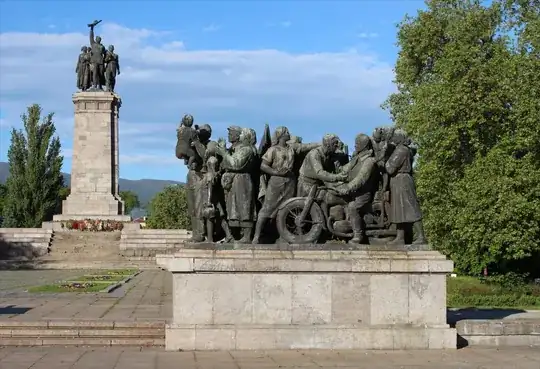
Also the demolition of the monument is illegal because of violated the Russia-Bulgaria Frendship treaties of 4.08.1992 and the Russian-Bulgaria governments culture and science partnership treaties 19.04.1993 - Russian official position.
The monument of "The Soviet Army - Liberator" clean and vandalized.