Three thoughts:
I doubt that people somehow suddenly got significantly taller in Sweden in the first half of the 20th century.
As a comment already points out, people did get substantially taller.
The German Wikipedia page on acceleration wrt. human development says:
Bei Frauen ist die Körpergröße von 156 cm im Jahr 1956 auf 166 cm in 1975 angestiegen
For women, height increased from 156 cm in 1956 to 166 cm in 1975
In other words, the 1960s may well have been a time where relevant increase in length occured much faster than before or after.
(The numbers may refer to Germany, and there the increase may have been sharper than in Sweden due to WWWI and WWII)
What about having everything uncomfortably low did they think was such a good idea?
Summary: The workflows in the old-style kitchens were quite different from the workflows in modern ones. Often, substantially more food was prepared there. It's fine peeling potatoes for 4 standing at the countertop, in particular if that happens only occasionally since it varies with pasta and rice. When peeling potatoes for 15 (who don't get much meat) on a daily basis, not so much. If you largest pot is, say, 6 l, you want a subtantially higher stovetop than when you work with a 15 - 20 l pot every few days.
In the old kitchens, large pots were used far more than nowadays, e.g.
- Heating the water for laundry or bathing (not everyone had a separate bathing stove).
- canning and sterilizing jars: jam, jelly, sausage, fruits etc.
- my great-grandma was cooking not only for her family but also for the apprentices and journeymen in my great-grandfathers employ, between WWI and WWI that were about 15 people to feed every day. And I bet they got lots of stew.
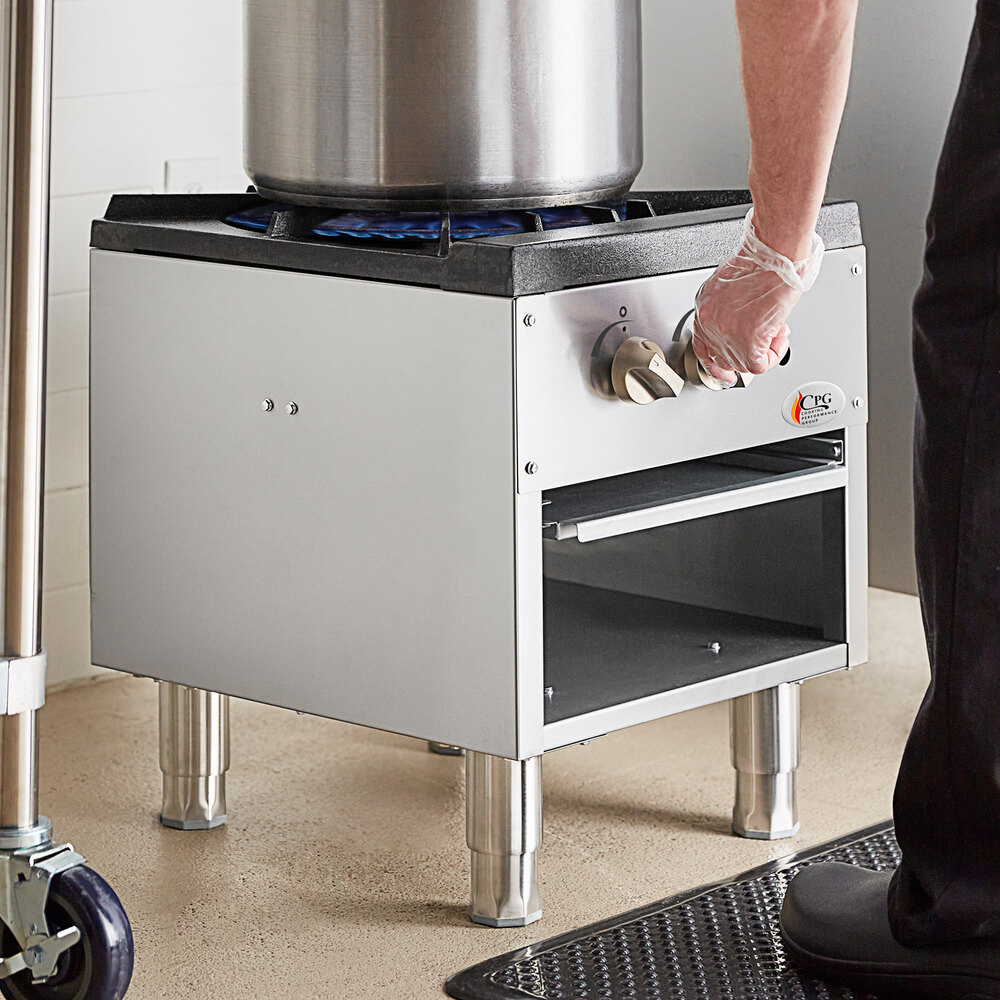
I'm talking here pots of 15 - 20 l, maybe even larger. They are not only heavy lifting, they are also taller and thus need to be placed lower for ergonomic working. (Note that in professional kitchens there are also nowadays stock pot stoves of e.g. 40 cm height for big stock/soup pots.)
I think the transition to the higher modern stovetops occured in parallel to those large pots being needed much less frequently (basically only occasionally for the canning) since people got laundry machines, hot water supply (or at least separate bath stoves), and employees not living in the same house any more and bringing their own lunch.
Old kitchens (as I know them here in Germany, and as also partially seen in the pre-Frankfurt panel of @MarkJohnson's answer) did not have much countertop-like space.
E.g. my grandma's kitchen (full room size kitchen in rural house) had full height kitchen cabinets rather than a wall cupboard over a countertop workspace. Much of the work was done at the table, and mostly sitting on a chair (potato peeling, cutting veggies, fruits, ... also, potatoes kept over winter in the basement aren't as nice as the ones professionally stored we now buy in spring, peeling them is more work and they need far more paring.). Kneading was done standing in front of the table, the countertop spaces would have been rather too high for that. The same for tasks like grating cucumbers or carrots, and heavy cutting like quinces, or the initial quartering of cabbages.
The same table was used for eating and generally as table.
(Since someone was mentioning butchering large animals, the large cutting of them did not take place in the kitchen, that was done on the yard (hanging at a ladder or barn door)
There was some countertop-like space (drainer - sink - stove). This area was used standing, and was higher.
The Frankfurt kitchen in @MarkJohnson's answer is closer to modern workflows: it fits a kitchen into a very small room, where not much more than preparing meals for a 2 generation family can be done, and it uses countertops as work space.
The Swedish kitchen page linked in @MarkJohnson's answer says that that approach (in 1930) assumed that (in future) the kitchen was to be used basically only to heat industrially prepared food - as opposed to preparing and cooking from scratch. I'd say that we have basically reached that stage nowadays, but it took decades longer than those architects imagined back then.
My parents built a frame for their sink/countertop area to bring it to a good height for them: it's much easier to rise the countertop than to lower it. From that point of view it makes sense to have the off-the-self height adapted to the short side of how tall people are.
My mother bought a new kitchen about 10 a ago, with very specific ideas of how it's good for her to work. She now as a smallish table at countertop height that is good for working standing, and a "bar chair" so she can also sit for longer tasks. The kitchen guys commented "that looks as if you intend working here - it's not often that we sell kitchens nowadays where substantial work is done". (She uses frozen or canned veggies a lot, but not canned soup or ready-to-bake frozen pizza etc.)