20

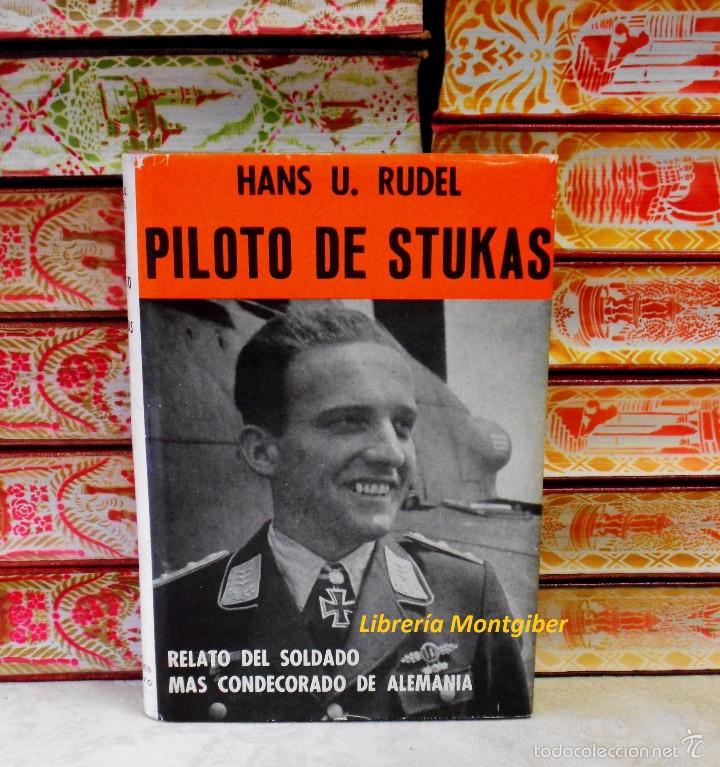
I have a 1971 Spanish edition of the book "Stuka Pilot" by Hans-Ulrich Rudel where he recounts his memories of war.

In the second chapter, in which he talks about the first combats of "Operation Barbarrossa" in 1941, there is a paragraph that seems to indicate that Soviet civilians used petrol to make homemade liquor. The following is my English translation:

For my part, I especially regret the petrol, as the old women of the villages in the region exchange it for fresh eggs. Apparently, they make liquor with it. Naturally, this exchange is forbidden, but everyone loves boiled eggs. As for the liquor, which the villagers try to resell to us, it is a particularly infernal variety of rat poison, so strong that it is not possible to withstand one of its drops on the skin. On the other hand, the Russians drink it without a gesture.

I couldn't find more information about this ersatz homemade liqueur. What was it called by the Russians? How popular was it in the Soviet Union?

RonJohn
  • 490
  • 2
  • 9
Ginasius
  • 1,914
  • 13
  • 27
  • 3
    I suspect you are looking for samogon. – sempaiscuba Nov 21 '18 at 00:35
  • 2
    The old women exchange petrol for eggs? Where do they get the petrol in the first place? Now, if the old women only had hens, they would have their own source of fresh eggs, which they could then exchange for petrol. – bof Nov 21 '18 at 01:16
  • 2
    @sempaiscuba, of course, it's not samogon (самогон in Russian). Samogon is a just distilled alcohol - https://en.wikipedia.org/wiki/Moonshine – c4pQ Nov 21 '18 at 08:44
  • 14
    @bof At least in my dialect of English, "exchange petrol for eggs" doesn't imply any direction to the exchange. As you say, in this case, it's obvious that the old ladies have eggs and wish to obtain petrol in return. – David Richerby Nov 21 '18 at 10:18
  • 1
    @LangLangC My Spanish edition places this paragraph at the end of the second chapter "WAR AGAINST SOVIETS" just before telling his strikes against the Smolensk-Moscow motorway. Of course, an English translation of the original may use different words than I have used in my translation. – Ginasius Nov 21 '18 at 10:32
  • 3
    Ah. Yes. But it would be a good idea to put the exact edition you used, with page number, and an indication that this then your own translation into the question. Translation is hell and often opens up quite some misunderstandings. – LаngLаngС Nov 21 '18 at 10:38
  • 4
    @user1056837 I know what samogon is (and I also know enough to smell it before drinking it, to get some idea of what might have been added to it!). The question is what liqueur was being sold by the villagers, and that was probably samogon. – sempaiscuba Nov 21 '18 at 11:33
  • Oh. Wow. Going through different language versions reveals that no two passages of this are alike, really. Quite liberal in how they treat the material. Found a nazi-publisher that put it out again recently and plans another release next year. And do you own that version you quoted from? Seems quite a bit expensive on the 2nd hand market? – LаngLаngС Nov 21 '18 at 14:09
  • @LangLangC I bought my book less than 10 years ago and it cost me less than 10 euros/dollars. I don't know why that edition you quote is so expensive. Can it be a "princeps" edition? Can it be that the seller is a scoundrel? My spanish edition is a lot more recent. https://cloud10.todocoleccion.online/libros-segunda-mano-segunda-guerra-mundial/tc/2016/07/11/08/57942256.jpg – Ginasius Nov 21 '18 at 17:10
  • @LangLangC You may find amusing how the "original" text in Spanish looks like: "Por mi parte, lamento sobre todo la gasolina, ya que las viejas aldeanas de la comarca nos la cambian por huevos frescos. Por lo visto, hacen con ella aguardiente. Naturalmente, este intercambio está prohibido, pero todo el mundo adora los huevos pasados por agua. En cuanto al aguardiente, que las aldeanas intentan revendernos, es una variedad particularmente infernal del matarratas, tan fuerte que no es posible soportar una de sus gotas en la piel. En cambio, los rusos la beben sin un gesto. " – Ginasius Nov 21 '18 at 17:13
  • I do. -- Es una lastima por la gasolina perdida, pues a muchas viejas les agrada cambiar gasolina por huevos. Se comprende, que esto estaba estrictamente prohibido, pues este liquido esta destinado para otra cosa que justamente para fomentar la produccion de bebidas alcolicas, en los laboratorios caseros de viajas sedientas… Nosotros apenas si aguantamos una gota en la piel, pero ellas… Bueno, para que discutir sobre los gustos. Todo en la vida es costumbre. Estamos viendo tantas novedades en estas tierras… – LаngLаngС Nov 21 '18 at 17:28
  • @sempaiscuba I personally don't understand why you are so sure. As far as I know, people made alcohol surrogates out of wooden lacquer during the WW1 and revolution. And I wouldn't be surprised if these kind villagers made the same kind of alcohol. Moreover, it's not that uncommon to have lacquer in the village rather than some amount of petrol or whatever. – c4pQ Nov 22 '18 at 12:29
  • @user1056837 I'm not sure. That's why I said 'probably'. But if the villagers were selling them alcohol, then it was probably samogon (which could have had almost anything added to it). And like I said, I know enough to smell it before drinking it (and - even today - if it smells like petrol or kerosene you should probably give it a miss!). – sempaiscuba Nov 22 '18 at 13:30

3 Answers3

48

There is quite some strange quotation mixing up the interpretation. My version of that book reads:

An ancient L.A.C. had been trying to fill his lighter from a large petrol tin. He does it by tilting the tin with the result that the petrol spills over the lighter whereupon he keeps flicking it to see if it is already working. There is a terrific bang; the tin explodes in his face and the L.A.C. pulls a face as if the explosion were a breach of military regulations. A sad waste of good petrol; for many old women are only too glad to swap eggs for a little petrol. This is of course forbidden, because petrol is meant for other uses than the concoction of spirituous liquor by old women. Even one drop of the stuff they manufacture burns our skin.

Hans Ulrich Rudel: "Stuka Pilot", Ballantine Books: New York, 1958, p24. (On archive.org: p. 34)

And this does not talk about any "drinking the petrol".

This is just a misconception. He is talking about gas, kerosene, that was used then to barter with the locals. The locals then would use this as fuel to burn, but not raw material or crucial ingredient or synonym for: to distill moonshine. Just for heating the still. This is most probably a type of vodka, like @sempaiscuba noticed called samogon.

Rudel, claiming to be a teetotaler, is of course opposed on these grounds alone to moonshining. Based on his inexperienced stomach for these kinds, it's no wonder that he disliked it.

But one thing remains, this is not liquor based on petrol, but ordinary grain or potato alcohol.

It was so popular that the highest Soviet outlawed it in 1948.

The Junkers Jumo engine for example used:

Junkers Jumo 210 – Fuel type: 87 octane rating gasoline
Cooling system: Liquid-cooled, ethylene glycol


One German version of this book reads "Eier" in at least two places:

p167: Almost all of a German Wehrmacht soldier's pay is invested in buying eggs. (Describing one situation, that he paints as 'excellent'.)

And the quote from above then reads:

Als er in Janowici zum ersten Mal zu uns ins Gruppenzelt kommt, ist gerade großer Lärm. Ein uralter Obergefreiter wollte sein Feuerzeug an einem großen Benzinfaß füllen. Um es gut zu machen neigte er das Faß und Benzin läuft über das Feuerzeug, woran er dauernd fleißig dreht, um zu sehen, ob es noch geht. Es tut einen unheimlichen Knall, das Faß fliegt ihm um die Ohren und der Obergefreite zieht ein Gesicht, als ob das Faß gegen die militärischen Vorschriften geplatzt wäre. Schade um das Benzin, denn viele alte Frauen tauschen gern Benzin gegen Eier. Natürlich ist das verboten, weil das Benzin eine andere Bestimmung hat als die Branntweinerzeugung bei alten Weibern. Wir können davon auch noch nicht mal einen Tropfen auf der Haut vertragen. Alles ist eine Frage der Gewohnheit.
__When he comes to our group tent for the first time in Janowici, there is just a lot of noise. An age-old lance corporal wanted to fill his lighter at a big petrol barrel. To make it good, he tilted the barrel and gas runs over the lighter, which he keeps flicking to see if it's still possible. It makes an incredible bang, the barrel flies around his ears and the corporal pulls a face as if the barrel had burst in violation of military regulations. Too bad about the gasoline, because many old women like to exchange gasoline for eggs. Of course this is forbidden, because gasoline has a different purpose than the production of brandy by old women. We cannot even tolerate a drop of it on our skin. Everything is a question of habituation. (My translation)

As the gas (Benzin) the soldiers had access to would usually not contain any alcohol to begin with, distilling any of it would not be possible in these conditions. But Rudel seems to think at least that old women are in the habit of using it the process of manufacturing spirits (Branntwein).

That may be true, but is just his reasoning and not proof. He probably saw just what was exchanged, in this case gas, eggs and spirits; connecting some dots. For moonshining you just need any type of heat source. That he just declares this gas to be used just for moonshine anyway is another form of contempt he displays towards the locals.

LаngLаngС
  • 80,978
  • 9
  • 282
  • 356
  • 2
    My uncle served on the Saratoga during WWII and he told me about drinking "torpedo juice," which was the fuel used in torpedos. – TomD Nov 21 '18 at 02:11
  • 22
    @Tombo, the Mk13 air-dropped torpedo and the Mk14 ship-launched torpedo both used 90% pure ethanol as fuel. – Mark Nov 21 '18 at 04:52
  • 8
    Moonshine produced by locals often compared with Jet fuel because it horrible taste. In practice fuel was never used as ingredient (it involves very sophisticated chemistry knowledge to do so). It was used for lighting, there are many cheaper fuel like wood to use for cooking and distilling. – talex Nov 21 '18 at 05:46
  • 2
    @Tombo Russian MIG-25 used pure alcohol as coolant for super-sonic flight. Many fun and horrible stories was born after it. – talex Nov 21 '18 at 05:48
  • 5
    @talex between popularity of alcohol in Soviet Union and its constant shortages, plenty of stories exist about misappropriation of alcohol in any conceivable industry. Including (possibly true) stories of unused equipment kept solely as excuse to spend ethanol on its maintenance, and (definitely made up) legends about cisterns of alcohol ordered by astronomical observatories for "cleaning optical axis of the telescopes". – IMil Nov 21 '18 at 06:03
  • 7
    @IMil I know. I'm Russian :) My favorite one is about extracting alcohol from brake fluid using metal bar and Siberian frost. – talex Nov 21 '18 at 06:11
  • 8
    @talex I'm going blind just by reading that! – RedSonja Nov 21 '18 at 13:06
  • 5
    @RedSonja don't worry, you get blind if you drink methyl spirit instead of usual, ethyl spirit. Great thing is that antidote for methyl is ethyl. – talex Nov 21 '18 at 13:09
  • Same is said about german V2 rockets, there was alcoholic fuel that is often said to have been consumed.... – rackandboneman Nov 21 '18 at 19:35
  • @IMil: Is that like treating kessler syndrome? – Joshua Nov 21 '18 at 20:44
  • @talex Agreed. A sort of exorcise the evil with a lesser evil. Some people are able to withstand a lethal dose of methyl "without harm" just because they are oversaturated with ethyl. – Crowley Nov 21 '18 at 22:54
  • 3
    The way I read it they were exchanging their eggs for his petrol. He never actually says that the petrol is an ingredient, just that it is used. – bigbadmouse Nov 22 '18 at 08:48
  • @talex as the old joke goes: an airbase commander received a tank of ethanol and wanting to disguise it from the airmen, labeled the tank С2Н5(ОН). By morning it was all gone and the airmen were drunk. He asks "how did you know what it was?" They say "we saw a tank with some nonsense and then in brackets, "oh". We tried it and it was indeed оh!" (in the original: Попробовали - точно он) – SPavel Sep 02 '22 at 19:53
2

I think that homemade liquor made from petrol is a hyperbole. Think that drinking of such a material is impossible from the medicine point of view.

The only cultural analogue I can remember is "Chassis liqueur" mentioned in Soviet cult movie "Chronicles of a Dive Bomber". There pilots prepared it from hydraulic system liquid.

Again I am not sure that such a beverage was real or it is only a legend.

  • 2
    This could do with a reference for the "impossible from the medicine point of view" assertion (I would guess you're right but it would be more authoritative to include one). – Steve Bird Nov 22 '18 at 11:09
2

What was the liquor that was based on petrol which was produced in the USSR during the Second World War? Answer is None. Samogon is moonshine. Ask in german what kind of brandy Rudel was able to produce from petrol.

NovaSweet
  • 21
  • 2