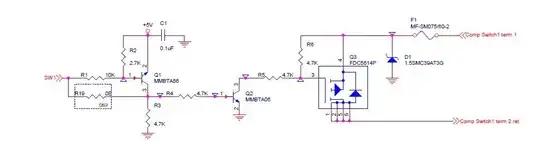
generally, in all switching circuit, emitter is connected to ground and collector is connected to high level. i am not getting why is it so? is there any special purpose?
generally, in all switching circuit, emitter is connected to ground and collector is connected to high level. i am not getting why is it so? is there any special purpose?

Transistors are not really symmetric. If you turn NPN turned around is still NPN, but that is an over simplification. The emitter typically has a much higher doping level than the collector.
You want high doping in the emitter because the higher doping level will give you a higher current gain. It injects more electrons into the base if there are lots of free electrons. This is why the emitter is tied to power or ground if you are amplifying a small signal; you want the BE current to be amplified into a larger CE current.
You don't want high doping on the collector at the base junction because that reduces the breakdown voltage, but light doping is not very conductive so you want the bulk of the collector to be strongly doped in regions away from the base to improve maximum current.
To sum up:

Usually to operate BJT in active region Base-Emitter Junction must Forward Bias and Base-Collector Junction must be Reverse Bias
In above circuit if you assume it as PNP BJT. then Base is at lesser voltage level compared to Emitter and higher compared to collector
