In the Before Pandemic times, my family would often host Easter-egg dyeing parties, where we provide the dyes and tools and guests provide eggs. We emphasize bringing whole raw eggs, but there are always a few know-it-alls who bring either hard-boiled eggs or already-blown egg shells. With the cooked eggs, we thank them kindly and put the eggs in the fridge for later eating, explaining (again) that the dyes are not food-safe, but we've always had trouble with the blown eggs.
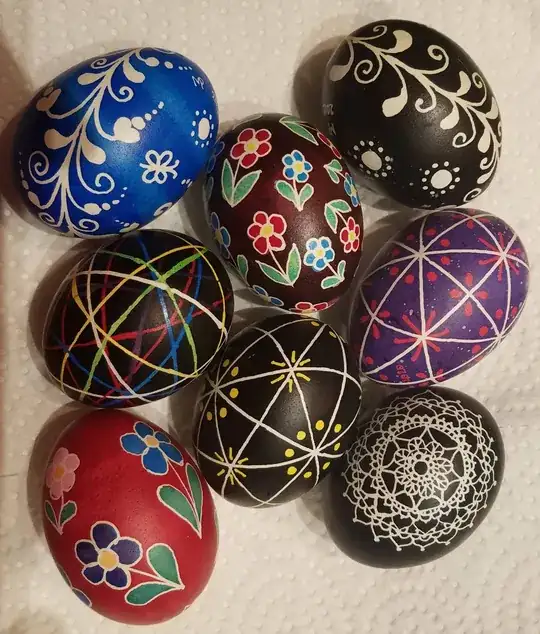
Lots of people who make amazing dyed eggs insist that they only work with blown eggs, but they never explain HOW THE HECK. I mean, basic physics, right? A blown eggshell will just float on top of the dye, leading to, uh... interesting patterns, but not a nice even color.
If you try to push an egg shell into the dye, you either end up with a broken shell, or the dye seeps into the inside, and then you end up with dye dripping all over everything. You can try to blow out the dye, same as the innards got blown out in the first place, but that's likely to still result in dye dripping all over creation, plus now your dye is contaminated with whatever was inside the egg before (raw egg, detergent, other dyes). Also, good luck with trying to turn a blue egg green by giving it a quick dunk in the yellow, and other such tricks.
I've heard tales of plugging the hole (or holes, depending on the blowing method) with wax, but 1. that has never worked for me - the wax always falls out at the most inopportune moment, and 2. that doesn't solve the basic physics problem.
Yet, people still insist that they do this all the time. HOW?