1

Related to question.

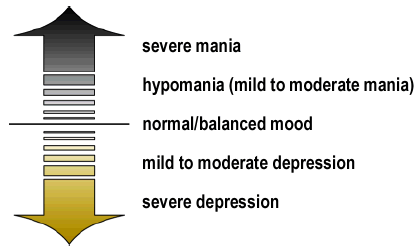
Mania, hypomania, depression and bipolar are mood disorders, from what I understand.

Are ADHD and OCD under some category as well? From what I understand, the are opposite ends of some impulsive-compulsive spectrum?

OCD is an anxiety disorder (same link as earlier), from what I understand, but what about ADHD? Is there another description of OCD that also applies to ADHD?

BCLC
  • 707
  • 2
  • 9
  • 24

2 Answers2

5

ADHD is considered a neurodevelopmental disorder.

Neurodevelopmental disorders are impairments of the growth and development of the brain or central nervous system. A narrower use of the term refers to a disorder of brain function that affects emotion, learning ability, self-control and memory and that unfolds as the individual grows.

You are correct in that OCD is generally considered an anxiety disorder. They are not the same because ADHD is characterized by cognitive impairment, and OCD is characterized by anxiety (in the form of obsessions and compulsions). However, you can find both disorders in one person.

Sydney Maples
  • 3,692
  • 1
  • 13
  • 31
  • 1
    @JackBauer There was nothing in that paper that suggested that OCD is a neurodevelopmental disorder, from what I can tell. I think it mentioned that because ADHD was neurodevelopmental, its symptoms typically showed up before OCD symptoms do. OCD is characterized by anxiety, which may or may not affect cognitive impairment, and ADHD is characterized by cognitive impairment, which may or may not produce anxiety. – Sydney Maples Sep 07 '15 at 17:52
  • Sydney Maples, it says neuropsychiatric. Not neurodevelopmental, but has 'neuro' in it. And apparently there is a neurobiological link between OCD and ADHD. Just to be clear, OCD isn't neurodevelopmental? – BCLC Sep 07 '15 at 23:42
  • Is there any kind of category under which OCD and ADHD are? Neuro something? Also, sorry for linking error. I edited link for spectrum in the post – BCLC Sep 07 '15 at 23:44
  • @JackBauer It has 'neuro' in it to refer to the nervous system, of which neuropsychiatric disorders are all a part ('psychiatry' involves the study of these disorders). Within neuropsychiatric disorders there are many different types of disorders. 'Neurodevelopmental' disorders are disorders that impair development within the nervous system. A 'neurobiological' link means that they may share similar properties within the biology of the brain, similar to how there may be a link between the biology of memory and the biology of imagination. But it doesn't mean they are in the same camp. – Sydney Maples Sep 07 '15 at 23:48
  • @JackBauer OCD is not considered a neurodevelopmental disorder because it is not characterized by its effect on development of the brain or nervous system. It is characterized by anxiety that produces obsessive thoughts about what the anxiety focuses on, as well as compulsions to do certain things to get rid of the anxiety. For that reason, it is an anxiety disorder, not a neurodevelopmental disorder. 'Anxiety disorder' is the category it is under. ADHD is under the 'neurodevelopmental disorder' category. It is characterized by impaired development in the brain, typically in the frontal lobes. – Sydney Maples Sep 07 '15 at 23:51
  • to your knowledge, is there a category of mental illnesses that includes ADHD and OCD? Apparently, there's an impulsive-compulsive spectrum. The word 'spectrum' brings to mind bipolar, wherein both mania and depression are mood disorders...right? – BCLC Sep 14 '15 at 13:52
  • From the article: Some research has suggested that OCD and Obsessive Compulsive Spectrum Disorders fall upon a compulsive-impulsive continuum. In other words there exists a gradient of disorders ranging from behavioral impulsivity to compulsivity. OCD appears to lie at one end of this spectrum, while ADHD exists at the other. – BCLC Sep 14 '15 at 13:53
  • @JackBauer that isn't true, because that is implying that you cannot have both at once, though it is often the case that OCD and ADHD occur together. I do think that that article is mistaking OCD with OCPD, which as far as I know is essentially the opposite of ADHD. – Sydney Maples Sep 15 '15 at 01:53
  • What exactly is 'that', and how does that imply one cannot have both OCD and ADHD? One can have both mania and depression (which is what bipolar disorder is) – BCLC Sep 15 '15 at 14:41
5

Different diagnostic systems may assign these syndromes to different categories based on theory or clinical opinion. In the DSM-IV era, OCD was listed under the "Anxiety disorders" category; however, in the DSM-5, it is now listed under a different "Obsessive-Compulsive and related disorders" category. ADHD is currently under the "Neurodevelopmental disorders" category.

However, many would argue that categorization should be based on empirical evaluation of the co-occurrence of syndromes and lower-level symptoms rather than on psychiatric theory or clinical opinion. When approached from this viewpoint, you find that OCD loads highly on the Internalizing spectrum (along with MDD, GAD, PTSD, and eating disorders) and ADHD loads highly on the Externalizing spectrum (along with substance abuse and conduct-related disorders) and moderately on the Antagonism spectrum (along with narcissism, antisocial, and histrionic disorders). There are many articles on such empirical evaluations and various dimensional and hierarchical approaches to understanding psychopathology that I could share if you are interested. One place to start is would be the Hierarchical Taxonomy of Psychopathology (HiTOP) system.

Jeffrey Girard
  • 204
  • 2
  • 6
  • thank you, jeffrey. why did you list the cluster-B personality disorders except for BPD? – BCLC Jun 07 '16 at 03:04
  • 1
    I didn't include BPD as an exemplar of the antagonism spectrum because it loads on both the internalizing and antagonism spectra. It is a complex and highly heterogeneous diagnosis. – Jeffrey Girard Jun 07 '16 at 03:11
  • I like that word heterogeneous. so the other cluster-B are homogeneous? – BCLC Jun 07 '16 at 03:19
  • 2
    No disorder is fully homogeneous, but yes, BPD would appear to be more heterogeneous than other personality disorders. For a very interesting read on this topic, I recommend: Sharp, C., Wright, A. G. C., Fowler, J. C., Frueh, B. C., Allen, J. G., Oldham, J., & Clark, L. A. (2015). The structure of personality pathology: Both general (’g') and specific ('s') factors? Journal of Abnormal Psychology, 124(2), 387–398. – Jeffrey Girard Jun 07 '16 at 03:42
  • Jeffrey, this one? http://www.ncbi.nlm.nih.gov/pubmed/25730515 – BCLC Jun 07 '16 at 04:24