1

CONTEXT:

Here's reaction of alkyl halide with aqueous $\ce{KOH}$
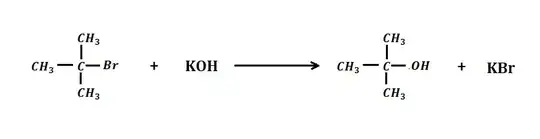
Text

and here's the reaction for dehydrohalogenation by alcoholic $\ce{KOH}$

dehydrohalogenation

Question

Initially $\ce{KOH}$ is aqueous. On reacting with alkyl halide, it produces alcohol product. Does the alcohol not make the initially aqueous $\ce{KOH}$ alcoholic as a result producing alkene in the later part of the reaction? If so, wouldn't the reaction initially produce alcohol and produce alkene from the remaining reactants?

Nilay Ghosh
  • 25,509
  • 26
  • 91
  • 197
  • 2
    It depends on the conditions. You'll note that the 2nd reaction is heated. In practice all these reactions produce mixtures of alkene and alcohol - the proportions of the mixture depend on temperature, solvent, reactant concentration, phase of the moon etc – Waylander Oct 04 '21 at 10:49
  • @Waylander what do you mean by phase of the moon? – R_Squared Oct 04 '21 at 11:51
  • I mean that you can run this reaction several times under what you think are identical conditions and get differing results. It is also difficult to replicate the reported results of other researchers. It is a reaction that is much taught but seldom used in the real world as there are better procedures that give more reliable results – Waylander Oct 04 '21 at 11:55
  • https://chemistry.stackexchange.com/a/15737/30929 – KarlsMaranjs Oct 05 '21 at 04:03

0 Answers0