Yes, this is mostly about estrogen. Most breast cancers rely on endogenous estrogen to sustain proliferation.
Some general reading: Cancer Medicine, Chapter 18
More in-depth reading: Endogenous Hormones as a Major Factor in Human Cancer
Requested summary of mentioned readings:
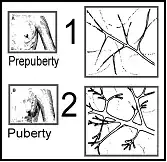
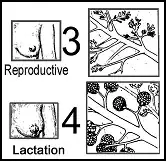
First of all, there is an established link between breast cancer cell proliferation and concentration of estrogens and progesterone, which is logical, because normal breast cells divide in response to those hormones (e.g. puberty, pregnancy, even luteal phase of the menstrual cycle). Secondly, the incidence of breast cancer in women correlates with major changes in their hormonal profile - girls and elderly women (i.e. women with lower levels of sex hormones) don't get breast cancer.
Many factors, that influence the risk of developing breast cancer are in fact tightly connected to the hormones' levels. For example - early age of menarche (or, more importantly, first ovulation, because physical activity at young age disturbs ovulation AND is protective against breast cancer) and Hormone Replacement Therapy raise the risk, early age of first full-term pregnancy or any form of artificial menopause (such as preventive oophorectomy for women with mutations in BRCA1 or 2) reduce the risk.
The first table from the book chapter lists known risk and preventive factors. The review article explains the same ideas, but connects them to other types of cancer (e.g. ovarian cancer) and suggests mechanisms, which might be the cause of those risk changes.