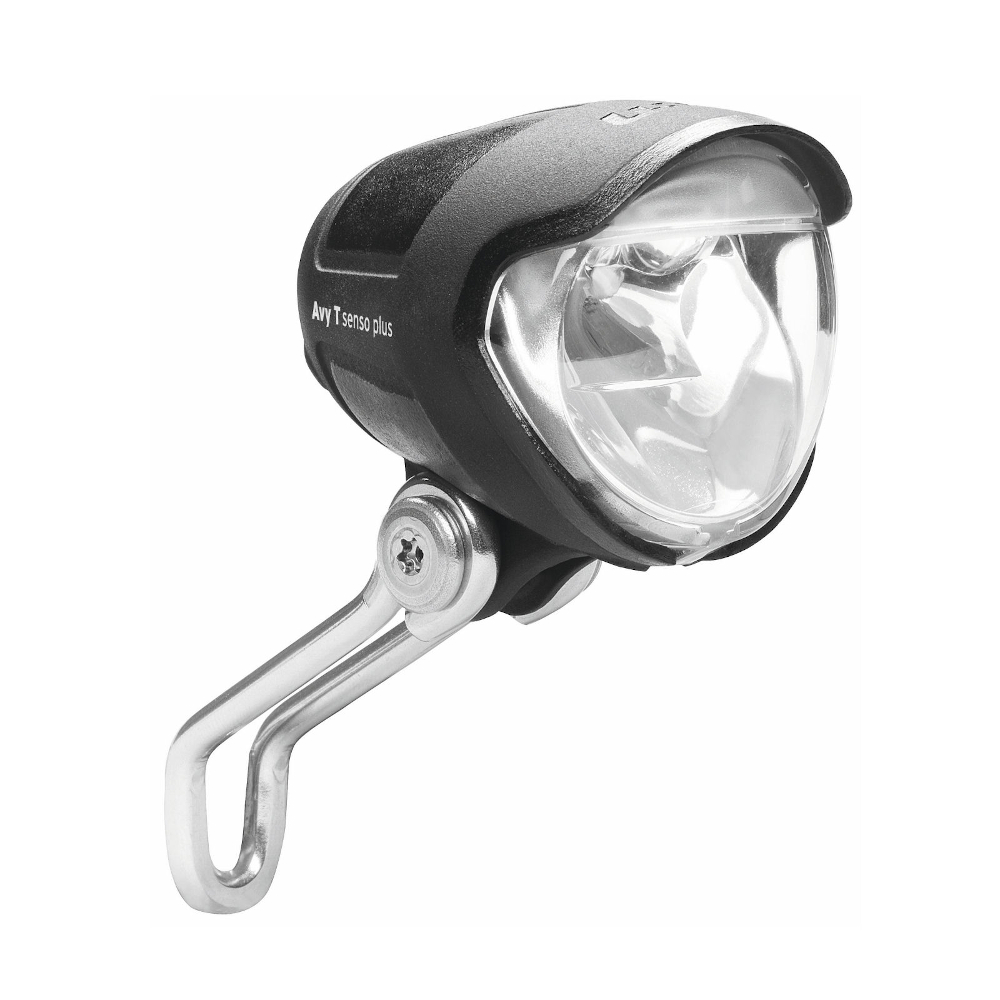
5

Many front lights look rotational symmetric, also pretty powerful ones (>500 lumen). Is that usually the case? Or are there many that only look like that, but are still constructed to produce a good beam (powerful, illuminate the road well, not blind oncoming traffic)

If there are many with a good beam, are there giveaways that allow to weed out the bad ones?

Background / explanation

This question is probably not easy to understand for many people.

The construction of bike front lights broadly falls into three categories (from what I've seen):

  1. light source pointing down, mirror to front.
  2. light source and reflector rotational symmetric with asymmetric lens (right half)
    The segments in the upper half probably reflect much of the light that goes through the upper half down onto the road
  3. complete rotational symmetric (left half)

I'm talking about the light source (LED) the reflector and the lens here, not the further assembly (battery, mount etc).

Rotational symmetric means that that you can turn it and it still looks the same. For a light, having rotational symmetry means that the beam is rotationally symmetric - if you point it at a (vertical) wall, it will make a circle.
This is not what you want for vehicle front lights ("to be seen"-lights and off-road use somewhat excluded):

  • if you point it at the horizon, half of the light will be above the horizon
    • there's usually not so much to be seen, and what needs to be seen either retroreflects or has its own light (hopefully).
    • If you go for powerful lights, you'll blind oncoming people which you usually want to avoid.
  • if you point it below the horizon, the emphasis of the beam is a few meters in front of you, quickly diminishing forward

Instead, you want much of the light illuminating the (mostly) horizontal road.

chichak
  • 703
  • 3
  • 14
  • 1
    There are also some with 2-fold rotational symmetry, i.e. you can run them upside down as well as the right way up, but turned on their sides they're less effective. Not that you do want to illuminate the edge of the road near you, so a purely vertical pattern isn't great either. My dynamo light is a little narrow near the bike, and on very twisty roads, especially when rough, I supplement it with a wider battery light – Chris H May 09 '22 at 13:40
  • 1
    Once in a while you read how easy it is to add light to a bicycle by simply strapping a flashlight to the handlebar using a rubberband, without their mentioning how irritating this setup is for pedestrians, or how dangerous it is for car drivers and for the cyclist alike when drivers can't see where they're going. "Rotationally symmetric cycling lights" are likely simply repurposed flashlights. – Sam7919 May 09 '22 at 17:39
  • 1
    regarding repurpsed flashlights: yes, but in addition to that, there seem to be also flashlight companies slightly altering their existing product by adding a handlebar mount and calling it a day :/

    @ChrisH sounds like you know your symmetry groups :) I didn't want to write rotational invariant. Would be even more alien to many people
    obviously not having a rotational symmetric beam does not gurantee a good beam, only the negation holds.

    – chichak May 09 '22 at 19:43
  • I don't follow this. If you aim the light down, the light beam will form a conical section on the road. Adjust it so that the 'top' (farthest point) is a reasonable distance ahead of you. Why would you aim it at the horizon? – JimmyJames May 09 '22 at 20:10
  • 2
    Also, where I live, roads are mostly horizontal. – JimmyJames May 09 '22 at 20:26
  • 1
    @JimmyJames The result of that approach is a very bright spot on the road very near to you (= less than seven meters). If you are going at 25km/h (7m/s), you cannot avoid collision with anything that you only detect at that distance. And, if the light is bright, the bright spot near to you has the disadvantage of reducing the dark adaption of your eyes. Meaning that it actively stops you from seeing stuff that you would see if you had no light at all. Unless you want to constrain yourself to riding slowly in the dark, you need the lighted region much further away from you. – cmaster - reinstate monica May 10 '22 at 06:06
  • 1
    @JimmyJames when you go 25 km/h have a reaction delay of 1 s and you're able to brake with 4 m/s^2 (quite strong but not super strong) you already have a stopping distance of 17 m with no safety factor. If you point your beam centre 17 m away ahead from 1 m above ground, it's 3.3° below horizon. If you open a flashlight so that the beam begins 5 m ahead of you, you, it will make a half angle of 8° -> that means it extends 4.7° above the horizon -> cutoff needed. If you want to be prepared for 60 km/h with minimal safety, you need at least a 70 m long beam, which is 0.8° below horizon. – chichak May 10 '22 at 06:58
  • @cmaster-reinstatemonica I don't see how you come to that conclusion. I've definitely adjusted my light to shine more than 7 meters ahead without pointing it at the horizon. It's not like there's only one angle you can point a light. Where does 7 meters come from, exactly? – JimmyJames May 10 '22 at 19:37
  • @chichak I'm talking about the farthest point of the beam. Point it the light to the farthest point of the light is where want it (on the ground.) How do you think they managed this with headlights on cars? It's not rocket science. But if you really can't find a suitable angle, consider electrical tape or duct tape. – JimmyJames May 10 '22 at 19:41
  • @JimmyJames The 7m is both the reaction distance when you are going 25km/h (= 7m/s !) and the max allowable distance a bike light may reach according to a hopelessly outdated (some would say anti-cyclist) law in Germany. It was in effect even before halogen bike lamps were a thing... Anyway, when you talk about conic section, I know that you do no have a lamp with a shaped beam, and those will always shine way too much light directly in front of you while shining way too little where you actually need it. And the effect of dark-adapted eyes, I know and fear it from personal experience. – cmaster - reinstate monica May 10 '22 at 19:58
  • @JimmyJames Btw, chichak's reply to your comment is excellent. – cmaster - reinstate monica May 10 '22 at 20:00
  • @chichak I didn't realize there was a law involved but now I am puzzled about your mention of a 70m beam or pointing it at the horizon. If 7m is all you have to work with, then maybe a shaped beam seems to be required. You might want to consider two lights oriented differently as well. – JimmyJames May 10 '22 at 20:28
  • 1
    The thing is, which wasn't explicitly mentioned here: you also want to the illuminated area to be roughly shaped like a trapezoid and that area to be illuminated somewhat even. What even means here is also not totally obvious. It's not so easy to explain (pen&paper would help here!), but this means you need to put much more light per angle into the upper part of the beam than the lower one. With rotational symmetry, the best bet for that is the beam centre. +To have the illuminated area near you somewhat wide, you want lower beam wider-angled than the upper. Quite far off rotational symmetric! – chichak May 10 '22 at 20:46
  • Everyone outside of STVZO-Land don't need to follow that law though. And I think the 7 m rule must have been phased out at some point. Maybe someone could cite it? – chichak May 10 '22 at 20:52
  • In comments below you talk about DIY approaches. Here's a modification I made. Without the mod I use that light for night MTB (on the bars, with another on my helmet). I can refit the mod to ride home without dazzling drivers. But it won't comply with any strict regulations. – Chris H May 11 '22 at 13:04
  • @cmaster-reinstatemonica I can't find any reference to the "7m rule" you mention in the current Stvzo. Here's the original text https://www.gesetze-im-internet.de/stvzo_2012/__67.html Maybe there was something along those lines in previous versions? But, for example, in the previous version I could only see a requirement that the center of the light cone must be at 50% of the lamp height 5m in front of the light. If I understand that correctly it means one should have aimed the center of the light 10m ahead. How much extra light goes beyond 10m then depends on the light cone. – user2705196 May 11 '22 at 17:57
  • @user2705196 Ah, excellent. I never honored that rule for safety reasons, anyways. It was in effect in the '90s, if I'm not much mistaken. Glad they updated it. The wording about the center of the light cone is another example of a totally misguided rule, though: If the light is mounted near the axle, it would still blind people, while the same light mounted on top of a high handle bar would not reach beyond 20m. The current wording is much better :-) – cmaster - reinstate monica May 11 '22 at 20:09
  • @cmaster-reinstatemonica Of course the irony is that bike lights in the 90s were in no real danger of blinding anyone...! ;-) – user2705196 May 20 '22 at 14:24

3 Answers3

16

Unfortunately, there are a lot of head lights for bikes out there which do not have a sharp cutoff at the top of the light cone to avoid blinding oncoming traffic. You have to check each individual brand.

The best give-away is when the light is legal for use in Germany. Because German law prescribes that cutoff. So, best pretend you are German when you shop for a front light, and check that the light abides by the StVZO (StVZO = Straßenverkehrszulassungsordnung = the directive that defines which lights are legal and which are not).

Btw, bike shops may have images for how the light cone is supposed to look like on a dark road, allowing you to directly compare what parts of the road are illuminated by how much. Use these images if you can. They will show you which lights actually allow you to look far, and which only blind yourself by over-illuminating the patch right in front of you.

  • have to check every model, right? or do brands usually fall into either category? btw, cutoff is a nice word here, didn't occur to me. Thanks! – chichak May 09 '22 at 11:05
  • 2
    The German standard is called StVZO (use that to search for compliant lights). Some lights even have dual mode (StVZO low beam and non compliant high beam) – Andy P May 09 '22 at 11:13
  • 4
    @chichak German bike shops mostly sell StVZO lights and some even let you filter them for the certification on their international sites. For example:

    https://www.bike-components.de/en/accessories/lighting/?m73267filterStreet%2520Use%2520in%2520Germany=yes%2C%20for%20bicycles%20%28%C2%A767%20StVZO%29&m73267filterType=front%20light%20%28white%29

    or https://www.bike24.com/cycling/electronics/bike-lights/front-bike-lights?dynamicAttributes%5B448%5D%5B3190%5D=3190&searchTerm=&sort= This should give you an good overview of available lights.

    – airace3 May 09 '22 at 11:50
  • @AndyP Thanks. My legalese is a bit rusty... I've made that part a bit more precise now. – cmaster - reinstate monica May 09 '22 at 12:08
  • 4
    tl;dr please, never shop for bike lights whilst not wearing a Dirndl or Lederhosen. Also make sure you regularly practice the Straßenverkehszulassungsordnung. – leftaroundabout May 09 '22 at 21:13
  • Germans "circumvent" this solution though by mounting their lights in such an upward direction that they still blind oncoming traffic :-( – Carsten May 10 '22 at 13:13
  • @Carsten Indeed. I'm afraid, we'll have to live with those until bikes are required to do a bi-annual TÜV checkup with a sticker on a required license plate like cars do. Not that I would put it past the Germans to come up with something like that... That said, the problem even extends to pedestrians. I once had a situation 100% under control, seeing the legs of a group of pedestrians from afar in my light (my light is perfectly adjusted). Then a pedestrian decided that they needed to be seen and directed their torch into my eyes. With the result that I couldn't see them at all, anymore X| – cmaster - reinstate monica May 10 '22 at 19:32
  • @cmaster-reinstatemonica my main light might be StVZO approved but it's probably compliant even if not (Axa Luxx 70). The mounting screws are such that after a few hundred km on poor roads the beam angle isn't where I put it, so a periodic inspection would have to be daily. Anyway, adjusting the angle for the conditions is a sensible thing to do (dumb laws aside - you'd melt most brakes descending long hills slow enough to ride in what you can see under the German regs) – Chris H May 11 '22 at 12:55
  • I believe there also exist bike lights that get dimmed when meeting others. There's a fine line between seeing well ahead at 25 km/h in a dark forest track vs. blinding opposing traffic, so I manually adjust my bike light whenever I meet someone in the dark. – gerrit May 11 '22 at 12:57
  • @ChrisH That's a problem specific to handle bar mounted lights. Fork mounted lights only need to be adjusted once. Then you secure them firmly in place by tightening the screw, so that you won't need to readjust until it has collided with something. – cmaster - reinstate monica May 11 '22 at 13:29
  • @cmaster-reinstatemonica not true, that's my fork-crown mounted light. Used as designed the nut is held by plastic so there's a limit to how tight you can do it up without breaking anything. And I don't want it locked off solid so that I can adjust to the conditions. Bar-mounted lights couldn't be periodically inspected as they have to be removed daily in case of theft, if parked outdoors – Chris H May 11 '22 at 13:34
  • @ChrisH Ok, there are lights out there that cannot be properly fixed in place. However, the usual front light mounts are specifically designed to allow this. After all, the mount was originally part of the electric circuit, connecting to a metal piece in the light to act as a ground connection, which would take the compression stress easily. As such, any good front light should be fixable. – cmaster - reinstate monica May 11 '22 at 14:49
  • @cmaster-reinstatemonica Yes, and if I really wanted this to be rock-solid it could be, but then I'd be forced to set it up for decent speeds on undulating unlit roads, and be unable to adjust it to shorter range which is sometimes useful. The cutoff means it can be non-dazzling while still not being set up to German rules – Chris H May 11 '22 at 15:05
  • 2
    @AndyP You mention "StVZO low beam and non compliant high beam" but the current StVZO explicitly allows for a high beam! Just like for cars the requirement is that the high beam and low beam modes (Abblendlicht & Fernlicht) need to be switchable (either automatically or manually) and that one cannot blind oncoming traffic. – user2705196 May 11 '22 at 18:04
  • 1
    @user2705196 Indeed. I didn't know about that rule either. Thanks for looking it up :-) – cmaster - reinstate monica May 11 '22 at 20:11
6

Summary of what I found when doing my DIY light:

If the light has only one symmetrical lens, then it won't be any good. If you want to see stuff near the front wheel to dodge potholes, and to the left and right to know where the curbs are, then the beam needs to be a bit wide, and the lens has to be aimed down. But in this case, it won't throw light in the distance, because the center of the beam will land about 5m in front of the bike. So if there is a pedestrian on the bike path, you'll only see them at the last second. That's no good.

With one narrow beam optic angled slightly down, with the center landing 25m in front of the bike, you'll see in the distance, but not up close and to the sides. That's also no good.

The ideal result with symmetrical optics turned out to be a wide lens angled down (about 15° beam, blue) and a narrow lens angled slightly down (about 6° beam, red). In fact, I don't remember, but the 15° might have been a non-symmetrical 15x30° lens. Anyway, it was quite good, not blinding incoming drivers, a good compromise using available off the shelf optics.

enter image description here

It is more difficult to build, because the two LEDs and lenses do not aim at the same angle. The LED has to sit on the heat sink, so this means one small heat sink per LED. I'd recommend this combo to anyone who wants to DIY. Get 2-3 small heat sinks, drill a hole through the fins, and put them on a skewer. Then you can mix and match optics and play with the angle of each LED until you find something that works. Note the narrow beam optics tend to be larger, so make sure it fits. With a dynamo, both available power and cooling airspeed are proportional to bicycle speed, so there is no risk of overheating when stopped, so the heat sink can be quite small as long as it gets good airflow.

It was not as good as a proper StVZO light, like the Saferide I got later. These are expensive because the optical design is quite difficult to do, requires custom molds, etc. At some point I got involved into designing one, but the optics company wanted $100k for the optics R&D, so... no go. That explains why there are so few on the market. But they are much MUCH better. Seriously if you have never tried one, you're missing out. The only drawback is they require a very accurate angle, because the brightest center spot, which throws light in the distance, is tiny with an abrupt cutoff. So they tend to cause problems at the beginning of an ascent, where the road ahead is above the cutoff, and at the top of a hill, where the beam will hit whoever's coming the other way in the face.

Wide symmetric lenses aimed horizontally are only suitable for mountain biking. In this case, you want to throw half the light up, to see the branch that will otherwise slap you in the face. So if you see a light with only one symmetric lens, or several but they're all at the same angle, there's no need to even try it for road cycling.

A helmet light with a narrow beam is a nice addition, because you can aim it, which is very useful when turning. Also to check stuff around that your main light doesn't illuminate. It needs to be a narrow beam, because it's about seeing stuff far away that's outside the main light beam, and to both point it away from people coming in the other direction to not blind them without having to turn your neck too much, and to briefly point towards drivers who come from the side at an intersection to make sure they see you. It also provides redundancy: if you're going downhill fast on a dark road, it's better to have two lights in case one dies.

bobflux
  • 1,744
  • 9
  • 9
  • Sounds like a nice project, even if you learned some commercial stuff is much better. Can we see it somewhere on the internet? And actually, it looks like this is a commercial design too >.< But these things don't need to be expensive, in the end, if you put 1 M€ into R&D + tooling and make a series of 1M, it's 1€/unit. – chichak May 10 '22 at 20:29
  • Also, I have the feeling calculating and constructing a decent reflector on a hobby scale is feasible with some geometric optics, 3D-printing + reflecting paint. Not easy though! Also probably not getting that STVZO stamp – chichak May 10 '22 at 20:31
  • @chichak I have quite a bit of experience in optics, including directing high-power LEDs and see a few difficulties: You have an area source, with a mystery lens built in (point sources are far simpler); 3d-printing is far from smooth enough, and smoothing techniques affect the the surface form; reflecting paint is also not smooth enough. Better might be to vacuum form thin (<1mm) mirror acrylic over a mould. The mould could be 3d-printed and polished if you're careful to only heat the mirror sheet – Chris H May 11 '22 at 13:02
  • 1
    @ChrisH Yes, that's pretty much it. I have a Philips SafeRide. If you do an image search, you'll see it is a metallized plastic reflector. Whether it is molded or vacuum formed, I'm not sure. But it's pretty big, because to get a well focused tight beam with an area source, the lens has to be large compared to the area of the source. These designs are usually married to the LED they're made for, because another LED will have slightly different optical center, embedded lens, thickness, etc, so it won't be at the focal point of the lens... – bobflux May 11 '22 at 14:01
  • @bobflux even a lot of the circularly symmetric ones use a metallised plastic reflector, though some are a solid aluminium shell (cast and polished by the look of things) and of course some just have a plastic lens. I'm not sure of the moulding process in bulk manufacturing, but I'd guess that they're metallised after forming which isn't a DIY option (with all the facilities in work I might be able to evaporate Al onto a custom reflector, but not for personal projects). While LEDs do vary, fitting to an existing reflector would be worth a try – Chris H May 11 '22 at 14:13
  • ... my current custom ideas involve minimal lights with lenses, built in to my aerobars as a backup and with a daytime flash mode. One day I might have time to do the electronics and start playing – Chris H May 11 '22 at 14:15
  • Well with a symmetrical reflector if you change the LED it'll change the beam width a bit, maybe change the distribution, if the LED is bigger (XM-L) then it'll be less focused, but it'll still look decent. As long as the LED is centered (ie, can't upgrade Luxeon Rebel which has a non centered footprint). With a StVZO reflector, it's another can of worms... – bobflux May 11 '22 at 14:39
  • @ChrisH: intersting, I assume you worked with LEDs professionally? Are there standard CAD tools for that? In-house tools? What about LEDs without without a lens, can they be treated as a Lambertian emitter reasonably well? Regarding 3D-printing, you're aware of resin-printers and their far higher resolution, right? DIY Aluminium PVD is a thing too. BTW, I don't see myself doing that project anytime soon, at least not alone, maybe as a collaboration. – chichak May 11 '22 at 19:01
  • I didn't have access to tools that would help here. Instead we went for emitters as bare as possible - a reasonable approximation to Lambertian but they're never truly lens-free because the encapsulation acts as a lens (even if it's only shaped to reduce internal reflections). We used a big fat glass condensing lens. – Chris H May 11 '22 at 20:37
  • I've seen some incredible resolutions from resin printers, but not DIY scale or budget; I've only used FDM and SLS. The latter can be polished pretty smooth and is stronger in thin sections - and "DIY" PVD is pretty much a matter of buying lab equipment to use at home - you could probably buy a complete evaporator 2nd hand. Economies of scale mean it's probably not worth it unless you want to found a new manufacturer – Chris H May 11 '22 at 20:38
1

There are two conflicting requirements for the light: do not dazzle the incoming traffic and see humans and other objects on the road so that you can stop in time. Riding a more remote road with no street lights is very different from riding a street where it is only important to ensure the good visibility of the cyclist instead.

If you only evade hitting the pedestrian because of the moonlight while your certified light seems not illuminating him at all, this is also unsafe. If you turn into the darkness because your light is aggressively shaped not to dazzle traffic on the side, this is unsafe. Same if your down-bent light is so bright that you do not see anything outside its highly restricted path.

The solution of this problem is known very well and is implemented on every car: if your road conditions change dramatically during the ride, you need both low and high beam. High end bicycle lights now feature a separate switch for a high beam. Unfortunately there are not many of them. Maybe a separate wide angle light for the usage outside the street/road may be a solution.

Very bright and "properly adjusted" light with expensive optics dangerously adapts the eyes of the cyclist for very poor visibility where this aggressively shaped beam does not reach.

nightrider
  • 7,731
  • 1
  • 21
  • 53
  • 2
    "dangerously adapts the eyes of the cyclist for very poor visibility " <- I don't understand, could you reword please? – chichak May 10 '22 at 20:33
  • 3
    Human eyes adapt to the amount of light by contracting the pupils as required. With the powerful light at high setting such that you see colors of the flowers on the ground, the eye adapts to the illuminated objects of the road. Very relevant objects that otherwise may still be visible (dead darkness is rare unless in the forest) may not be visible in this case. If the beam is intentionally shaped "not too far, not into the side", the objects there are not properly lighted up may be easier to see with the low light setting when the diffuse light from environment can complement. – nightrider May 11 '22 at 08:12
  • thanks for the explanation! I think the sentence is accidentally oxymoronic, maybe change it to: "dangerously adapts the eyes of the cyclist to the higher light levels of the beam, far above that of the surroundings"? – chichak May 11 '22 at 19:07