52

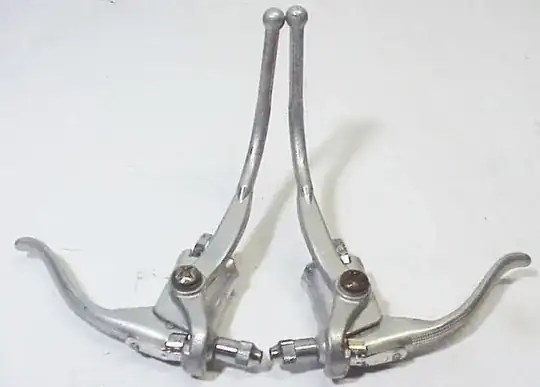
It used to be very common to see bikes with dual pull brake levers (if that's even the right name) as shown below. However now it seems almost impossible to find brakes like this. Even finding a picture to post was hard. It seems like it would be quite useful to be able to brake from various hand positions. There was an answer I read a while back (can't find it now) that stated that there was a reason they got rid of those, but no explanation as to why. So any technical reason, or is it just for looks?

dual pull brake levers

ʍǝɥʇɐɯ
  • 17,209
  • 2
  • 50
  • 84
Kibbee
  • 21,729
  • 10
  • 72
  • 109
  • 4
    @mathew -- I only rarely heard them called "safety levers". "Dual pull" was the more common term -- that and "suicide levers". – Daniel R Hicks Aug 04 '11 at 19:12
  • 1
    @Daniel - Yeah, same here. From what I've heard, these are anything but safe. (Although I did survive using them as a kid.) – Goodbye Stack Exchange Aug 04 '11 at 19:28
  • 1
    The manufacturer called them 'Safety Levers'. Sheldon referred to them as 'Extension Levers'. Personally I never heard of 'Dual Pull' and wondered if that was a term for centre pull brakes. It may be an Americanism that we didn't get here. That said, the wikipedia page for the CPSC mentions 'safety levers', 'suicide levers' and 'auxiliary levers' but no mention of 'dual pull'. – ʍǝɥʇɐɯ Aug 04 '11 at 21:33
  • 4
    I believe the CPSC term is "hand lever extensions", as found in 16 CFR 1512.5. It doesn't look like that's been revised since 1978, unfortunately I can't find a copy of the 1974 regulations to see if they differ - they were published in 39 FR 26100, which I haven't been able to find online. – lantius Aug 04 '11 at 23:36
  • I think we need to email John Forester as he was the guy that kicked up the fuss about them. @lantius top marks for research! – ʍǝɥʇɐɯ Aug 05 '11 at 00:39
  • some more opinion here: http://www.mytenspeeds.com/My_TenSpeeds_1/Feature_Bicycles/Custom_Built_Bicycles/Custom_Built_Bicycles_2_Original_Single_Speed.htm . These are also called 'dual position' levers, or rear levers. Agree with user5830, the 'suicide lever' moniker is a load of crap. I have these levers, and they're plenty safe, as long as they're adjusted properly. – naught101 Sep 03 '13 at 10:34
  • Back then drops were not designed as a hand position. For one the cable come out the top. A second lever on the drop would interfere with riding on the drop. For example gripping the drop for power. – paparazzo Jun 03 '14 at 15:10
  • 1
    Indeed, it's silly to call these things "safety levers", since all the actuators in the diagrams are levers, and brakes are for safety. Thus they are all "safety levers". – Kaz May 21 '15 at 23:13
  • Just for completeness, I've heard them called "sissy brakes" or "sissy levers" I changed to normal road brakes and missed these for about a week before figuring out how to ride on the hoods. – Criggie Dec 23 '15 at 07:49

8 Answers8

35

I believe there are multiple reasons that "extension"/"dual-pull"/"safety"/"suicide" levers aren't seen anymore:

  1. They're really a solution for a poorly fit bike, where the rider can't reach the regular brake levers. Fix that and you don't need an extra lever on the flat of the handlebars. This was especially a problem for smaller riders. Bike sizing and fit have improved a lot since then.
  2. Since they effectively pre-pull your brake a little, they reduce how much travel you can get out of the primary brake lever which can reduce the effectiveness of that primary brake lever. (I guess some designs don't have this problem, but most did)
  3. Using them puts your hands in a location that doesn't give you much leverage for controlling the bike.
  4. It's an extra piece that can break (and leave you unable to brake). Especially, if the main brake lever is knocked out of alignment, the extension lever will hit the handlebar.
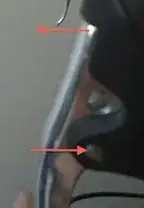
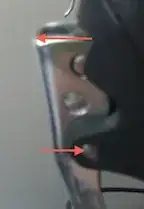
  5. Modern brake levers ("aero"?) have a different pivot setup that works better over all, but especially works better with hands on the hoods than old levers did. Extension levers simply won't work because of the way a modern lever pivots. If you look at a modern brake lever, when you pull the lever the top of the lever doesn't go down, it goes forward, and extension levers rely on pushing down on the top of the lever. Sin As you can see from these blurry pictures of a vaguely modern brake lever, the pivot is somewhat low and in front and the top of the lever rotates straight forward. enter image description here enter image description here
  6. Somebody invented "interrupter" or "cyclocross" levers which go mid-cable instead, allowing you to get the same end result (a second brake lever) without any of the problems of extension levers.
  7. Some regulation changes and historical market realities that ʍǝɥʇɐɯ discusses in his answer.
freiheit
  • 18,957
  • 4
  • 86
  • 117
  • Although there is a lot of common sense in this answer it is not set in the context of regulation changes and historical market realities. – ʍǝɥʇɐɯ Aug 04 '11 at 18:21
  • @ʍǝɥʇɐɯ -- didn't know about regulation changes or historical market details. Added a link to your answer – freiheit Aug 04 '11 at 21:01
  • Fine but point 1) is not justified as 1) - actually the levers were very popular and people didn't take them off just to be cool. But if we are answering this question as 'what is wrong with safety levers' you can add difficulty of changing cables on Weinmann/Dia-Compe Brakes and the problem of knocking the main brake lever out of alignment, this would cause the safety lever to clash with the underside of the handlebar reducing their effectiveness. As for the question and why they went, I think I provided in depth on the real reasons rather than guesses. – ʍǝɥʇɐɯ Aug 04 '11 at 21:53
  • This is very similar to the information found on Sheldon Brown's site. Did you use it as a source? http://www.sheldonbrown.com/gloss_e-f.html#extensionlevers – Kibbee Aug 05 '11 at 00:15
  • 4
    I checked the terminology on Sheldon's site. I worked on hundreds of these back in the day and Sheldon doesn't mention the main problem with them from a mechanic's perspective - they main levers get knocked out of alignment and getting to the bolt to put them tight after lining them up is hard because the cable is in front of the 5mm allen bolt. This meant having to undo the 10mm bolt on the brake, pulling cable through, getting the lever straight and then re-adjusting the brake. This was in the days before cable slots so the back brake needed it too. Replacing the hoods was also a palaver. – ʍǝɥʇɐɯ Aug 05 '11 at 00:35
  • 2
    +1 for mentioning interrupter levers. I think they're a great option and am surprised they're not on more bikes. A huge safety feature considering how many people I see riding on the flats and having to scramble for the levers when someone in front of them brakes – Mac Aug 05 '11 at 00:38
  • 2
    Interrupter levers have their own set up issues, but definitely better than suicide levers. And I think they could be designed better than they are. Mainly, not enough people think this is an issue for anyone to fix it. – zenbike Aug 05 '11 at 08:55
  • 1
  • nonsense. they provide two extra positions with brake access on the bars (including on the top of the curve, which interrupt levers [6] don't allow). 2. This isn't enough to worry about. Easily adjusted out. 3. see grip mentioned in (1) 4. agreed. 5. dual pull levers could easily be adapted to the new designs.
  • – naught101 Sep 03 '13 at 10:46
  • @naught101 for the curve position, you can use interrupter levers with your thumbs. – ojs May 19 '15 at 18:40