8

Conventional magnetotorquers for cubesats are electromagnets that produce torque in the Earth's magnetic field, and nearly all of the power they use just heats the copper through $\text{I}^2 \text{R}$ losses. A permanent magnet that was articulated with some kind of gimbal-like mechanism that could point it in a wide variety of orientations within the cube could in principle do this as well, using only a tiny fraction of the power.

There are a lot of design issues related to a magnetic design that would maximize the effect while keeping weight down. There might need to be a fail-safe parked position so that the satellite would not be "magnetically active" externally until it was fully deployed and operational - a little bit like those magnetic bases used in machine shops. A realistic design might require some finite torque in the articulation simply due to forces between the magnet and its "safe position" keeper or other ferro-magnetic materials that could be substantially larger than the torque related to the Earth's magnetic field.

  1. This sounds great, but is it functionally realistic for a low-U cubesat?
  2. Are there rules about permanent magnets inside cubesats - either regulatory or from individual launch providers - that could be a 'deal-breaker'?

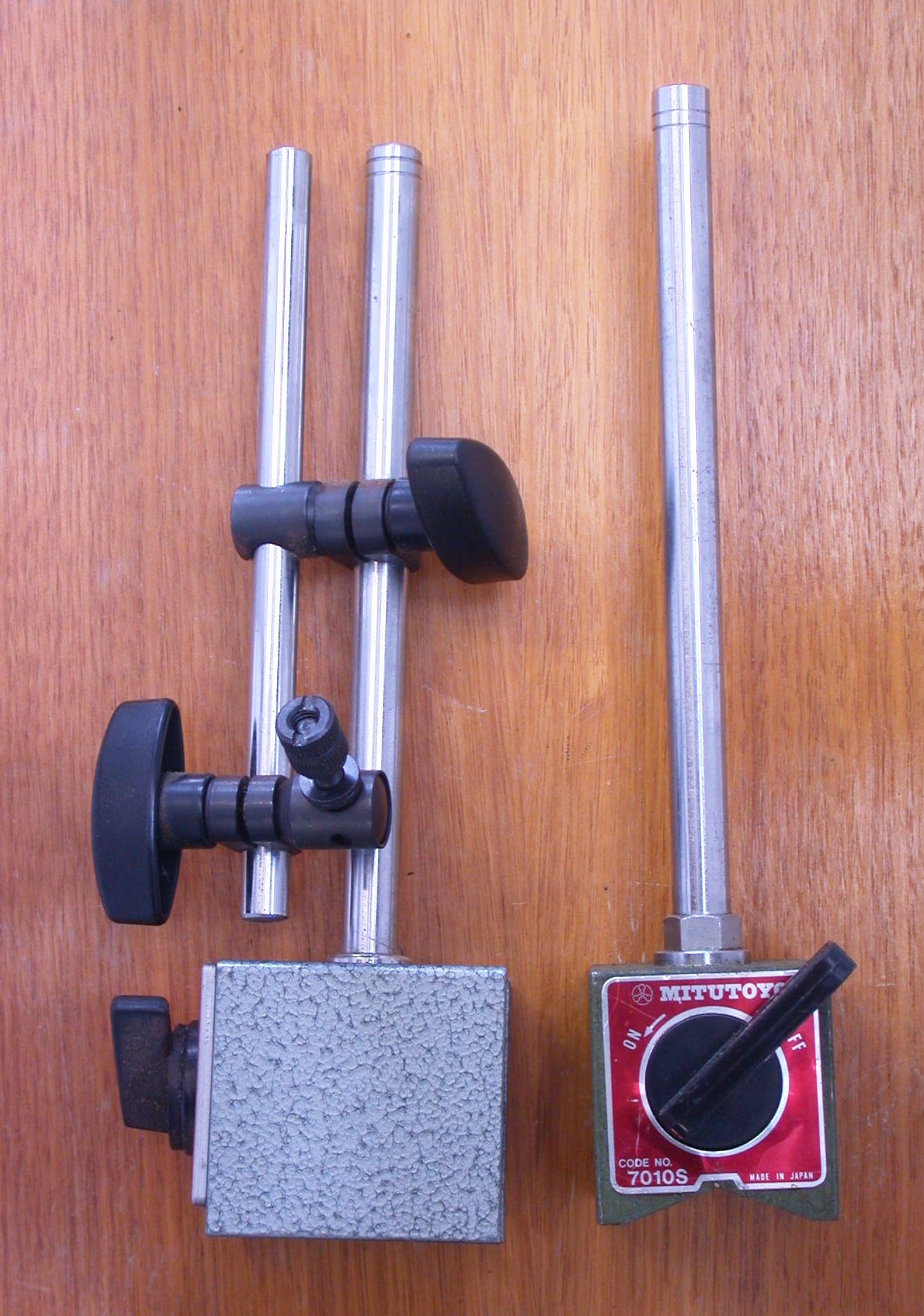
below: an example of a Magnetic Base (rotated) from here. The permanent magnet (PM) magnetotorquer would not look like this nor be this heavy. It's just an example of the concept of a PM object with an "off"-like position.

enter image description here

uhoh
  • 148,791
  • 53
  • 476
  • 1,473

1 Answers1

11

RAX and RAX-2 and possibly other cubesats launched by the University of Michigan (I can't remember at the moment) used fixed neodymium based magnets on their Z+ axis. Hysteresis was added to dump any residual momentum after P-Pod ejection. On the RAX missions, the magnets then were used to orient the satellite vertically over the poles where the science missions were conducted.

I haven't kept close tabs on the smallsat industry lately, but I would estimate that it is totally within the realm of doable, but with its risks. Cubesats are often built out of aluminum. While there may be other ferromagnetic materials used, and current loops in the electronics, I think a well chosen servomotor could over come most issues. The biggest risk in my mind would be dealing with vibration on launch. Moving parts tend to have higher risk.

Yes, there are rules about magnets (and just about everything else) on secondary payloads. The primary payload usually has many times more risk invested so they control almost everything about secondary payloads. The launch provider will have a say as well. It's almost always a case by case basis. The largest risk takers are probably any other secondary payloads on board. For example, M-Cubed (another Michigan launched sat) was believed to have stuck to another cubesat using passive magnetic control, rendering both missions a loss.

Disclaimer: I worked on the missions mentioned here, as well as a few others.

Glorfindel
  • 723
  • 1
  • 9
  • 22
Andrew W.
  • 976
  • 6
  • 6
  • 7
    "First US CubeSat missions to effectively demonstrate on-orbit rendezvous!" Theses guys know how to remain optimistic :p – Antzi Aug 04 '16 at 07:10
  • This is really helpful information and a great help for me to start reading! Do you think you could pull out some kind of value for the magnetic moment of one of those permanent magnets compared to some typical magetotorrquer? Are they roughly the same ballpark values, or is one clearly much stronger than the other? Thanks! – uhoh Aug 04 '16 at 07:22
  • 1
    @uhoh: while permanent magnet will most likely fit better field strength per mass/volume invested (unless the magnetorquer is allowed excessive current drains - and where would it get the power for that?) the definite problem is oscillation. Magnetic needle wobbles back and forth before stopping and pointing north, due to friction. In space there's no friction to extinguish the oscillation. Some other means must be used to dissipate the wobble energy. – SF. Aug 04 '16 at 16:46
  • it CAN be done passively, e.g. including an extra small magnet suspended in liquid container; the rotation energy would be dissipated by the magnet turning in the liquid. But that's more headaches (e.g. your magnet-in-liquid could keep orienting on the permanent magnets, and not on the north) – SF. Aug 04 '16 at 16:54
  • @SF. this is actively driven. Imagine the cube is transparent. If the cube is turning to the right, the PM rotates within the cube so that it is always pointing roughly east ~90 to the right making a constant torque to the left. When it reaches a stop, it suddenly flips vertical. There is (almost) no angular momentum and simultaneously no torque. It is stopped. If there's a tiny leftover angular momentum or misalignment either way, it tilts slightly wrt Earths' field, and tunes it out. PID's "D" is for (active) Damping. – uhoh Aug 04 '16 at 18:17
  • @Uhoh Google "cubesat magnetorquer" for a bunch of publications on cubesat sized torquers. check out MXLs publications page for info on choice of the passive magnets: http://exploration.engin.umich.edu/blog/?page_id=10 – Andrew W. Aug 04 '16 at 21:22
  • Also, you can google "M-Cubed-2 magnetorquer" for pictures of the torquer used in the next mission. – Andrew W. Aug 04 '16 at 21:25
  • @AndrewW. OK there's quite a lot of in-depth discussion to study there - a very well-documented effort - thank you! I can see that the risks of a permanent magnet are real, and some kind of fail-safe parking of the magnet in a fully shunted position is going to be absolutely essential. – uhoh Aug 05 '16 at 01:26
  • @SF FYI The D stands for Differential. – Andrew W. Aug 05 '16 at 16:22
  • @SF. Yikes! It's been quite a long time. (at)AndrewW. is right - thanks! The 'D' in PID is for differential and not anything else. "Swamp gas from a weather balloon was trapped in a thermal pocket and reflected the light from Venus" and momentarily distracted me. – uhoh Aug 05 '16 at 23:56
  • If we're talking about classical process control, PID stands for Proportional-Integral-Derivative – Wayne Conrad Aug 24 '17 at 21:14
  • 1
    Hey @AndrewW good to see other MXLers here. I was sure I could not be the only one. Long live RAX! Do you know if anyone else is on here too? – Knudsen Number Apr 11 '19 at 03:58
  • Hi @KnudsenNumber, I was in the lab from RAX to MC2, and everything in between. I have no Idea who else is active here on space.stackexchange. (I couldn't find a way to PM you...) – Andrew W. Jun 25 '19 at 02:33